
Hostility or Silence...Is There a Third Option?
One of JFA's distinctive features is our focus on the "Three Essential Skills:" asking questions, listening, and finding common ground.
ASK QUESTIONS with an open heart
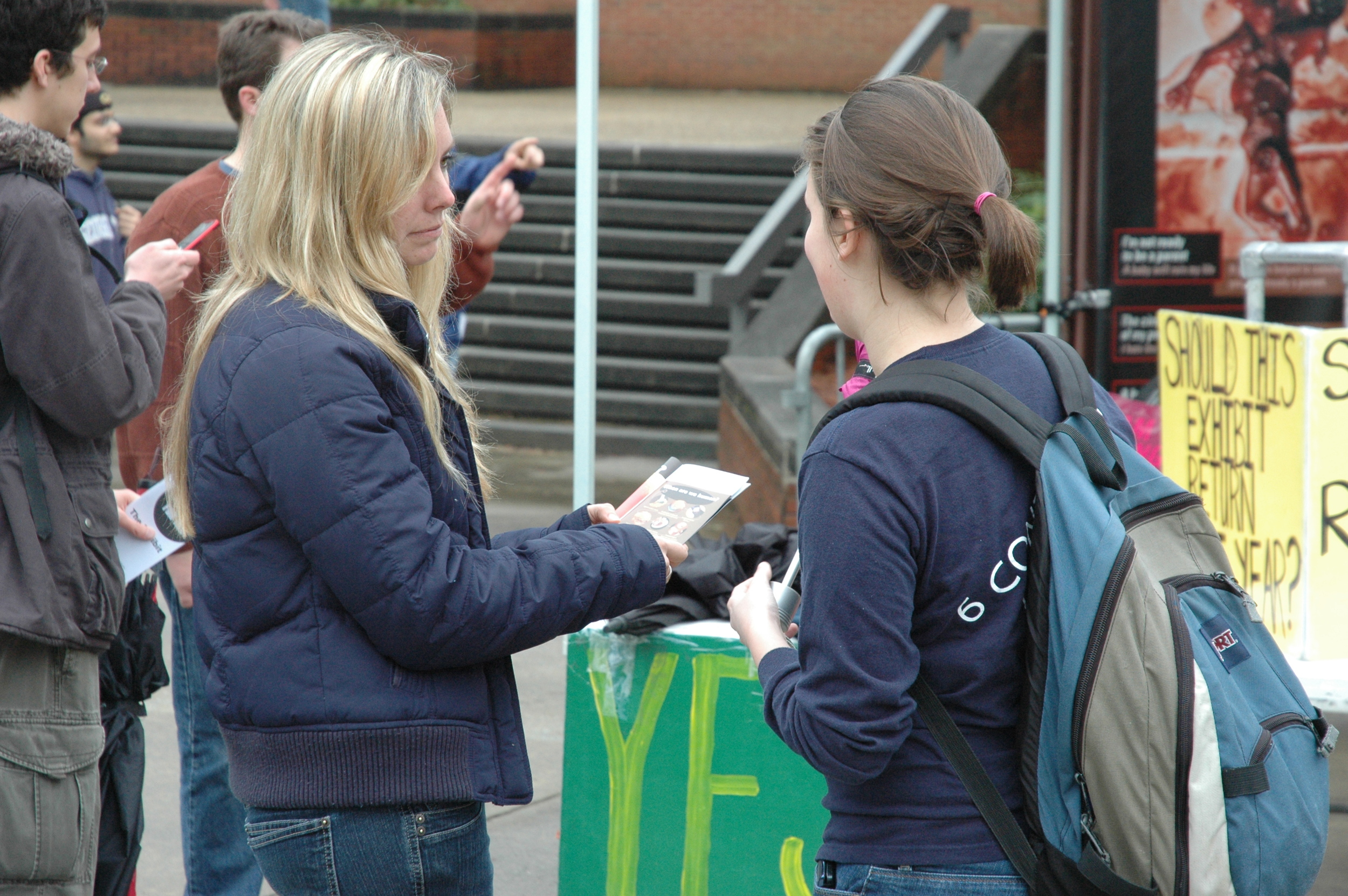
Instead of making statements and lecturing people who disagree with us, we ask genuine questions with the intention of getting to know what people think and why.
Rebecca Haschke discusses abortion with Nate at the University of Nebraska, Lincoln, and he changes his mind.
LISTEN TO UNDERSTAND
Rather than listening just so we can come up with our next response, we listen to join people in their world. We listen because we really want to know what people think.
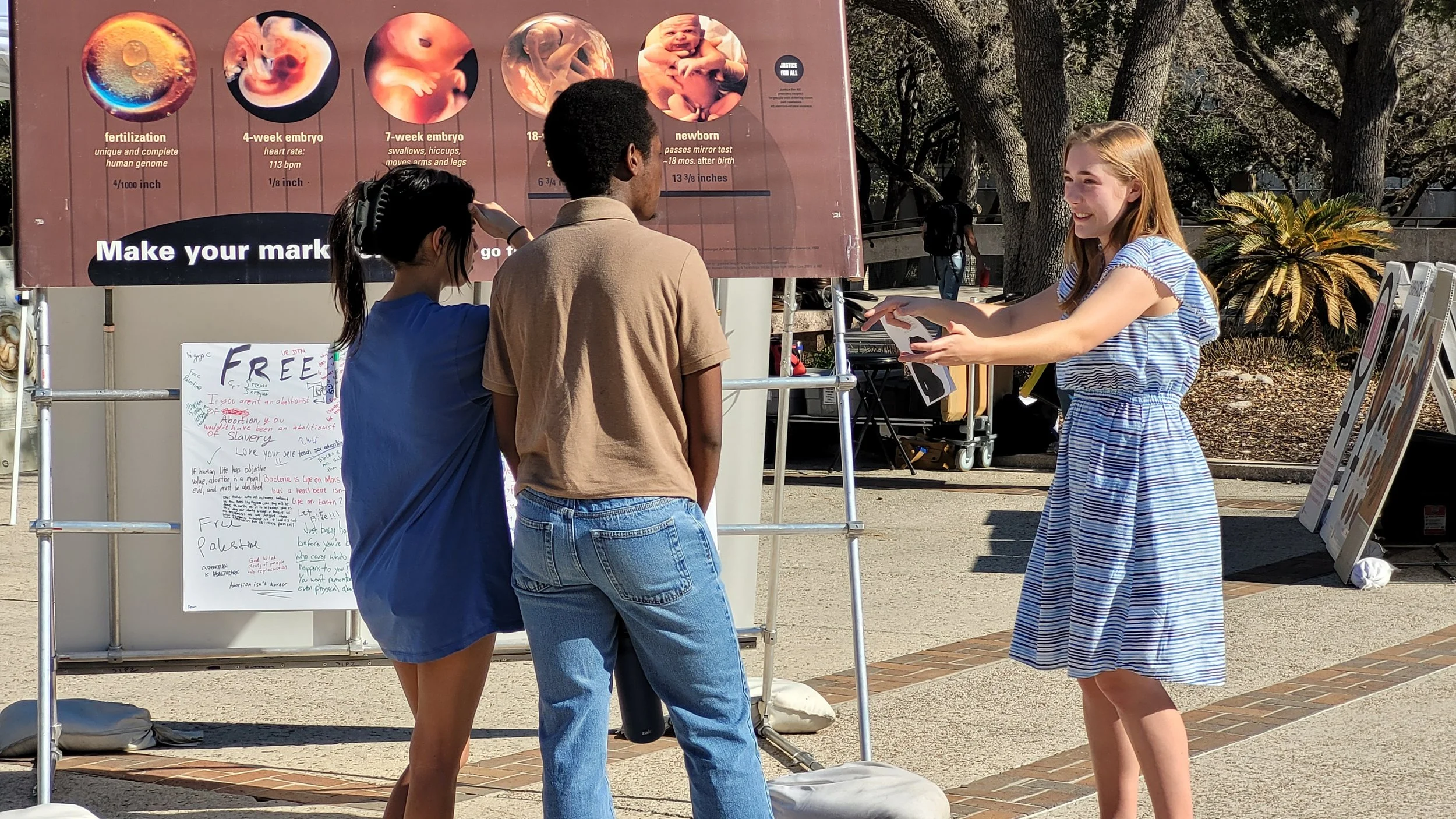
Catherine discusses abortion with a student during a "silent" conversation.
FIND COMMON GROUND WHEN POSSIBLE
When people think of abortion, they tend to think people have one-dimensional opinions about it - They’re either pro-life or pro-choice.
When we take the time to listen and ask questions, we find that we agree on many particular facts, moral assessments, and even legal assessments. Starting our conversations with common ground, and returning to common ground regularly, helps us discuss our disagreements more productively.

Our Executive Director, Steve Wagner, wrote Common Ground Without Compromise: 25 Questions to Create Dialogue on Abortion in 2008 as a letter to pro-life & pro-choice people to help them use common ground as the fuel for good conversation. Get the book free.
Stories of Three Essential Skills in Action


Do Pictures Help?
Some of JFA’s dialogue tools contain graphic photographs of the results of abortion. You may wonder how it could be loving to show photos like these in public, because they may stir up painful memories in many people who have had experiences with abortion. Considering that half of the women who have abortions say that they have already had one or more abortions (see page 8 of Characteristics of U.S. Abortion Patients, 2008), it’s likely that these women would have another abortion if they don’t see the photos or if no one convinces them to make a better choice.
What would it mean to love these people? What would it mean to love the unborn child who may be in danger? We have found that one way to balance love for both the child and his parents is to share the truth about abortion with photos, but in the context of dialogue. As caring ambassadors, we walk alongside those who are hurting from abortion. We have found that within this context, the truth about abortion can be helpful to healing. For example, Lori Navrodtzke, Manager of Client Services at Hands of Hope (and Silent No More Regional Coordinator), wrote in her reflection, “My Experience with Justice For All,” that working with Justice For All helped her continue to heal from her abortion experience. She said, “I have learned that I do not need to put ministering to those who have been involved with abortion on the opposite side of the fence from presenting the truth about abortion.”