
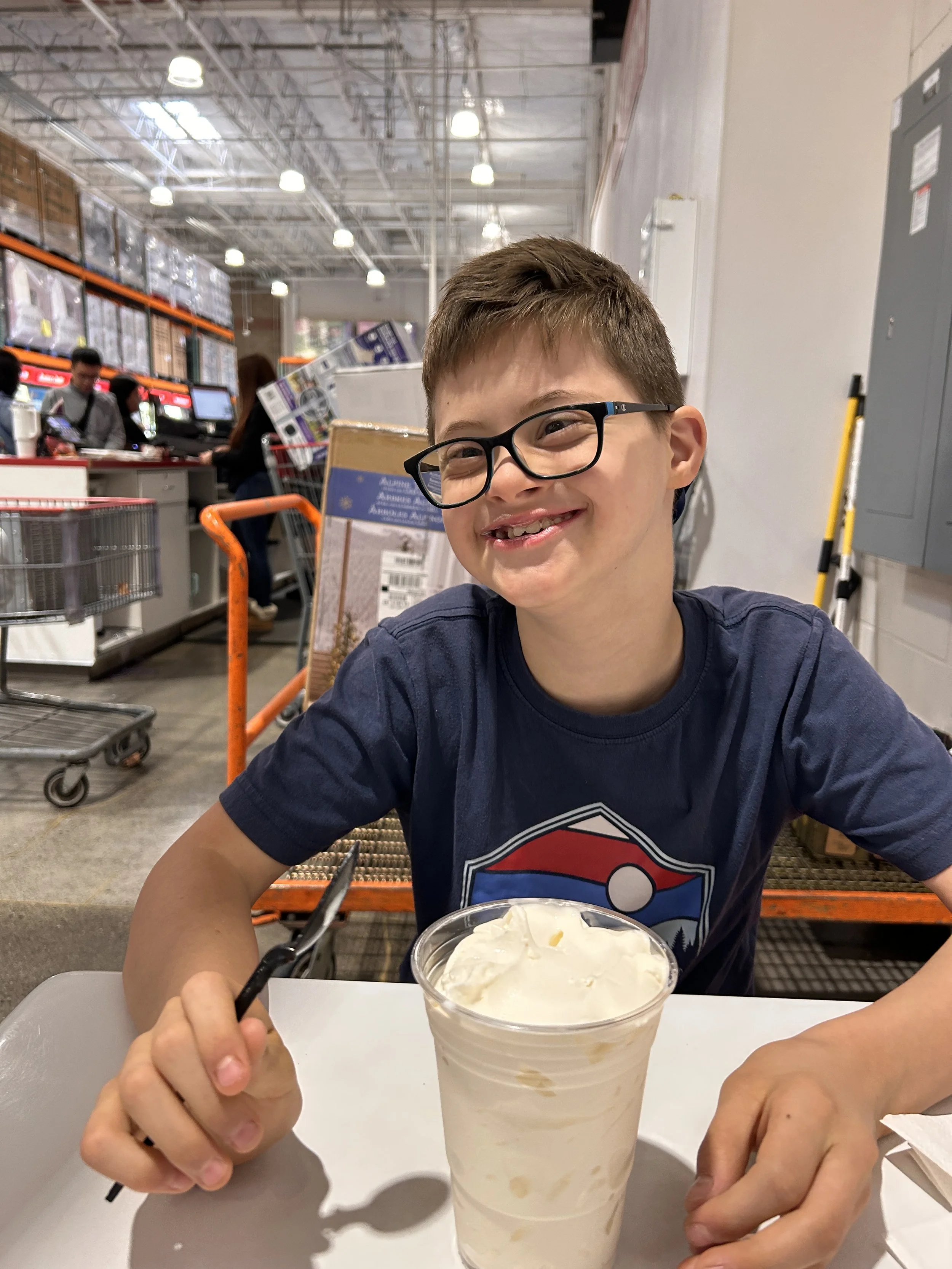
Luke's favorite part about a Costco run is the ice cream (obviously)!
My little brother, Luke, has Down syndrome. This August, he started 7th grade, which meant adjusting to a new school, new teachers, and new peers. He also recently developed some new interests. One of those interests is somersaults.
One day while jumping on the trampoline with my husband at my parent's house, Luke asked if Caden could teach him how to do a flip. Caden wisely replied, “First learn to do a somersault, then we can talk about learning flips.”
Excited, Luke came running to find me knowing I was a cheerleader in high school and asked me to teach him how to somersault. The three of us walked out to the front lawn, and I demonstrated step-by-step the proper technique. “Put your arms straight by your ears, bend your knees, tuck your chin into your neck, and push with your legs.” He struggled to figure out how to straighten his arms by his ears, so I helped him. Then he understood how to do it on his own. On his first attempt at a somersault, he got stuck on his head, unable to complete a full roll. As a result, he was a bit moody and discouraged, but I told him to keep trying. Next, he pushed his legs and sort of “twisted out” — not quite a true roll, but at least he was pushing forward. After about 20 minutes of repetition, just before dinner, Luke finally rolled all the way through a somersault by himself. His joy was priceless.
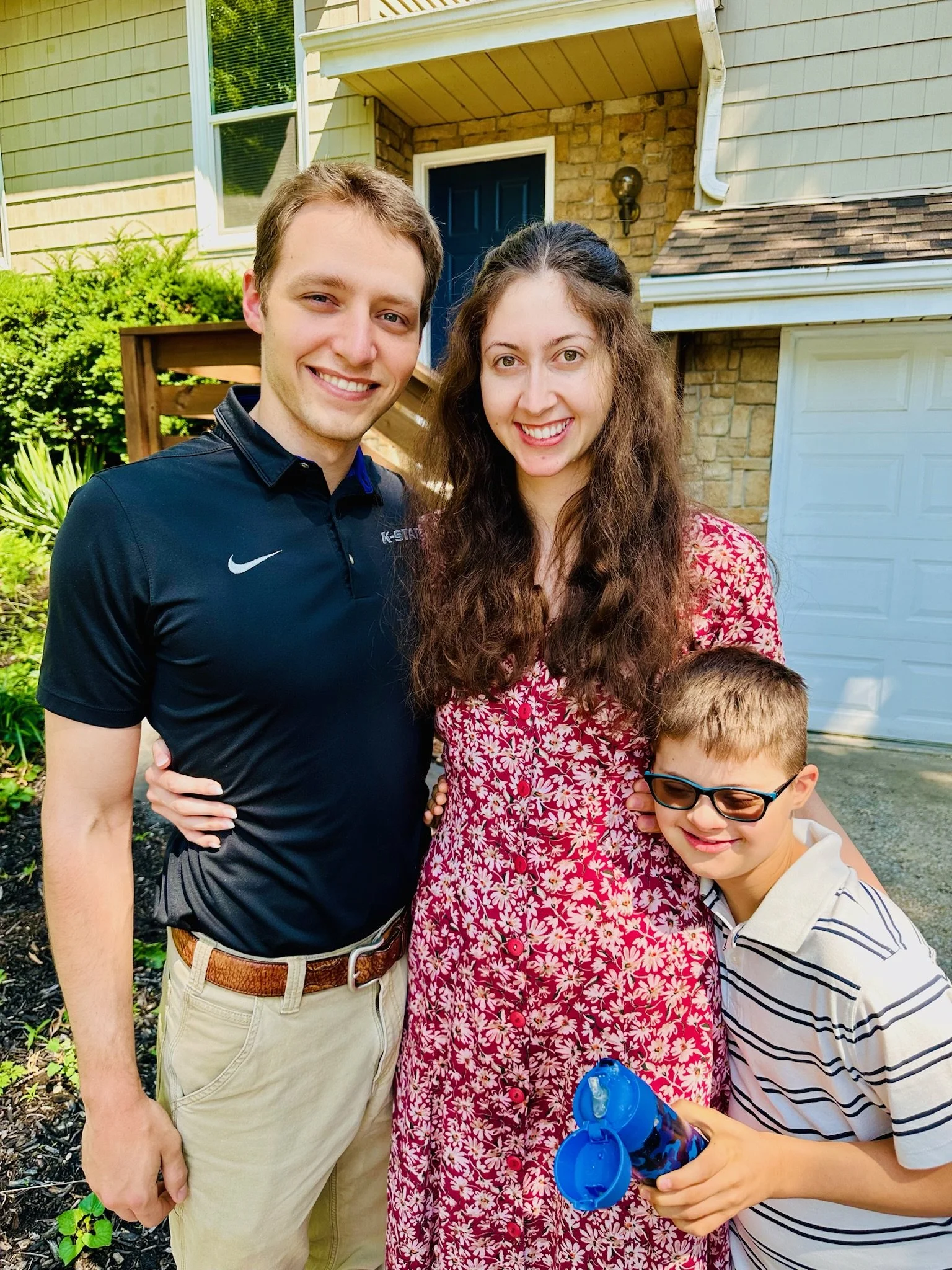
Caden, Luke, and me a couple days after our wedding in June.
Learning a new skill can be intimidating. It’s easy to think of all the ways things can go wrong. This often results in discouragement, a fear of getting hurt, or giving up altogether. At our JFA dialogue workshops, we encourage participants to go out into the world and have conversations with pro-choice advocates. It’s easy to remain in our echo chambers and have our beliefs reinforced. It’s much harder to talk to someone who challenges them. However, to jump into a conversation with an ardent pro-choice advocate without having a good conversation strategy is like trying to flip before you can somersault. This is why a portion of our training program focuses on the basic principles of good dialogue: How to ask open ended questions, listen, and find common ground. We also challenge participants with “role-play” exercises to give them an idea of what a conversation will feel like in real life and help them practice memory recall while under pressure.
Even after learning and practicing in role-play, many participants still fear that, in real conversation, they’ll freeze up or fumble their words. This fear is not unfounded. Just like Luke trying a new skill, when we are new to having conversations about abortion, we likely aren't going to “stick the landing” flawlessly right away. However, the way forward is not to read every book on the topic to ensure you have “all the answers.” It’s actually through trial and error: Try, stumble, reflect, and try again. Our mindset should be one of progression, not immediate perfection.
Once we’ve accepted the learning process of becoming a good and wise pro-life advocate, we now have to put what we’ve learned into action. To do this, we should start by thinking about the people in our lives we believe to be “safe” to fail in front of. I often encourage participants to think of three kinds of people they probably know:
Person Type 1: A friend or family member you assume to be pro-life but with whom you haven’t talked about the issue in much depth.
Person Type 2: Someone who identifies as pro-choice but appears moderate. Perhaps he or she personally would never get an abortion (or maybe would prefer there were fewer abortions) but still thinks other people have the right to make the choice for themselves.
Person Type 3: Someone who is passionately pro-choice. Perhaps she has a bumper sticker on her car that says, “Abortion is healthcare.”
I encourage you not to have your first conversation with the third person. That’s like trying to flip on concrete before you’ve learned to somersault. Instead, start with Person Type 1. Since you assume she is pro-life, you likely share a lot of values, which serve as easy common ground throughout the conversation. You might also be surprised to find out that, while she thinks abortion should generally be illegal, there are certain cases she believes to be exceptions (such as pregnancy resulting from sexual assault). This is a great person with whom you can practice the dialogue tools you learned in the workshop, such as “Trot Out A Toddler.” Regardless of whether she changes her mind about those exceptions, the odds of a cordial and encouraging conversation are high. Once you have that first successful conversation, try talking to Person Type 2. Use the Three Essential Skills (asking questions, listening, and finding common ground), and see if you can get the conversation a little further than you’ve been able to in the past. Remember the goal is not perfection, but progress. Once you get the hang of the discussion with Person Type 2, now you can challenge yourself to try the “flip” by engaging Person Type 3. By this point, you may be pleasantly surprised to see how well you do at easing the tension and finding common ground since you've been practicing with several people.
So who in your life might be your Person Type 1? I encourage you to reach out to him or her and say something like, “I recently attended a class on how to have civil discussions about abortion. The instructors encouraged me to start a conversation about the issue with someone I know. I think we probably agree on a lot, but would you be open to meeting up for coffee so I can practice what I learned by hearing more about your perspective?”
When you do, I’d love to hear how the conversation goes. If you get stuck or don't know how to respond to a particular argument, don’t hesitate to reach out. A JFA mentor (myself included) would be happy to role-play more conversations with you over Zoom.
Equip your church or school with pro-life dialogue skills!
Want to be equipped to have meaningful conversations about tough moral issues? Bring a pro-life dialogue work-shop or presentation to your church community, school, or club!
For younger students, we also offer a fun, hands-on K–4 lesson plan that highlights the beauty of development in the womb and helps children connect with the unborn in an age-appropriate way. (www.jfaweb.org/kids)
Did you know you can request a JFA speaker online? Reach out to us to explore dates to have us speak to your group: www.jfaweb.org/request