
Jon Wagner

Bubba’s Timely Advice and Memorable Prayers

Impact Report August 2026

In this Impact Report, JFA trainer Jonathan Wagner reflects on the impact of one of our dear colleagues, Curtis Gene “Bubba” Garrett. Proudly hailing from Alabama, Bubba worked tirelessly in various capacities with Justice For All for about 15 years. Bubba continues to this day to encourage current and former members of the JFA team with phone calls out of the blue, reminiscing, and praying. In each interaction, he continues to show a deep interest in each person’s well-being as well as our shared work of advocating for the unborn and for the truth of Christianity. Bubba has always exemplified an attitude with a simple priority: show up and serve. Whether lugging sandbags with a smile or sharing a self-deprecating joke to lighten the mood, Bubba tends to put a positive spin on everything. If you know Bubba, you know he would object to this report’s focus on him, so with that in mind, let’s thank God for the impact He accomplished through Bubba’s service with JFA.

-Executive Director, Steve Wagner
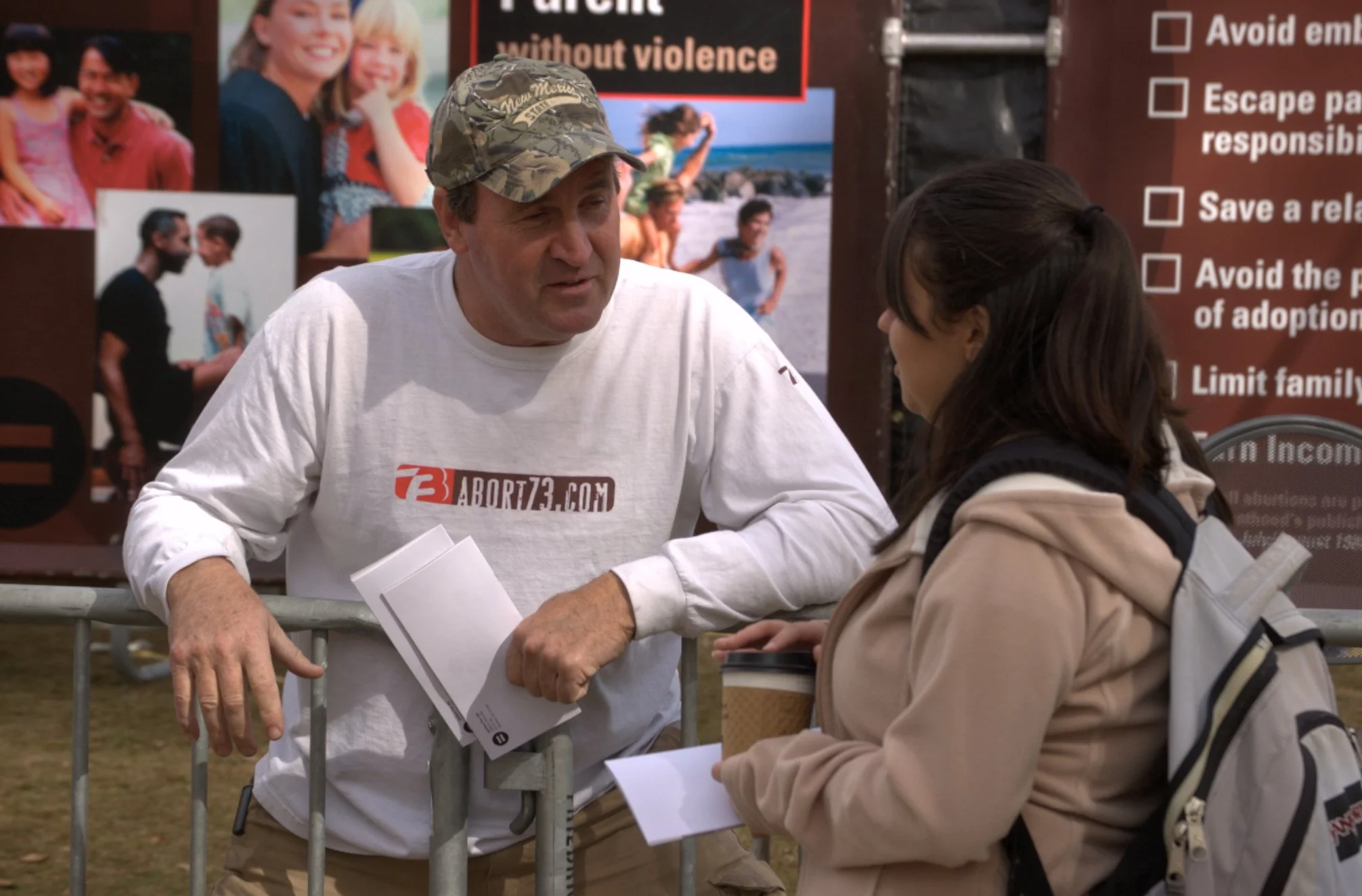
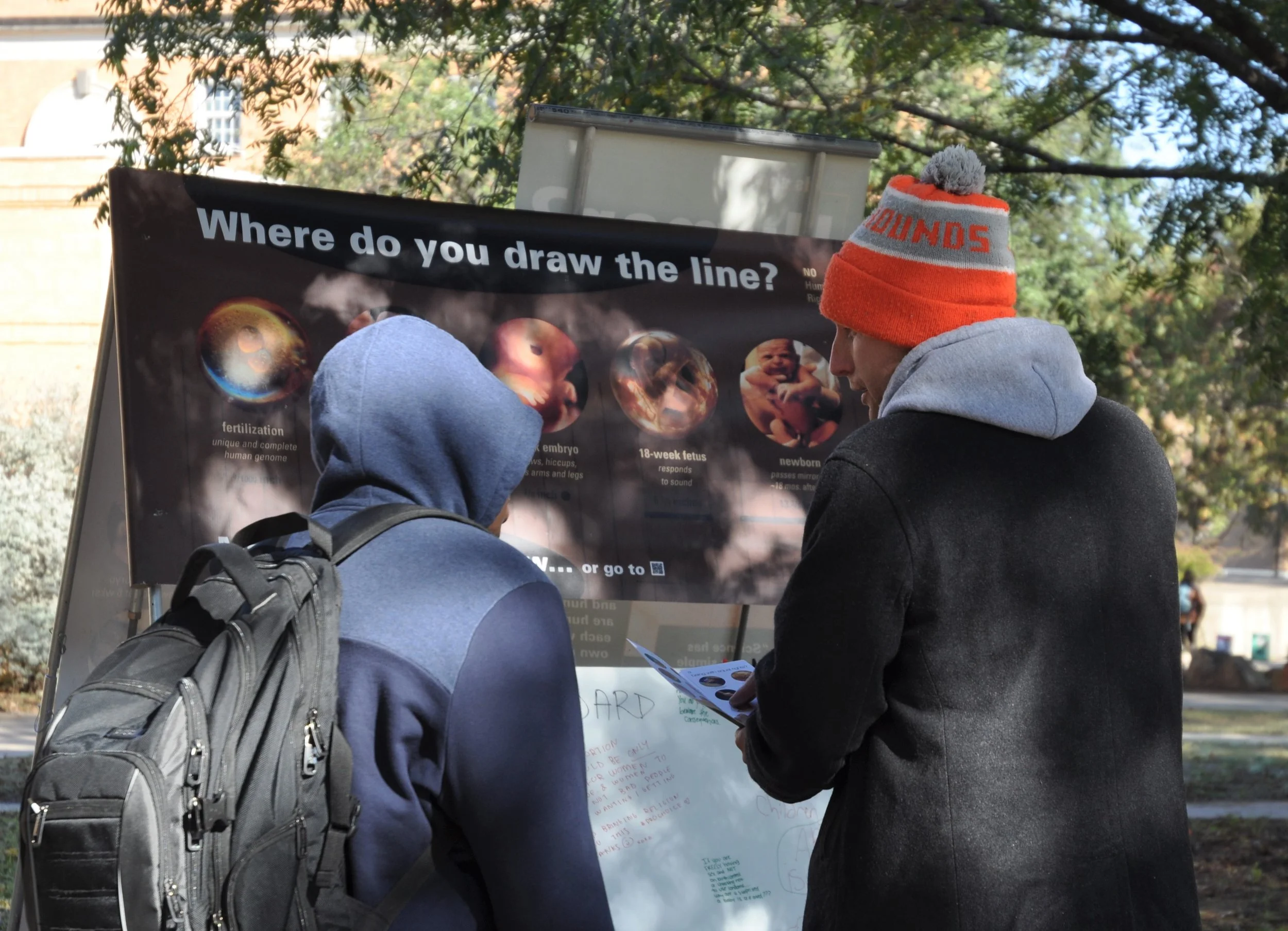
Bubba talks to a student at the JFA Exhibit outreach at University of Texas at El Paso (UTEP) in 2006.

I stood there in the Texas heat, deeply moved. We were at the University of Texas at El Paso having healthy yet challenging conversations with frustrated students. The ministry was fruitful, but we were tired. During a lull before the next class change, Bubba shared a simple yet profound verse with impeccable timing:

“Rejoice always, pray without ceasing, give thanks in all circumstances; for this is the will of God in Christ Jesus for you.” – 1 Thess. 5:16-18

I’ve been reminded of this verse since that day while serving in ministry and raising a family, especially because of watching friends like Bubba who have lived it out. I want to pause to give thanks to God for Bubba and for how his friendship and his work at Justice For All (JFA) has affected me. Through this reflection, I hope you can see how Bubba inspired and spurred our team on to love and good deeds, even as his role in our outreach events is different now than when he was an active participant.

Bubba Garrett has been a consistent friend since my earliest days with JFA, and he even served as a groomsman in my wedding 12 years ago. Although his wife Jackie has been mostly in the background in terms of JFA, she grew to be a friend and encouragement to me as I watched her serve as an amazing partner in ministry for Bubba – helping propel her husband in countless ministry pursuits in Alabama and all around the country. Bubba and Jackie recently celebrated 54 years of marriage! Between Jackie’s recovery from a stroke and Bubba’s recent challenges with dementia, their lives have changed somewhat in recent years, but they’ve continued to serve those around them faithfully.

Every member of the JFA team who has worked with Bubba has had a high regard for him. See Tammy’s statement (right) as one example. For my part, I remember purposeful and tender conversations, precious eye contact, warm smiles, godly optimism, perseverance, and timely advice. He lived out a Jim Elliott quote that hit me profoundly in college: Wherever you are, be all there.

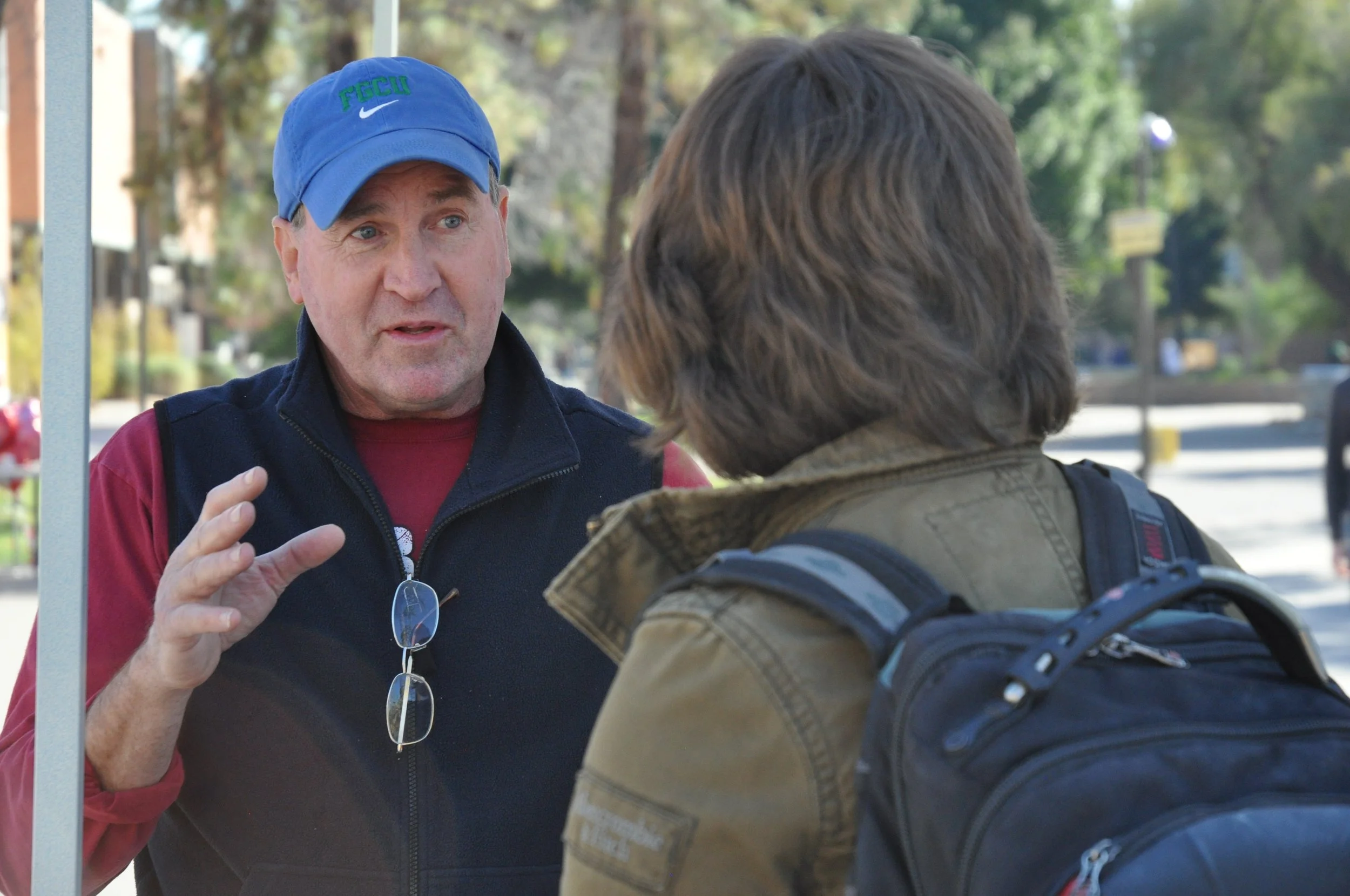
Bubba with a student at Arizona State University (ASU) in 2013 (Image: Cheryl Caffarella Wilson)

Bubba modeled godly courage when outreach was intense. When team members shared difficult experiences, he was ready with an apt word or a comforting hug. Relaxing over a meal at the end of the day with locals who supported us, his timely stories and jokes built us up.
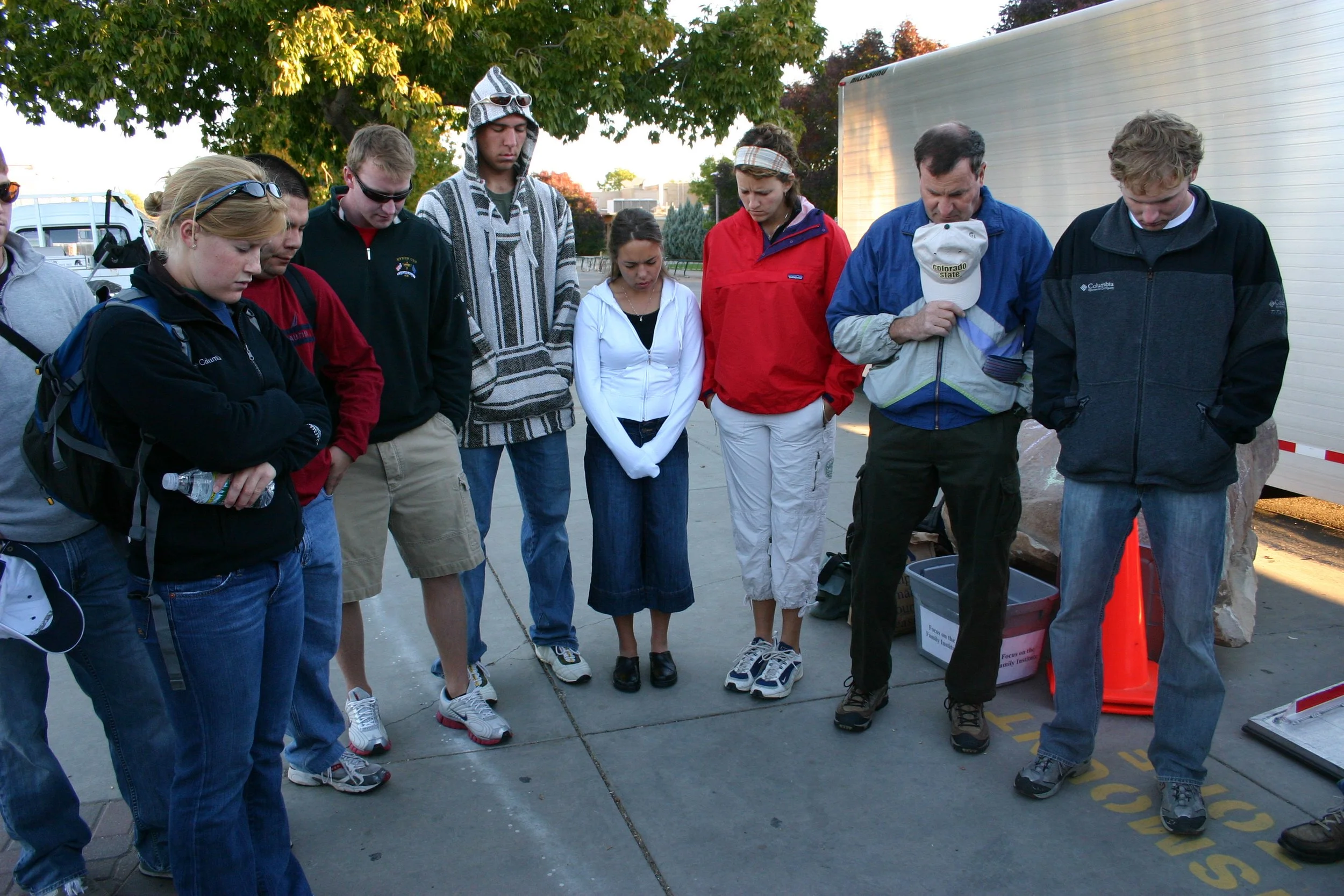
Bubba (second from right) and JFA volunteers pause to pray before setting up the Justice For All Exhibit at Colorado State University (CSU) in 2006.

In addition to laboring with the JFA team, Bubba also selflessly helped a number of other organizations as they contended for the rights of the preborn. Bubba has been faithful, bold, caring, genuine, and resilient. He impacted me as he led by example, uplifted me, took healthy risks, worked diligently, and spread an infectious smile far and wide.

Now Bubba is struggling with dementia, and it is frustrating, confusing, and challenging. Bubba is persevering in this new season and doesn’t want anyone to feel sorry for him. Instead, he desires prayer and wants Christ to be glorified. In the midst of this, he is pursuing Jackie and enjoying his adult children and grandkids, while continuing to serve locally where he can. Bubba and Jackie are also still in touch with five women they raised through a girls’ ranch ministry years ago. Bubba knows that his family, our team, beloved ministry partners, and his long-time supporters appreciate him. He knows he’s loved by God, and his hope is in Jesus.

On campus he had a knack for challenging young men and joyfully lifting up the downtrodden. He cared for and connected with the heart of each person with whom he spoke.
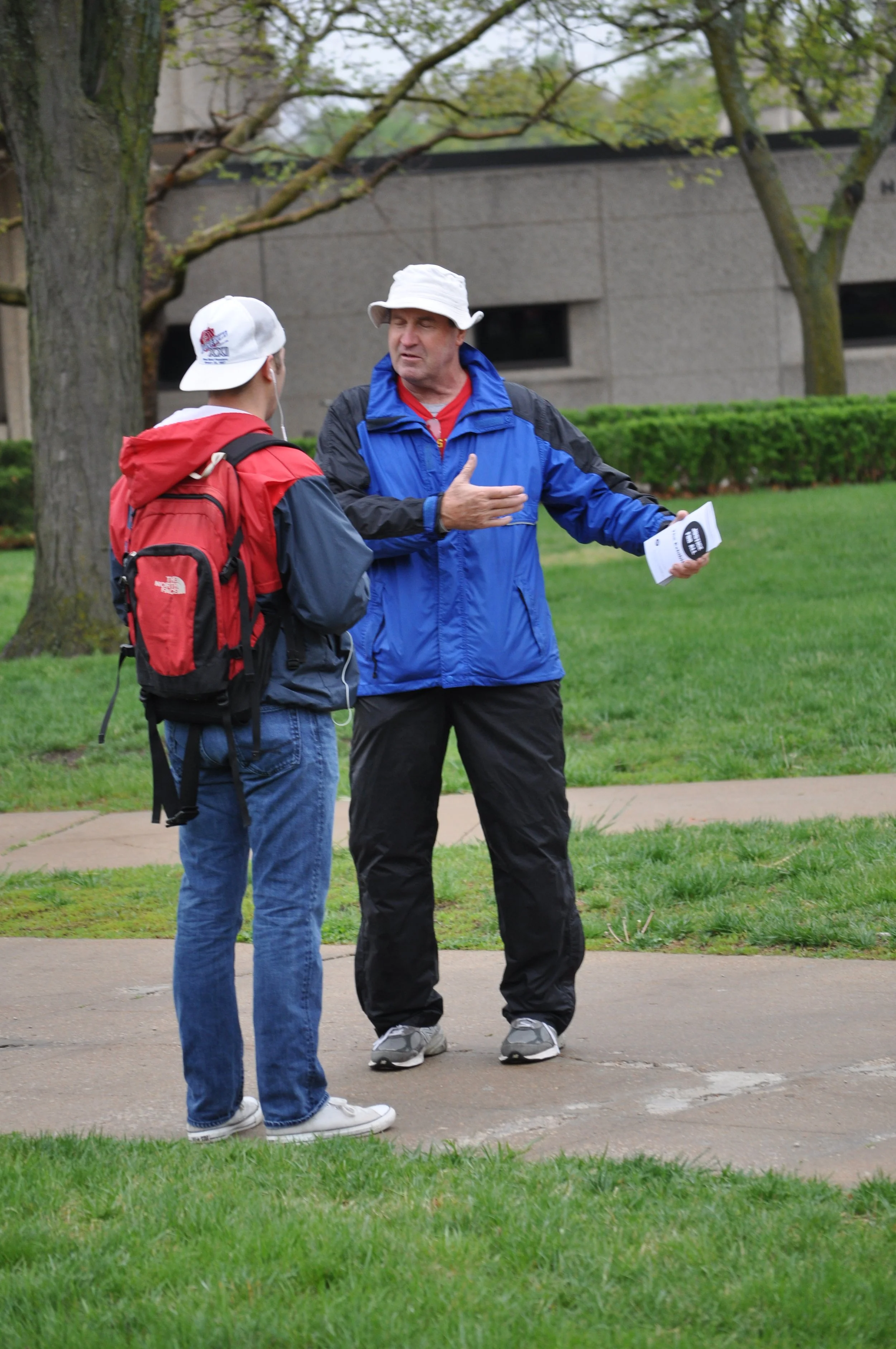
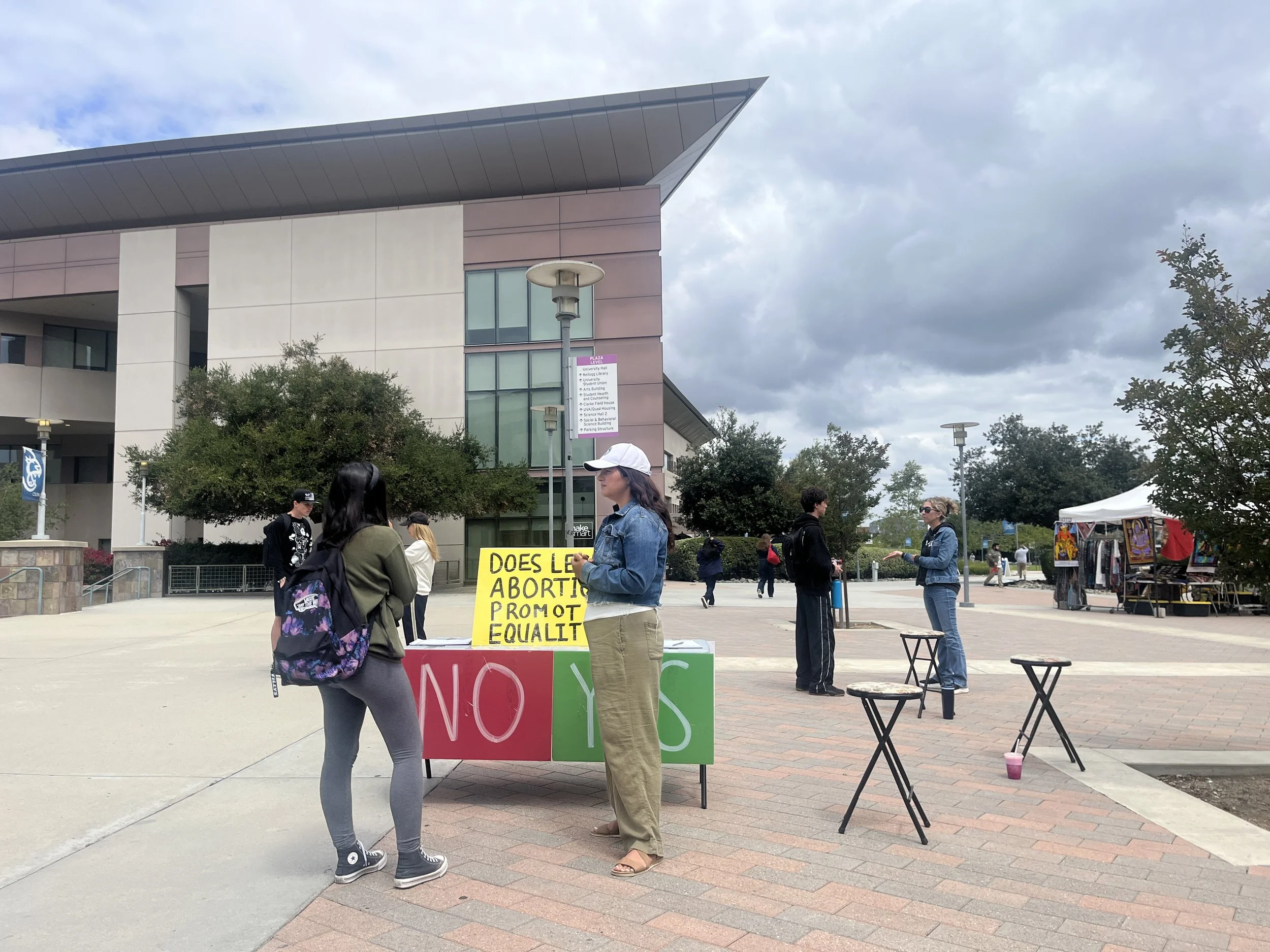
At the University of Kansas in 2014

In our morning prayer times before our outreach events and in many other prayer contexts, Bubba would often close with Psalm 19:14. So often did he proclaim this powerful verse, that it stuck with me and echoes at every outreach for me.

“Let the words of my mouth and the meditation of my heart be acceptable in your sight, O Lord, my rock and my redeemer.” – Psalm 19:14

This was such an amazing reminder and calming force as moments later we’d launch into dozens of challenging conversations, situations, and emotions.

Bubba helped make the JFA team an encouraging community committed to defending the preborn, caring for women in need, listening well, wisely challenging others, showing the injustice of abortion, and training up gracious advocates.

Bubba set an example for us of a Christian who, by God’s grace, is firmly committed to justice while also embodying deep empathy and extraordinary care for others. His passion for justice and for people emboldened our team. Above all, Bubba’s example continues to give us a steady encouragement to continue standing up for the unborn while always acknowledging God’s authority, God’s perfection, and God’s abounding love.

Jonathan Wagner, for the JFA Team

JFA Continues Campus Work in the Midst of Tumultuous Year

“When people stop talking, really bad stuff starts. When marriages stop talking, divorce happens. When civilizations stop talking, civil war ensues. When you stop having a human connection with someone you disagree with, it becomes a lot easier to want to commit violence against that group. What we as a culture have to get back to is being able to have reasonable disagreement – where violence is not an option.”
— Charlie Kirk

You may be wondering how our team is doing in the midst of a tumultuous year where we’ve seen more vandalism than in previous years and where we’ve watched, along with you, a shocking succession of murders unfold over the past few weeks, including the assassination of Charlie Kirk in the midst of a college campus free speech event. Our team gathered that night to pray for Charlie’s family, for college students, for protection over our work that likewise seeks to create dialogue with those who disagree, and to entrust ourselves to God.

JFA Intern Martha (left) creates dialogue at University of Kansas on September 10, 2025.

Our team continues to be eager to engage on campus and reports that our recent events (see below) have been very busy and active, with many people stopping and willing to engage. Our trainer Jeremy Gorr shared a quote from Charlie Kirk (right) at our online Love3 training event shortly after the murder. I think it captures an important part of why we do our work.

I also want you to read an excellent reflection from JFA’s Director of Community Engagement, Jon Wagner. You can read an excerpt below or read the whole reflection by clicking here. Thank you for praying for us and for supporting JFA’s work financially. We can’t do this without you.


“Prayer and Encouragement in the Midst of Grieving” (Excerpt)

Jon Wagner, JFA Director of Community Engagement


I’ll always remember where I was when I heard of the shot that took Charlie Kirk’s life at Utah Valley University. In between phone calls for setting up Justice For All speaking and outreach events, I was dropping off donations for our local pregnancy help ministry when one of the staff members alerted me...

As I reflected, I thought of the tens of thousands of people who have engaged our JFA team in dialogue or observed our displays. I am praying they each have a caring friend to process with during this trying time. I am praying they are encountering Christ and flourishing. I pray for our many thousands of seminar trainees, presentation participants, and volunteers to maximize their impact during this critical time – that now more than ever they would heed James 1:19 and be quick to listen, slow to speak, and slow to anger...

My prayer is that this horrific injustice, this critical cultural moment would open doors for dialogue, forgiveness, and understanding in our communities, especially with those who oppose us most firmly.
— Jon Wagner, JFA Director of Community Engagement

Even as some opponents of Charlie publicly praised the horrific act, most condemned it as evil. Pro-life and pro-choice, conservative and liberal, various political parties united against this horrific act against a man and organization...

How do we grieve in a godly manner? I suggest we should refrain from either immortalizing or demonizing Kirk. Kirk himself would want us to focus on Christ rather than himself. Even most of Kirk’s opponents refuse to demonize him. Instead, can we unite against violence, unite for free speech, and unite in seeing the image of God in each other? Let us resolve to dialogue with, respect, and befriend others even if we don’t agree...

Kirk prioritized those with whom he disagreed, listened carefully, and stayed on point. He countered ideas much more than people. He was an earnest defender of the preborn... He challenged bad thinking, challenged young men, shared his faith in Christ unapologetically, and engaged culture.

Did you agree with much of Charlie’s worldview? You have an opportunity to grieve with those who are likeminded, but you also have an opportunity to love those who are confused that a person they despised is being celebrated – by hearing their concerns and committing to healthy dialogue. Did you disagree with much of Kirk’s worldview, strategies, or his event optics? You have an opportunity to unite in grief and prayer for Charlie’s family and friends, to affirm the importance of free speech, to unite against violence, and to also commit to listening to those with whom you disagree...

Read Jon’s Entire Reflection, including specific prayers by clicking here.


Recent and Upcoming Events

8/26-27 Surveys at CO Colleges (Various, CO)

9/10 University of Kansas (Lawrence, KS)

9/11 Univ. of Missouri at Kansas City (MO)

9/15-16 Indiana University (Bloomington, IN)

9/22-24 Colorado State Univ. (Fort Collins)

10/13 UCSD (San Diego, CA)

10/14-15 Grossmont College (El Cajon, CA)

11/3-4 Kansas State Univ. (Manhattan, KS)

More Upcoming Events and Details: jfaweb.org/calendar

More Recent Events: jfaweb.org/impact-quick-look

Prayer and Encouragement in the Midst of Grieving

... so as to walk in a manner worthy of the Lord, fully pleasing to him: bearing fruit in every good work and increasing in the knowledge of God; being strengthened with all power, according to his glorious might, for all endurance and patience with joy...
— Colossians 1:10-11 (ESV)

I’ll always remember where I was when I heard of the shot that took Charlie Kirk’s life at Utah Valley University. In between phone calls for setting up Justice For All speaking and outreach events, I was dropping off donations for our local pregnancy help ministry when one of the staff members alerted me. The news seemed especially frantic in the midst of the shooting at Evergreen High School near Denver the same day, the stabbing of Ukrainian refugee Iryna Zarutska on a train about two weeks before, the murder of Minnesota state representative Melissa Hortman and her husband, Mark, in June, and other acts of violence this year.

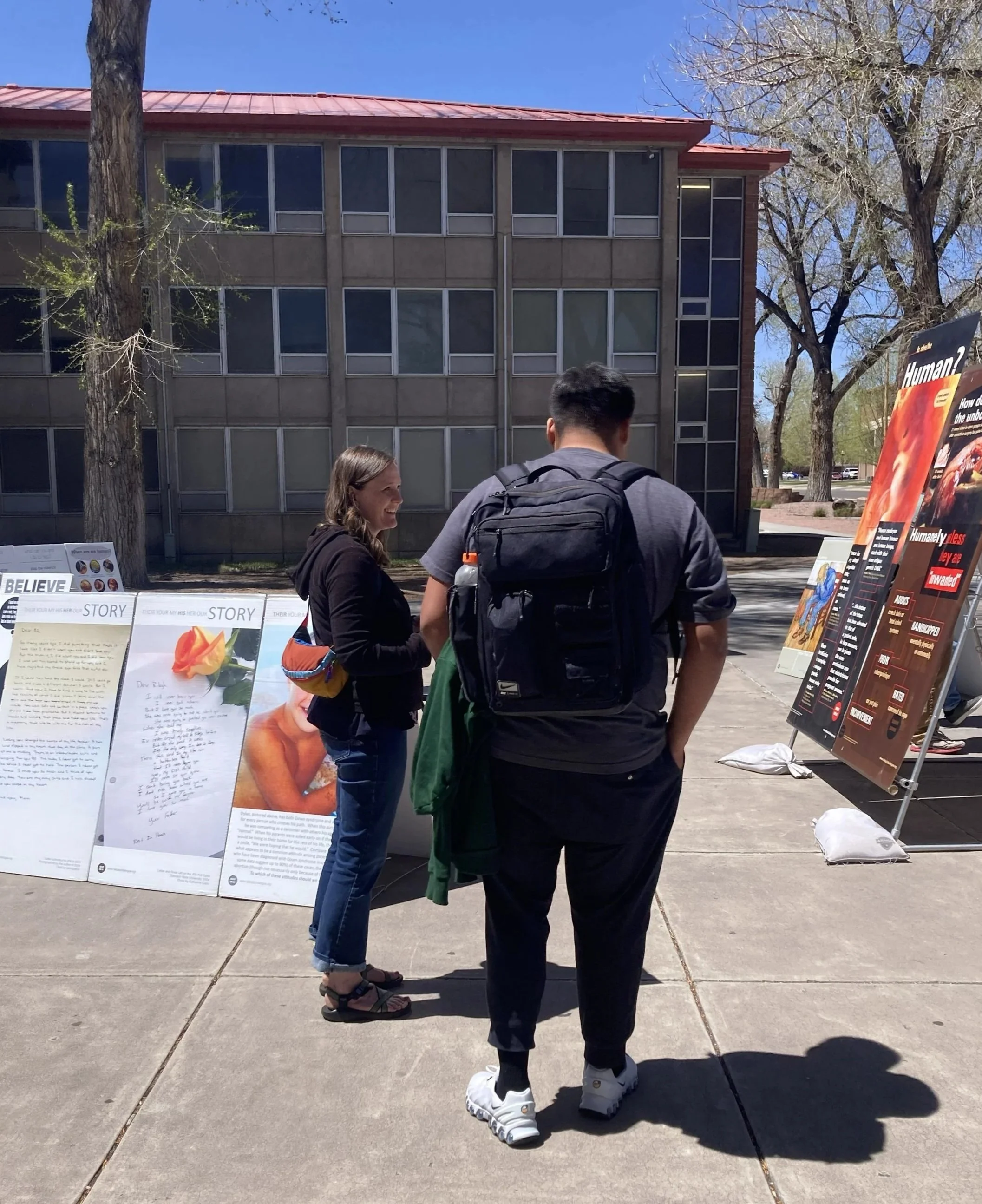
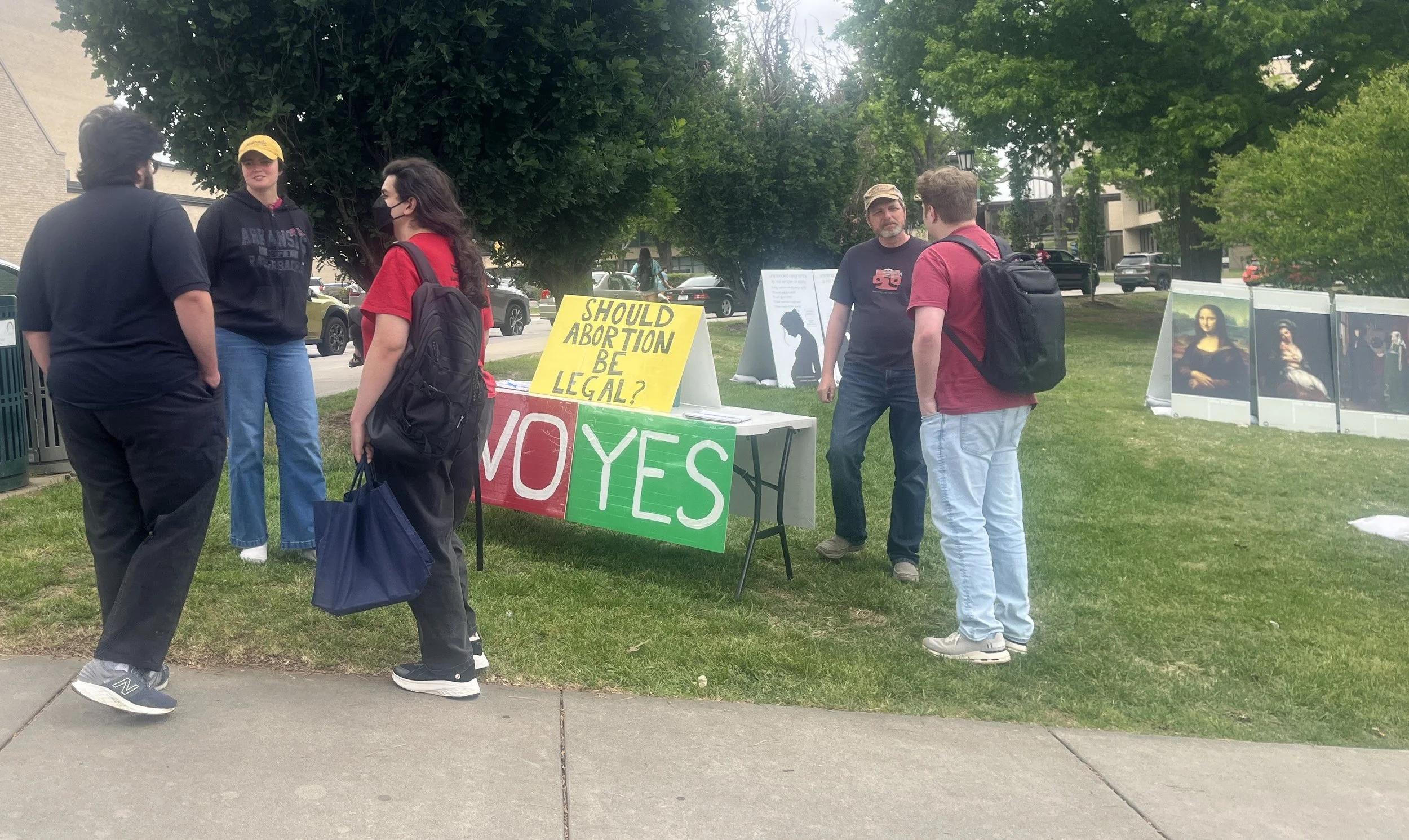
“As I reflected, I thought of the tens of thousands of people who have engaged our JFA team in dialogue or observed our displays. I am praying they each have a caring friend to process with during this trying time.” - Jon Wagner, who is shown above, speaking to a student just a few months ago at University of Arkansas in April 2025.

As I reflected, I thought of the tens of thousands of people who have engaged our JFA team in dialogue or observed our displays. I am praying they each have a caring friend to process with during this trying time. I am praying they are encountering Christ and flourishing. I pray for our many thousands of seminar trainees, presentation participants, and volunteers to maximize their impact during this critical time – that now more than ever they would heed James 1:19 and be quick to listen, slow to speak, and slow to anger.

Campuses hold a special place in my heart. College was a critical time for my growth as a young man due to discipleship at campus and our local church, friendships, classes, and being part of a championship tennis team.

My prayer is that this horrific injustice, this critical cultural moment, would open doors for dialogue, forgiveness, and understanding in our communities, especially with those who oppose us most firmly.
— Jon Wagner

Universities have been the main outreach venue for our educational and outreach endeavors around the sanctity of life. Our team has had tens of thousands of interactions about abortion, unplanned pregnancy, and human dignity. We’ve regularly discussed purpose, sin, salvation, and Jesus Christ, who reconciles us and invites us into His ministry of reconciliation (see II Cor. 5:17-21, a major theme passage for our team). We strive to make the unique college campus venue a better free speech opportunity for everyone, especially for those with whom we disagree.

Campuses should be a safe environment for learning, debate, and character building, so when we watched in horror on September 10 as conservative speaker and activist Charlie Kirk was assassinated, it was heartbreaking. It would have been heartbreaking for any activist to be gunned down, especially in the midst of free speech activity, but this felt more shocking to me personally because of Charlie’s persistent defense of human life, willingness to engage those with whom he disagreed, and bold proclamation of Jesus as Lord and Savior.

Even as some opponents of Charlie publicly praised the horrific act, most condemned it as evil. Pro-life and pro-choice, conservative and liberal, various political parties united against this horrific act against a man and organization – a despicable and cowardly atrocity that was an afront to decency and free speech.

How do we grieve in a godly manner? I suggest we should refrain from either immortalizing or demonizing Kirk. Kirk himself would want us to focus on Christ rather than himself. Even most of Kirk’s opponents refuse to demonize him. Instead, can we unite against violence, unite for free speech, and unite in seeing the image of God in each other? Let us resolve to dialogue with, respect, and befriend others even if we don’t agree.

Should Kirk have sometimes used a slower, more measured approach, pausing or asking more clarifying questions before making a strong statement? Perhaps. But whatever is true about the best strategy in various high-pressure contexts, I want to focus on something else: Kirk prioritized those with whom he disagreed, listened carefully, and stayed on point. He countered ideas much more than people. He was an earnest defender of the preborn even at a time when many other leaders, especially the powerful and popular, were not. He challenged bad thinking, challenged young men, shared his faith in Christ unapologetically, and engaged culture.

Did you agree with much of Charlie’s worldview? You have an opportunity to grieve with those who are like-minded, but you also have an opportunity to love those who are confused that a person they despised is being celebrated – by hearing their concerns and committing to healthy dialogue.

Did you disagree with much of Kirk’s worldview, strategies, or his event optics? You have an opportunity to unite in grief and prayer for Charlie’s family and friends, to affirm the importance of free speech, to unite against violence, and to also commit to listening to those with whom you disagree.

My prayer is that this horrific injustice, this critical cultural moment, would open doors for dialogue, forgiveness, and understanding in our communities, especially with those who oppose us most firmly.

Here are some of my prayers as I grieve and reflect…

  • I pray for Charlie’s family, friends, supporters, as they grieve this unspeakable loss. For this injustice to guide these folks closer to Christ rather than further away.

  • I pray for each person involved in or defending this murder to be reconciled to God.

  • I thank God that Frank Turek, Marco Rubio, Erika Kirk, and others proclaimed Christ at Charlie’s memorial. Rubio said, “God took on the form of a man and came down and lived among us and He suffered like men and He died like a man, but on the third day He rose unlike any mortal man... because He took on that death, because He carried that cross, we were freed from the sin that separated us from Him.”

  • I thank God that Charlie’s widow, Erika Kirk, is showing the courage and faith to forgive and graciously press on. Look at her statement at the memorial: “On the cross, our Savior said: ‘Father, forgive them, for they know not what they do.’ That man – that young man – I forgive him. I forgive him because it’s what Christ did. And it’s what Charlie would do.” Taking a cue from Erika’s model, “Is there anyone you or I need to forgive? Is there an old friend or family member with whom you are angry and don’t think you can forgive?” I pray God will help you seek His strength to forgive.

  • I pray for our JFA community to take this tragedy as yet another opportunity to employ our Three Essential Skills: listening to understand, asking questions with an open heart, and finding common ground when possible. People are grieving, talking, processing, hurting, and angry. The opportunities are right in front of us.

May we be a people who are ready to forgive, humbled by our own need for forgiveness. I often reflect on the names of those at our events who have been the most disrespectful, loud, and crude – and by God’s grace I take joy in praying for them, asking God to guide them, and re-affirming my forgiveness and love for them: “Let all bitterness and wrath and anger and clamor and slander be put away from you, along with all malice. Be kind to one another, tenderhearted, forgiving one another, as God in Christ forgave you.” – Ephesians‬ ‭4‬:‭31‬-‭32‬ ‭ESV‬‬

Charlie would want you to put your hope in Christ rather than any man, woman, or strategy. I am reminded of 1 Peter 1:13-15 which states, “Therefore, preparing your minds for action, and being sober-minded, set your hope fully on the grace that will be brought to you at the revelation of Jesus Christ. As obedient children, do not be conformed to the passions of your former ignorance, but as he who called you is holy, you also be holy in all your conduct, since it is written, ‘You shall be holy, for I am holy.’”

Team Be Nimble

Team Be Nimble

In this Impact Report, we feature highlights from Justice For All (JFA) events that took place from March to September. Each highlighted event illustrates the way smaller training teams can help us make a bigger impact. We’ve found that empowering our trainers to do events on their own helps our team to be nimble and ready to meet the great need all over the country for good dialogue training—training that includes outreach whenever possible.

Are you a man and intimidated by conversations about abortion? - Resource List

Mary Jumped Right In!

“Naturally gifted at public speaking, Mary quickly learns the material she will be presenting to pro-life advocates while also allowing her personality to bring joy to the conversation, even in the midst of discussing the heavy subject of abortion. Teaching Mary to present JFA material has been a delightful process for me.” - Rebecca Hotovy, JFA Speaking Coach

This was the perfect semester for Mary St. Hilaire to make her entrance into the JFA community as an intern. Given the COVID-19 shutdown, that may sound odd, but God knew the type of people we would need for this particular season.

Mary was eager to finally start the internship for which she’d been preparing. In anticipation, she said,

“Justice For All (JFA) is a group that I have known about and loved for several years now because of the way they approach the pro-life movement. JFA's goal is to educate people, specifically college students, on the reality of abortion and the humanity of the unborn through respectful dialogue. JFA's approach is not one of hate, judgment, or condescension, but of love, understanding, and openness. This is what attracted me to them. My passion for the pro-life movement put in me the urge to do more to save the lives of the innocent, and JFA is truly the perfect fit for me.”

We soon realized she was right, and that she was also a great fit for us!

I had the privilege in 2019 of following up with Mary several times about her desire to impact the injustice of abortion. Through our phone calls, her application, and the interview process it became clear that Mary genuinely wanted to help, was willing to work hard, and would enhance our team. She didn’t disappoint.

Hailing from the Lincoln, Nebraska area, Mary took her faith, her unbending pro-life convictions, her work ethic, her joy, and her sense of humor to Wichita, Kansas and didn’t look back. We could see that her family had prepared and encouraged her in some amazing ways!

Mary started as an intern in late January and quite quickly jumped into her two main tasks — creating conversations on college campuses (becoming a trusted advocate on our team) and learning our speaking material well enough to be able to contribute to our training events within weeks.

This semester will always be remembered for the impact of COVID-19 on our society, the shutdown of schools, the cancelling of events, and how it pushed our ministry to enhance our outreach and training tools online. It changed our plans, but it didn’t ruin our mission. This cultural moment has allowed us to take new chances, learn new things, and it was actually the perfect semester for Mary to start with us.

We are so thankful for the way our schedule worked out, abnormally packed for February. Mary started the semester off with a total of 11 outreach days and 4 interactive training events. She also helped in our office and learned speaking parts, making for a wild six weeks. If the schedule had been lighter, she would have had far less practice by the time the COVID-19 shutdown happened. Instead, she emerged a much stronger advocate through events in Denton, Albuquerque, San Antonio, and Dallas. By the time she completed our spring break mission trip at UT Dallas (March 9-11), Mary had also successfully contributed to our training seminars by delivering our “One Central Question” section (aimed at simplifying the abortion conversation), and she did a great job. She was polished, energetic, clear, and enjoyable to watch.

The Dallas trip helped all aspects of Mary’s job come together in a dynamic way. She helped with the speaking and brought a good amount of experience to outreach conversations there at UT Dallas. The mission trip team had enjoyable team building experiences together as well.

Mary in a conversation at UT Dallas, the last location where we held an outreach event before the COVID-19 crisis caused us all to change our plans.

Posting in March about her internship experience, Mary said,

“If I had to choose the single most important thing I’ve gained from interning with Justice For All these past two months it would most definitely be a new kind of love for all humans. In conversing with so many people from various races, religions, states, and even countries, getting to know them on a personal level, sharing my beliefs with them, and searching for the truth alongside of them, I have come to realize that my love does not have to be limited to only those with whom I share the same views. I knew this in my head, but until I actually participated in outreach, I didn’t know it in my heart. Through respectful dialogue I have been able to actually understand opposite viewpoints and beliefs for the first time in a totally new way. I have been able to find common ground and mutual interests with people I previously would’ve thought I could never talk to, and I have been able to positively impact students I thought would never want to hear my view.

“Each conversation I’ve had has brought me closer to an understanding of what Jesus’ words “Love your neighbor” truly mean. He didn’t mean “just be nice to your neighbor and put up with them.” No. He wants us to unconditionally love the people around us, despite their beliefs, their backgrounds, or their lifestyles. He wants us to take time to get to know them, listen to them, pray for them, help them, and love them as he loves us—without exception. Every single person I’ve talked to on campus holds a special place in my heart. I loved getting to know all of them, telling them about myself, and discussing the hard topic of abortion as well as other important issues with them. I think about them individually all the time, and I pray for them on a regular basis. I love them, not because we believe the same things, we’re from the same place, or raised the same way, but simply because they are children of God.

“I used to be scared to meet people who I disagree with spiritually, politically, or morally. Now, I jump at the chance to meet people of different beliefs! I find it intriguing and exciting to learn new religious, political, or moral views, and I love being able to share my beliefs and passions with them. For me, there is nothing more rewarding than meeting, knowing, and loving the people I meet through this work. JFA is by far one of the greatest blessings of my life, and I’m looking forward to the rest of my internship here!”

After our trip in early March, we decided to limit travel, and then within a week or so most schools were shut down anyway. Still, this didn’t shut down Mary’s internship. To the contrary, she pushed ahead with her speaking parts, learning several more sections of our seminar this past month. She is ready to assist with online trainings in the coming months and at in-person events when those return. Just last week, Mary was a significant contributor for our webinar. See upcoming webinars at JFA’s Calendar Page.

Mary has also been instrumental in helping us pivot during this time by being more active online with Instagram, Facebook, and other social media platforms. She’s worked hard to connect with pro-choice folks and to encourage pro-life students, and along the way she has encouraged the rest of our staff with some specific skills she brings.

A Gracious and Courageous Response

How to Help a Person Who Says, “You’re a Man, So Your Opinion Doesn’t Count.”

During our outreach events and around our society, a common phrase men hear is, “Abortion is a women’s issue, so be quiet!” Or, “You don’t have a uterus, so you shouldn’t weigh in.”

Many people say that men like Steve (grey) and Jeremy (blue), pictured here at UCLA, shouldn’t even weigh in on this discussion.

These assertions silence many men. Other men react to these assertions with anger. How should we respond?

This can be frustrating, especially if the person seems dismissive or arrogant. Over the years I’ve tried to carefully consider my response, rather than getting caught up in the emotions and being defensive. I could snap back with a quick answer or cower in silence, but I strive instead to be both sensitive and substantive in my response.

The challenge is the same as with other pro-choice statements: Faithfully explain the pro-life perspective while still reaching the person. That takes empathy and humility. What an opportunity to love another person!

While passionately defending the preborn we must show genuine love for the woman who may consider abortion, and also, especially with this objection, the person who believes men shouldn’t have a voice.

This can unfold in many ways because we are trying to reach each unique person, but I believe the following progression has the best chance for ultimate success—reaching the questioner and answering the objection. As with any assertion or argument, I would encourage you to employ JFA’s “Three Essential Skills” of asking questions, listening, and finding common ground. In this case, though, the order in which you use those skills is very important for showing that you genuinely care and aren’t just trying to return fire with fire:

Listen to understand (be attentive and show them you care):

  • Listen to reflect on their statements and not primarily to refute them. Show them you are listening by making good eye contact and clarifying their statements. Listen to their heart and their hurts.

Find common ground when possible:

  • “I can’t fully understand or experience what women are going through.”

  • “I admit up front that many women have been hurt by men and many men have been unhelpful in the way they discuss this topic.”

  • “Can we agree it’s important for men to speak out against rape, abuse, and mistreatment of others?”

Ask questions (information/clarification) with a calm and genuine attitude:

  • “What do you mean when you say I shouldn’t be involved?”

  • “Do you mean I can’t hold a substantive opinion, or do you mean that I shouldn’t make laws about this?”

Ask questions (ask for evidence) with a calm and genuine attitude:

  • “Granted, I can’t fully understand what a woman in an unplanned pregnancy is experiencing, but why does that mean I can’t hold a strong opinion or involve myself in the discussion?”

  • “Why do you believe I should not take a stand?”

  • “Why would you silence me if I am trying to care for someone I believe is in need?”

Ask questions (challenge gently; notice challenging comes late in the process):

  • “How are my ideas insufficient simply because of my gender if many women make the same arguments?”

  • “There are many situations about which I don’t fully understand the circumstances, but clearly I should still help. Should I as a white man have marched in the civil rights movement or risked ridicule on Freedom Rides for the sake of people who were different from me who were being treated very harshly?”

This progression may help this person to see that her dismissal of men is an unhelpful tangent (resembling sexism) rather than a substantive argument. If so, she may then be willing to move on to discuss arguments about human rights, just as if she had been talking to a woman who had made the exact same points as you.

If not, you need to remain gracious anyway. You must continue to be both calm and confident.

I suggest using a carefully-worded story to respond to the “You’re a man!” dismissal. Consider this story from my friend and colleague Tim Brahm:

“You’re absolutely right. I am a man, and I will never get pregnant. I can do my best to sympathize with women who experience unplanned pregnancies, but I will never really know what they’re going through. Let me ask you kind of a weird question, bear with me. Imagine I go fishing at the lake. I’m having a great time fishing, and then I see her [pointing to a female pro-life volunteer] about twenty yards away. I notice that she is pushing her car into the lake. Well that’s weird, why would she do that? Then I look in the back seat, and I notice there’s a two-year-old child in the car. Now, I’m a man. I’ve never been pregnant. I’ve never been a mother. I will never know what she is going through. We could even change the scenario by making her child a newborn and saying that she has postpartum depression, something I as a man could never experience. But even though I can’t understand what she’s going through, shouldn’t I try to do something to save that kid?” (Read the rest of Tim’s helpful discussion in his November 5, 2015 post at the Equal Rights Institute blog.)

This carefully crafted story can help those with whom you disagree to realize that not only can men be advocates—they should be advocates. Why? Because the preborn are human beings like toddlers.

Psalm 82:3-4 and Proverbs 24:10-12 urge us to care for the weak. And 1 Corinthians 16:13-14 says, “Be watchful, stand firm in the faith, act like men, be strong. Let all that you do be done in love.” (ESV)

It stands to reason that men can engage this discussion, but the point is much stronger than that — we must! Men need to abound with intentionality, empathy, support, and sound arguments clothed with grace. We have to be alert and ready to serve, a compassionate and compelling voice in all our spheres of influence.

I echo what abortion survivor, Gianna Jessen (left), said in her House Judiciary Committee hearing (9/9/15),

“Do not tell me this is only a women’s issue. It takes both a man and a woman to create a child. And to that point I wish to speak to the men listening to me. You are made for greatness. You were born to defend women and children, not to use and abandon us, nor sit idly by while you know we are being harmed, and I am asking you to be brave.”

Further Resources:

Empathy Opens the Door

“I was in the broken foster care system and have seen the challenges of adoption—I wouldn’t wish that on anyone, so I am pro-choice,” replied “Eva” cautiously. I had asked for her opinion on abortion as she approached our exhibit at the University of North Texas (UNT). She continued to walk, appearing to have little interest in a discussion.

“Eva” was more willing to focus on the unborn because I showed empathy for her suffering first. Here JFA volunteer Mark creates a similar moment for another UNT student. (Photo: University of North Texas, November 2018)

At that point, I was tired from a long day of conversations. My knee-jerk reaction to her anecdotal reasoning was to give a quick, factual response, but that approach wouldn’t have served Eva. She appeared to be skeptical and shy, worried that I might lash out with a firm response. I wanted my words to be meaningful and gracious to Eva. I wanted her to truly hear that I cared.

So instead of following my initial impulse I said, “I hear you, and I want you to know that I don’t think the foster care and adoption systems are perfect, or that these processes are easy or smooth. I’m sorry if anyone, especially a pro-life advocate, has ever implied that they are. I know that many cases do play out well, but I also know that even in the best cases, placing someone for adoption, adopting a baby, or being placed in foster care are very complex processes logistically and emotionally. We pro-life advocates need to research more and learn to listen and empathize better.”

I hear you, and I want you to know that I don’t think the foster care and adoption systems are perfect, or that these processes are easy or smooth. I’m sorry if anyone, especially a pro-life advocate, has ever implied that they are.

Eva was visibly relieved that I had acknowledged the challenges she brought up, and she was encouraged that I asked questions that allowed her to open up about her life growing up in the foster care system. She seemed very thankful to be heard.

Eventually, I felt we had reached a moment when it would be fruitful to return to the topic of abortion. Our dialogue went something like this:

Jon: Would you agree that many of the challenges faced by children in foster care actually increase as they get older? I’ve heard that it’s often especially difficult to place an older child for adoption.

Eva: I definitely agree with that.

Jon: Knowing that, then, how should we treat infants, toddlers, and young kids who are currently in a difficult foster care or adoption situation? Even though they face increasingly challenging circumstances, would ending the lives of these children ever be an acceptable solution to their problems?

Eva: Of course not. Regardless of the challenges, violence is not the answer.

Jon: I agree. Eva, it seems to me that this relates directly to the topic of abortion. If the unborn are fully human like older children in the foster care system, then wouldn’t that mean that the unborn should be protected in the same way? Shouldn’t children be protected despite the challenges they face, or the challenges that seem to lie ahead of them, at any stage in their development?

Eva: That makes sense. I would agree that if the unborn is a human being, just like children outside the womb in the foster care system, then they should be protected in the same way.

Eva then willingly processed through the information on our human development display, listening as I explained why we know that the preborn are whole, living, human beings. Furthermore, she heard me out as I shared that the preborn should not be treated differently because they look different than we do, or because they are inside of or dependent on their mothers. None of these reasons justify killing them. Eva then brought up pain sensation, asserting that perhaps it marks the start of value and worth for the unborn.

Eventually, after discussing that specific topic and several others, Eva agreed that abortion is wrong, at least after seven weeks. Even though she did not agree with me about the equality of the unborn before seven weeks of age, she seemed to shift on her view of many cases of abortion. Additionally, she now seemed more uncomfortable with all of them.

The most encouraging thing about my conversation with Eva didn’t come until the very end. As we concluded our dialogue, Eva wasn’t just content or thankful for being heard—she was beaming. I offered Eva a bottle of water since we had been talking for a while, and it was warming up. She said, “Yes, I’d love a water, but I was actually going to offer to buy you a drink and a snack in the union as a sign of gratitude for our conversation.” Eva chose to bless me, even though I had just disagreed with her very firmly.

In the conversation Jon Wagner (orange hat) had with Eva, he had the opportunity to share JFA’s brochure and his reasons for opposing abortion. The same happened with another UNT student pictured above. (Photo: University of North Texas, November 2018)

I handed Eva JFA’s new “Invitation to Dialogue” Brochure, and wrote down other websites she could go to for further study.* She was very open to these resources and promised to do further research. I gave Eva a hug, and she thanked our team for caring and engaging her campus in healthy discussion.

As I reflected back to the beginning of my interaction with Eva, one important principle stood out: I didn’t need to immediately make my next point when she first shared hers. I needed to empathize with her and acknowledge her ideas, even if they were unpersuasive, because she matters. Ironically, this was likely what prompted her interest in hearing what I had to say, after all. Eva ended up showing genuine interest in the reasons I opposed abortion and in discussing our differences. She even expressed interest in staying in contact and discussing the issue further.

Empathy for another person and genuine interest in another perspective drew together two unlikely friends. This was one of my favorite conversations last year. It showed once again the value of JFA’s Three Essential Skills: asking questions with an open heart, listening to understand, and finding common ground when possible.

* Websites Jon shared in this conversation: