
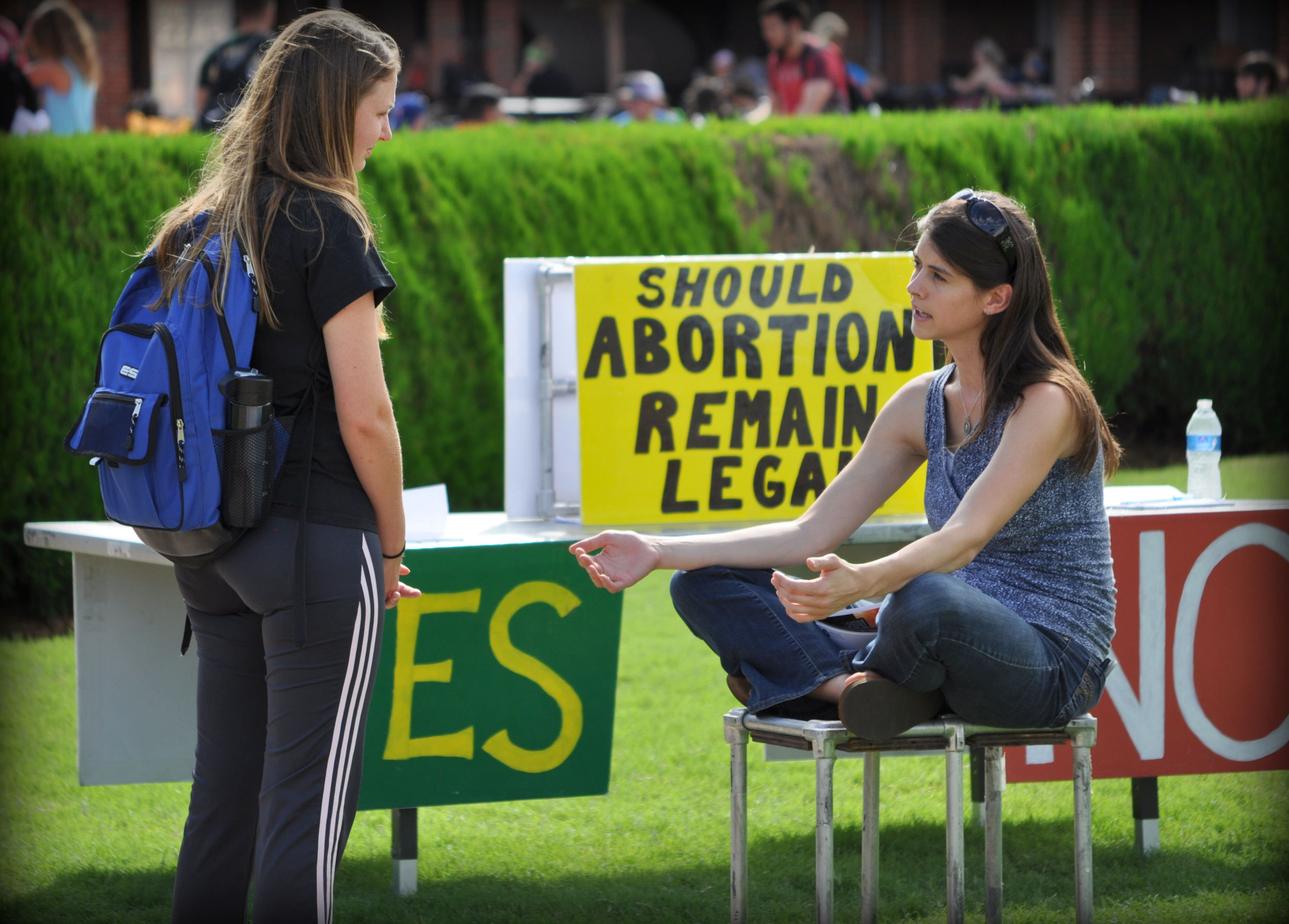
This past June, I sat on Wichita State University’s campus next to a poll table with the question, “Should Abortion Remain Legal?” I encouraged a young woman, Michelle, to share her opinion as she walked past. She responded,
Abortion needs to be legal for women who are not able to care for or provide a good life for the child. So many children live in broken homes, are abused, and experience neglect. Abortion is a better option in this situation because it prevents a child from ever having to live through these experiences.
I didn’t agree with her conclusion—that abortion should remain legal—and yet, there was something about Michelle’s explanation with which I could agree. There was also something about her demeanor that stood out to me. I made a mental note of both, knowing I would bring them up later in the conversation.
Since we had begun talking only a few minutes earlier, instead of jumping to conclusions about her beliefs, I decided to ask a few more questions to fully discover her position regarding the legality of abortion.
About 15 minutes later I turned the conversation back to her concerns about children living in difficult circumstances—and whether or not abortion is an acceptable way to prevent future abuse, neglect, and broken homes. The conversation went something like this:
Me: Michelle, earlier in our conversation you mentioned that you believe abortion is necessary, especially in situations where a woman wouldn’t be able to adequately care for the child.
Michelle: [nodding her head] Yes.
Me: I want to acknowledge something about you that I appreciate. From our conversation so far, I can see that you truly care about women and you care about children. You desire good for them. It is refreshing to meet students on campus who are not apathetic but instead have compassion.
Michelle: [smiling] Thank you.
Me: You’re welcome. I, too, desire for women and children to live prosperous lives, to be loved, and to live in situations free from abuse, poverty, and neglect. We have that in common.
Do you mind if I ask you a question that is not about the unborn? I will come back and reference them in a moment, though.
Michelle: No, I don’t mind. Go ahead.
Me: Let’s imagine that there is a woman in a difficult situation who isn’t able to care for her child. This woman’s child is two years old. Her husband had always been the breadwinner for the family, and she had stayed at home to care for her child. Sadly, he died in an accident and didn’t have life insurance. Now she isn’t able to find work, and she doesn’t have help from family or friends. Now, I’m going to ask a question that may sound a little crazy, but we’re likely to agree about the answer: If this woman isn’t able to provide for her child, should she have the right to kill her two-year-old as a solution to their problem?
Michelle: No, of course not.
Me: I agree. This next question may also seem extreme, so please bear with me for a moment: Why? Why can’t she kill her two-year-old child?
Michelle: Well, of course because you can’t kill children! They are human beings. [Michelle immediately recognized one can’t kill the two-year-old because he is a human being. Many people say that you can’t kill the two-year old because “it’s wrong” or “it’s illegal.” For this type of person, it takes longer than it took for Michelle to get to the more fundamental reason that you can’t kill the two-year old —“because he is a human.”]
Me: Once again, we’re on the same page. Let’s think about that for a moment, though. We agree that not being able to care for a child is not a good reason to the kill the child. And we agree that it would be wrong to kill the two-year-old because he is a human being. So, can we agree that if the unborn is a human being like the two-year-old, we would have to protect the unborn like we would protect the two-year-old?
Michelle: [silent pause] Wow, I haven’t ever looked at it that way before.
It was clear from her change in demeanor that Michelle was connecting the dots between her view that the unborn was human and how we should treat the unborn. But it appeared to me that she now saw her view in conflict with her concern for the condition in which these women and children would be living, so I addressed that.
Me: Michelle, as I mentioned earlier, you seem to have a strong desire to show people compassion. Your personality and demeanor make that obvious. I see this desire as a good thing. I admire people who are compassionate. It may be helpful, though, for us to discuss compassion a little more. When you see people in pain or suffering, do you desire to help them and relieve them from experiencing this suffering or pain?
Michelle: Yes, yes, of course.
Me: That’s a natural and good response, but we have to make sure that our methods of relief are truly compassionate. Can we agree that it isn’t always compassionate to encourage a friend to do anything she can think of to remove a difficulty, pain, or struggle from her life? For instance, let’s use the example of the mother with the two-year-old again. Can we agree that, even if killing her two-year-old would prevent her from living in poverty and prevent her child from living a hard life, it wouldn’t be compassionate to encourage her to kill her child? In order to be compassionate, we need to seek solutions that uphold the dignity of both the mother and the child, even if we can’t eliminate all of their pain and suffering.
During the past seven years I have had conversations with hundreds of students with pro-choice leanings. When I have taken the time to truly understand their positions regarding the legality of abortion and why they support these views, many times I’ve found that they hold their beliefs because they care about women. It is not because they dislike or hate the unborn. Often they have a deep care for children, too. They, however, like Michelle, come into the conversation believing that abortion is compassionate. Thank you for making it possible for me to propose a different kind of compassion to these students and to Michelle. Please say a prayer for Michelle, that the information she learned from our conversation will continue to bear fruit in her heart and mind.
-Rebecca Haschke
This past June my roommate Catherine and I had the joy of hosting a seminar. It was the first seminar to take place in our own home! The invitation list was limited because of space, but we crammed 13 participants into our living room using a little creativity and the skills we learned from playing Tetris as children.
After the seminar, participants were given the option to write a “Thank You” to the financial supporters who had made the event possible. Today you are receiving a “Thank You” (to the left) written by a seminarian, Michael, who wrote that you have helped prepare him for what he had previously considered “an impossible task.”
—-
“Dear Justice For All Supporter,
I’ve always been pro-life, but how in the world do I share that message in a culture that isn’t?…an impossible task!
After attending [a] JFA seminar, the impossible finally feels attainable. I have practical, simple tools to engage someone in a productive dialogue on abortion. Thank you sooo much for providing support to make that possible! God is good!
-Michael