
stories

Everyone Needs This Training

Impact Report, Dec. 2025

During this Advent and Christmas season, as we think about the Son of God taking on flesh in order to save the world, we pause and thank God. We pray you are able to pause with us to worship our great God.

In this Impact Report, I share the story of two eager pro-life advocates, Maya and Matthew. Both joined me in a special conversation that took place at the University of New Mexico (UNM) when we partnered with the Summit Ministries Gap-Year Program to conduct outreach there in March. Maya, a Summit student, made a special impact in this conversation where Matthew didn’t, and that was in part because of the special gifting she has from God and in part because of Summit’s priority on providing JFA’s training for their students. There’s still time to give a special year-end gift to help us train more Christians like Maya in the coming year. Please consider giving a generous gift today at jfaweb.org/donate.

Steve Wagner, Executive Director


I think the conversation lasted for about three hours.  It all began when a student stopped to talk at our intern Alora and my daughter Elsie who were stationed near our poll table at the University of New Mexico (UNM) in March.  The young man with a skateboard wanted to know why they were hurting women.  So I spoke up and said, “I’m the Director of the organization, so I’m happy to talk to you.”  Well, based on what followed, I’m not sure he was happy to talk to me.  He proceeded to tell me what I believed and all about views I held...that I don’t actually hold.  When I attempted to answer a question he asked, I barely had three words out before he would cut me off.  It was ugly.
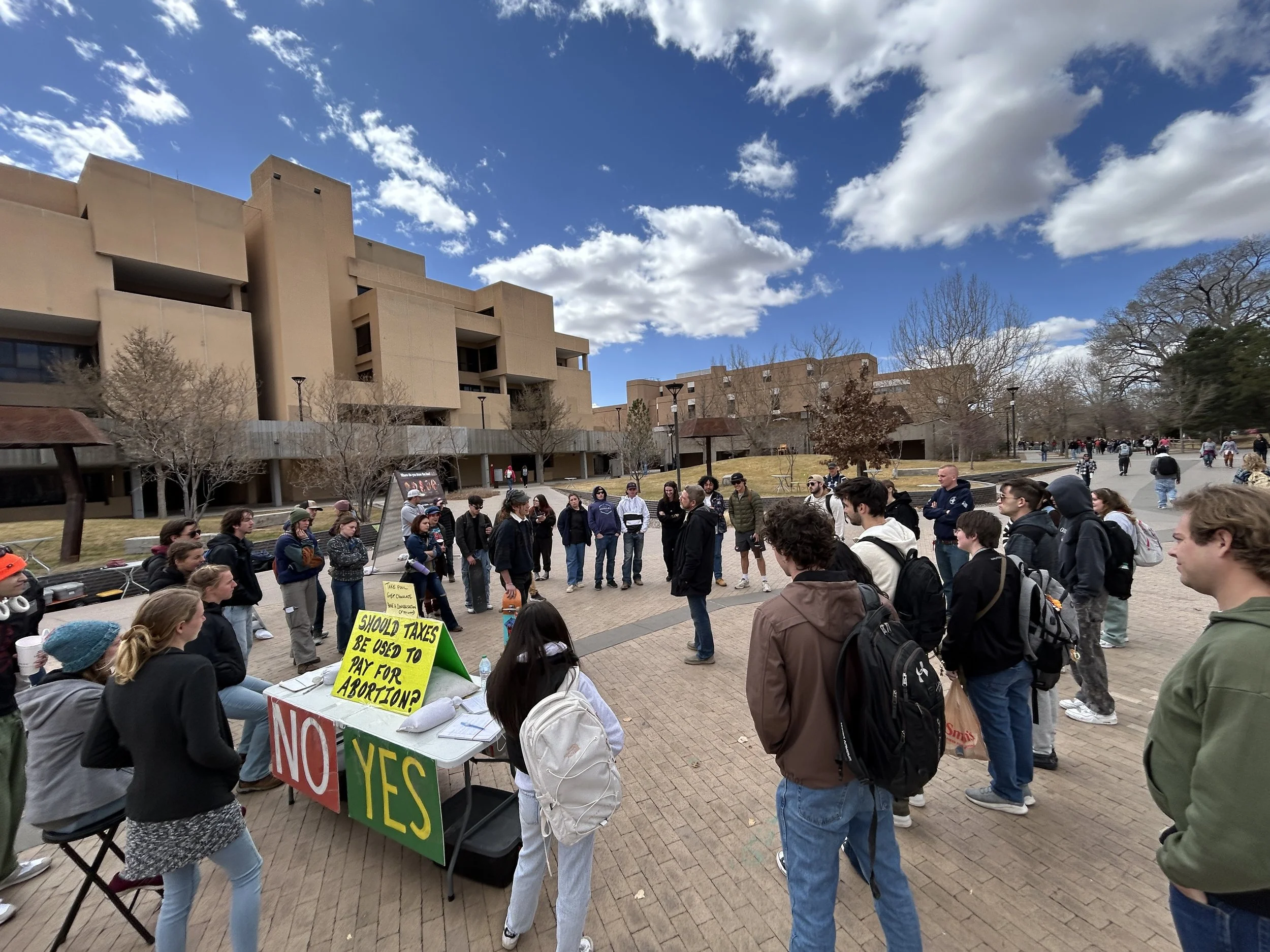
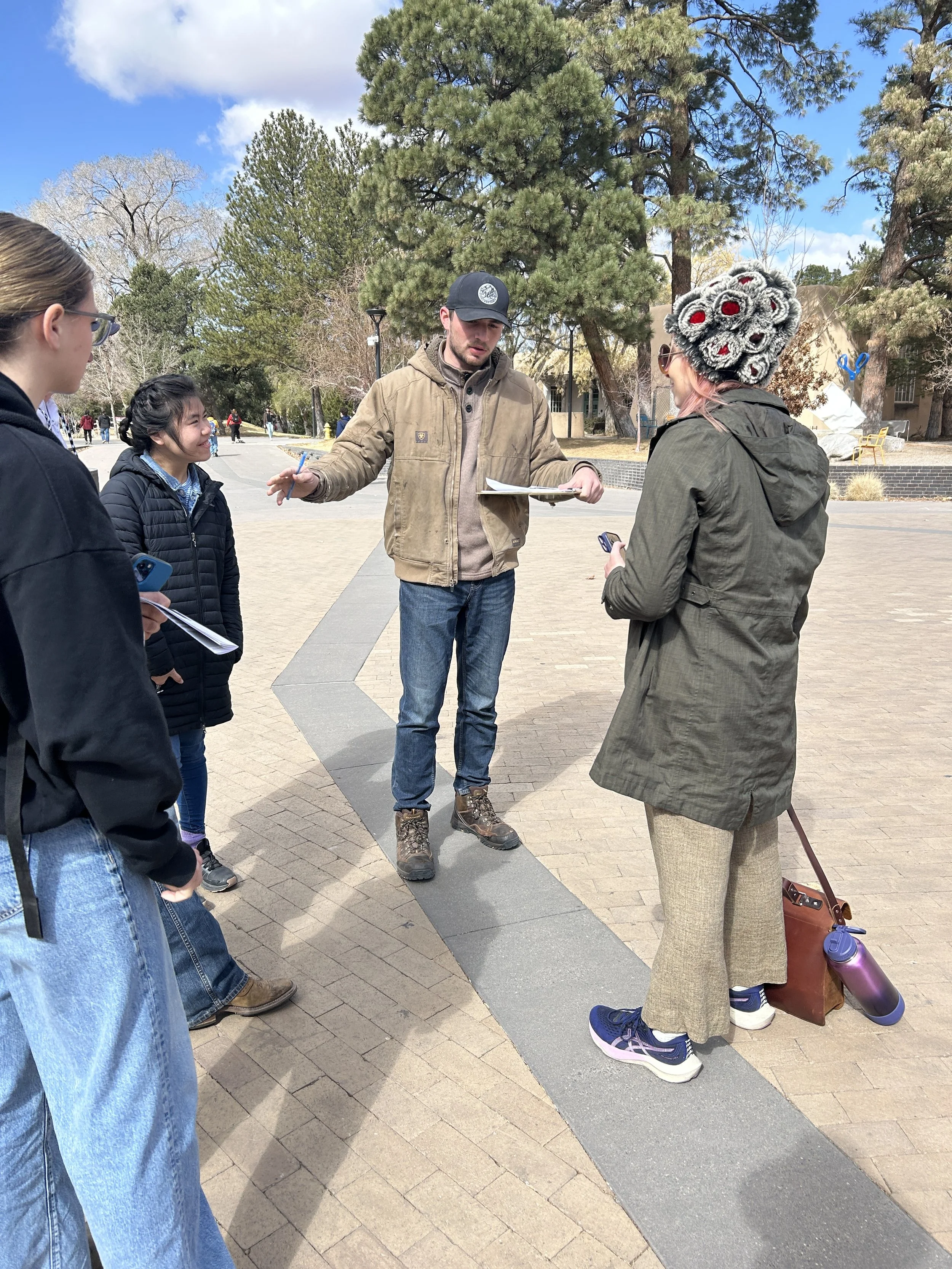
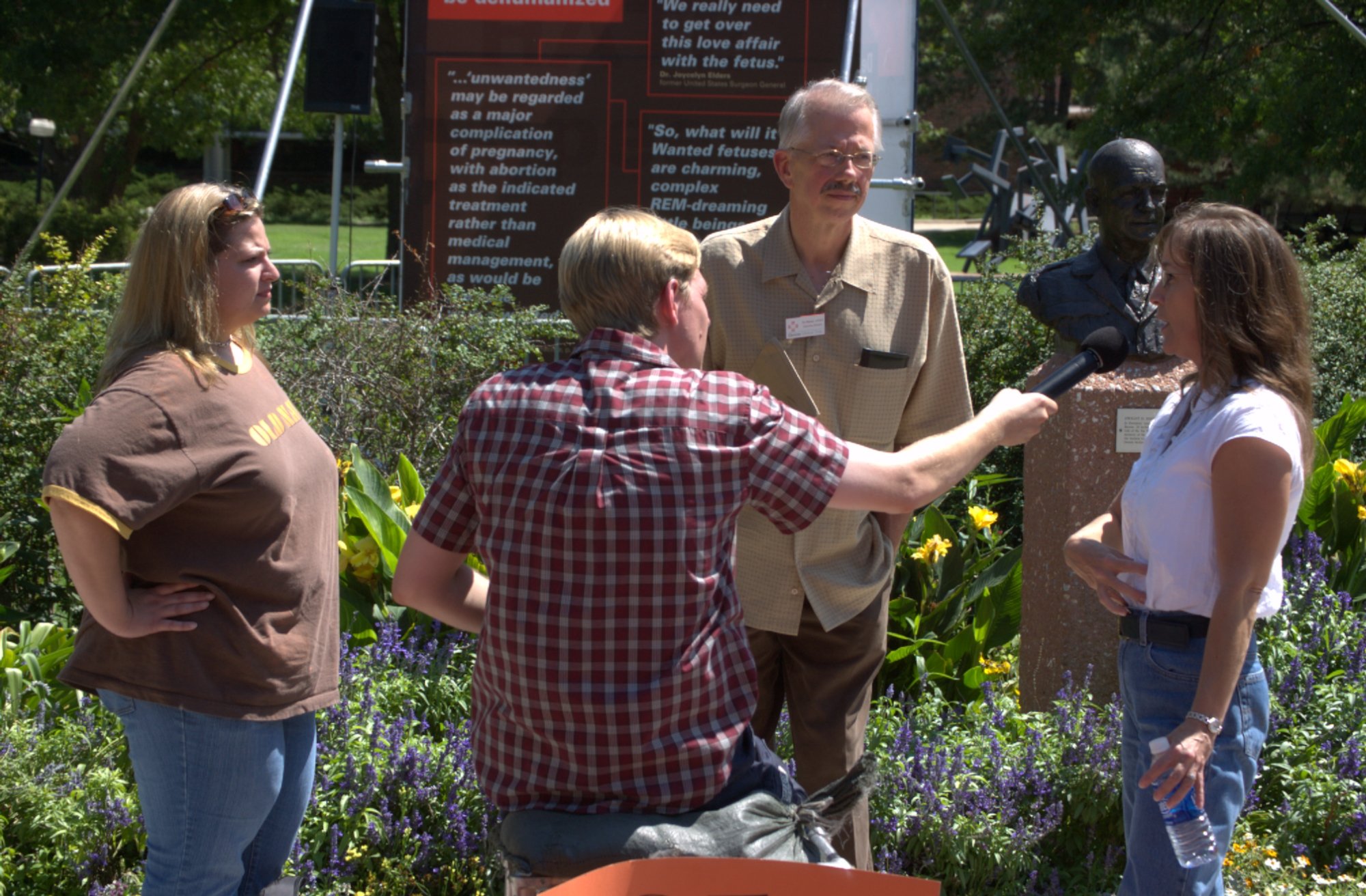
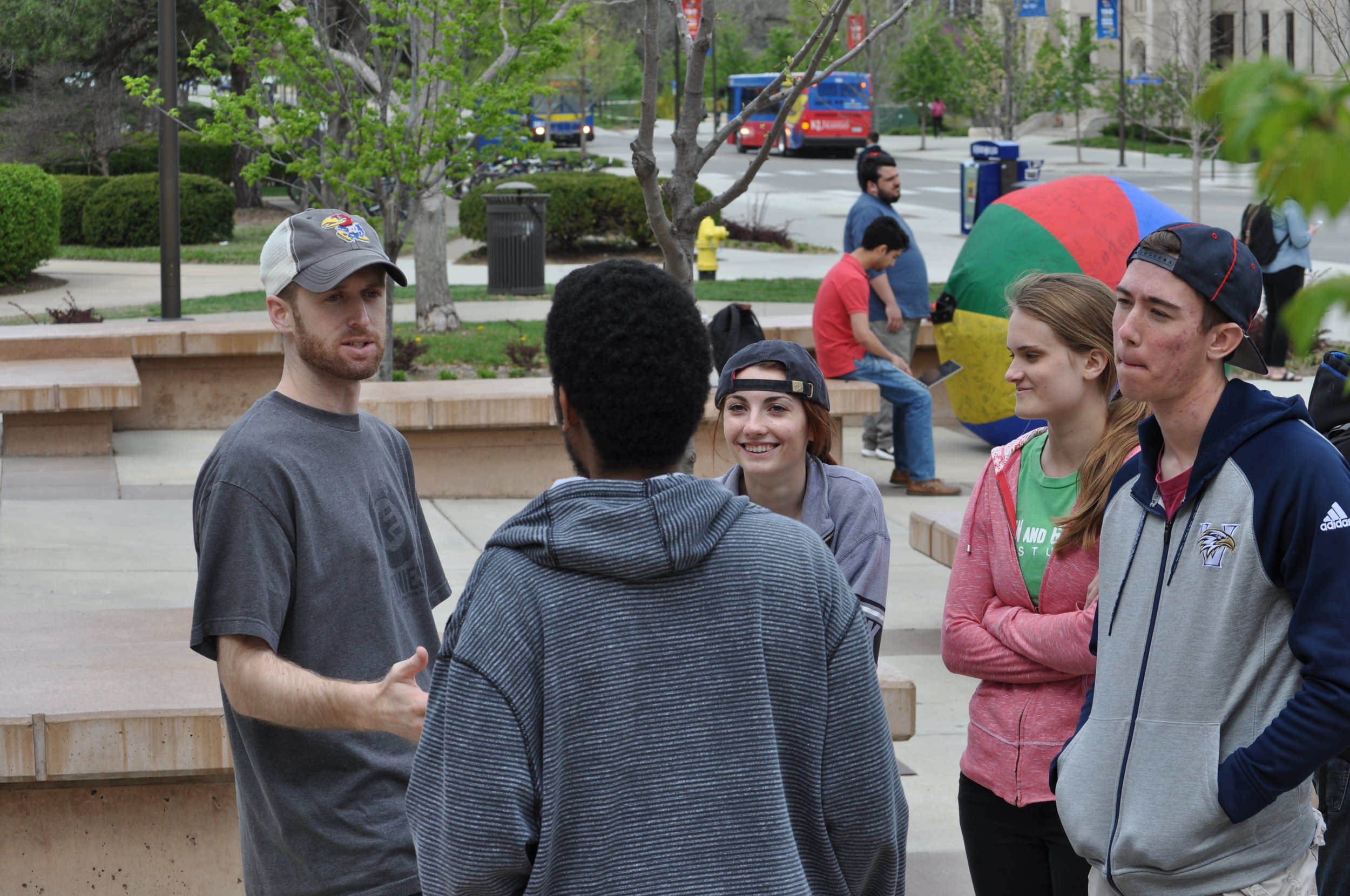
At University of New Mexico (UNM) in early March, a crowd formed as Steve (center right) engaged a heated skateboarder in dialogue.

I was in my element, though.  A crowd began to form, made up of JFA volunteers and UNM passersby.  Soon a shorter female student with bright pink hair stepped up and said she wanted a turn.  Evidently I was either a sounding board or a punching bag for each of these students to share their thoughts.  I carefully listened, and I worked hard to live out the tools we had been training our volunteers to exemplify: listening to understand, asking questions with an open heart, and finding common ground when possible.

Soon a student named Kayla confidently joined the conversation, and the large crowd continued to listen for awhile before our volunteers did what I had hoped they would do – turn to their neighbors and ask what they thought.  Kayla and I and a few others ended up in a smaller circle continuing to dialogue. 

That’s when a UNM student I’ll call Matthew joined our conversation.  Matthew was very intelligent, very conservative, and very confident.  If I remember correctly, he also said he was a Christian.  As I listened to the conversation between Kayla and Matthew, I became concerned.  When Kayla mentioned women who were raped, Matthew quickly pointed out that only 1.5% of abortions happen due to rape.  I don’t remember each of the next exchanges, but they all followed a familiar pattern: Kayla would share something about the plight of women, and Matthew would give an intellectual response to show how her point didn’t justify abortion. Kayla was getting more and more agitated, and her anger and annoyance were palpable. Matthew was unfazed.

A student named Maya had joined our circle and motioned that she wanted to tell me something. “I don’t think the way he’s doing this is very good. I think he should use a different approach.” Maya said this humbly, with a spirit of concern for Kayla and not an intent to criticize. Maya was serving as a volunteer on our mission outreach team, along with about 40 other students and faculty from the incredible Summit Ministries Gap Year program. (Cheryl Kaye Davis, who served on JFA’s training team from 2012-2016, helps direct this program and helped arrange our partnership.)
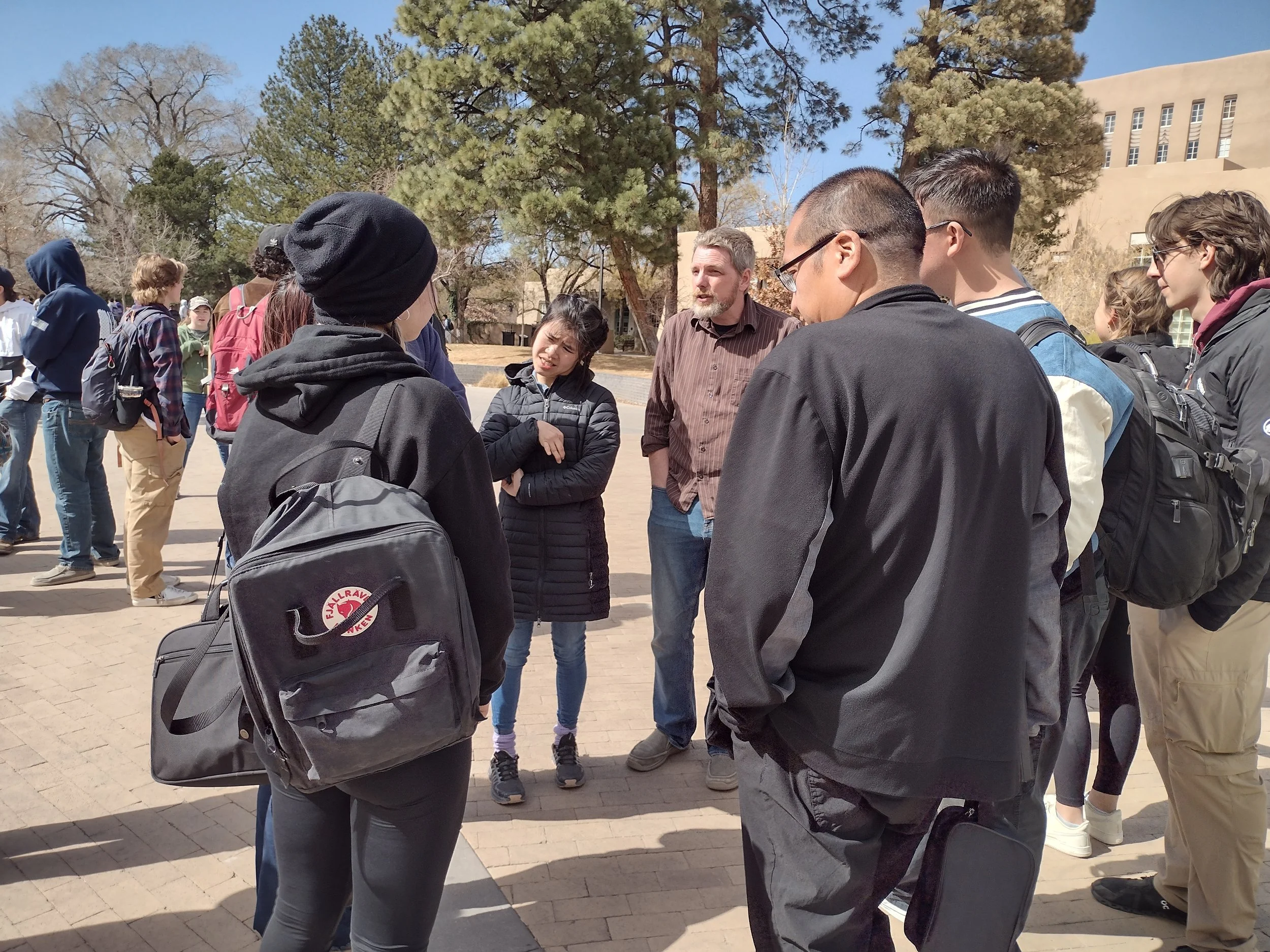
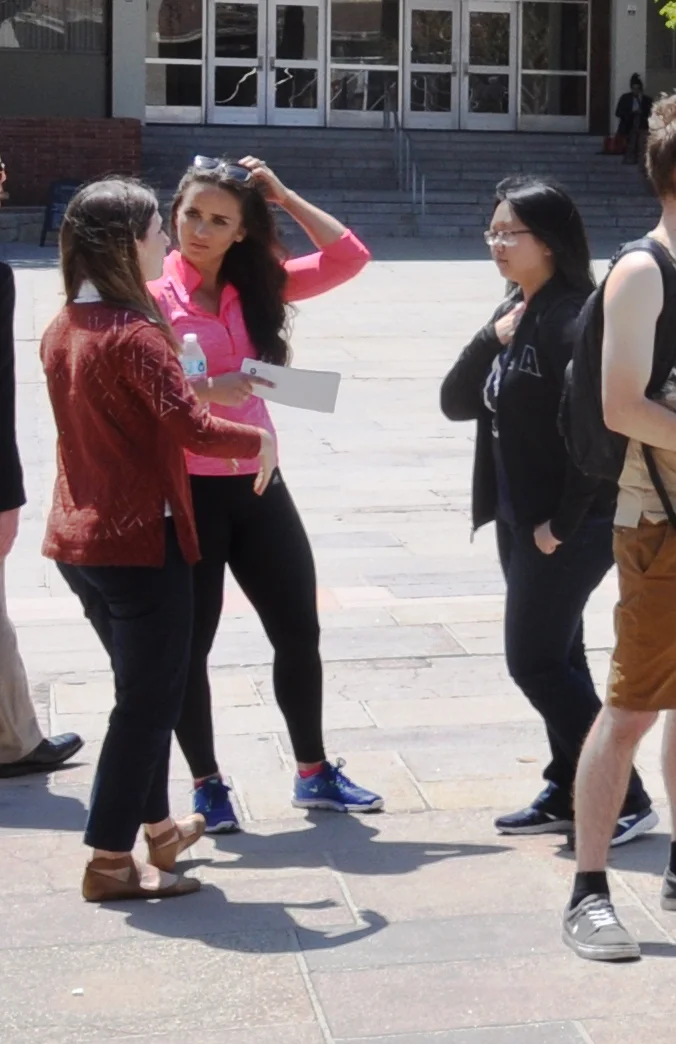
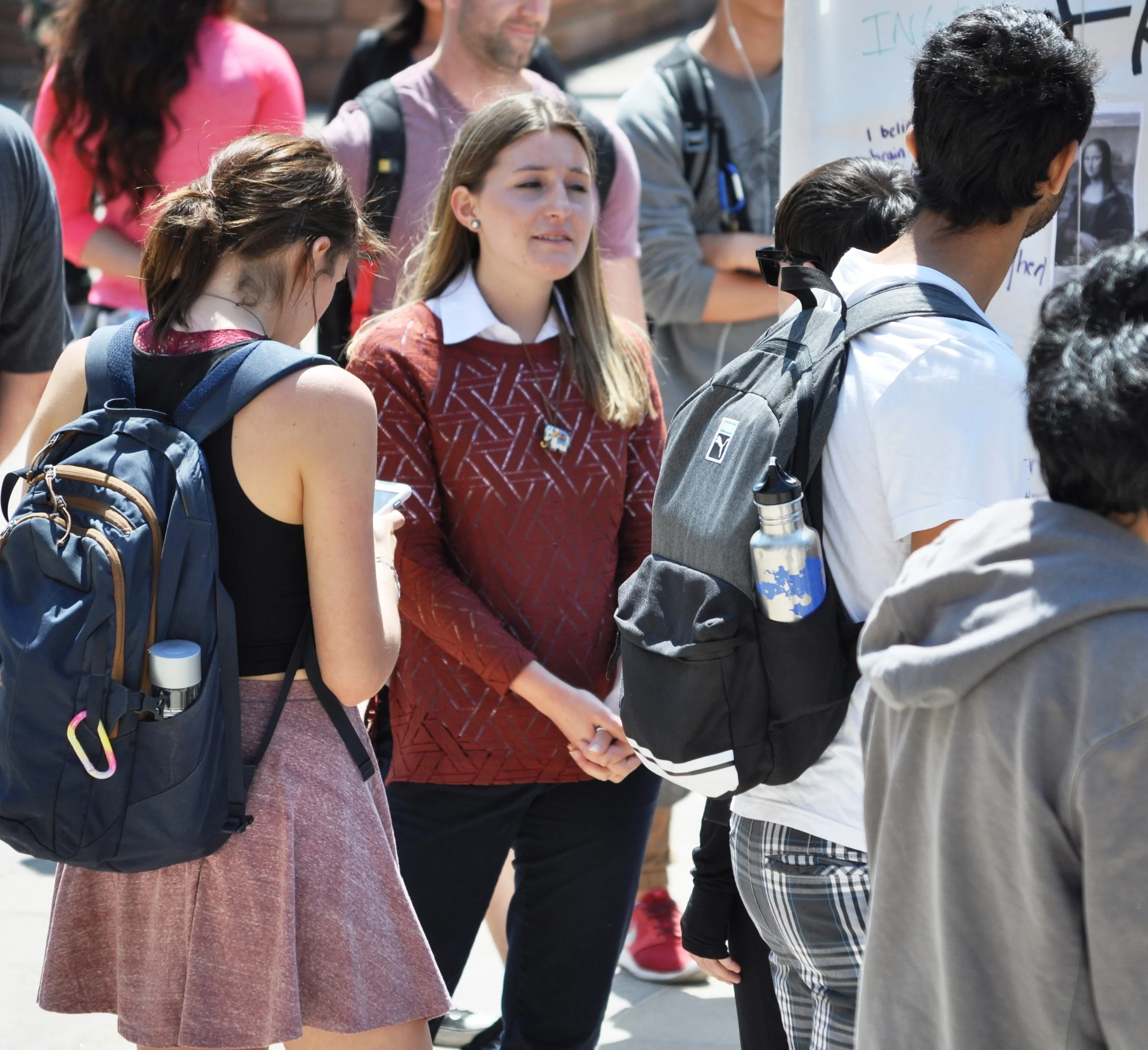
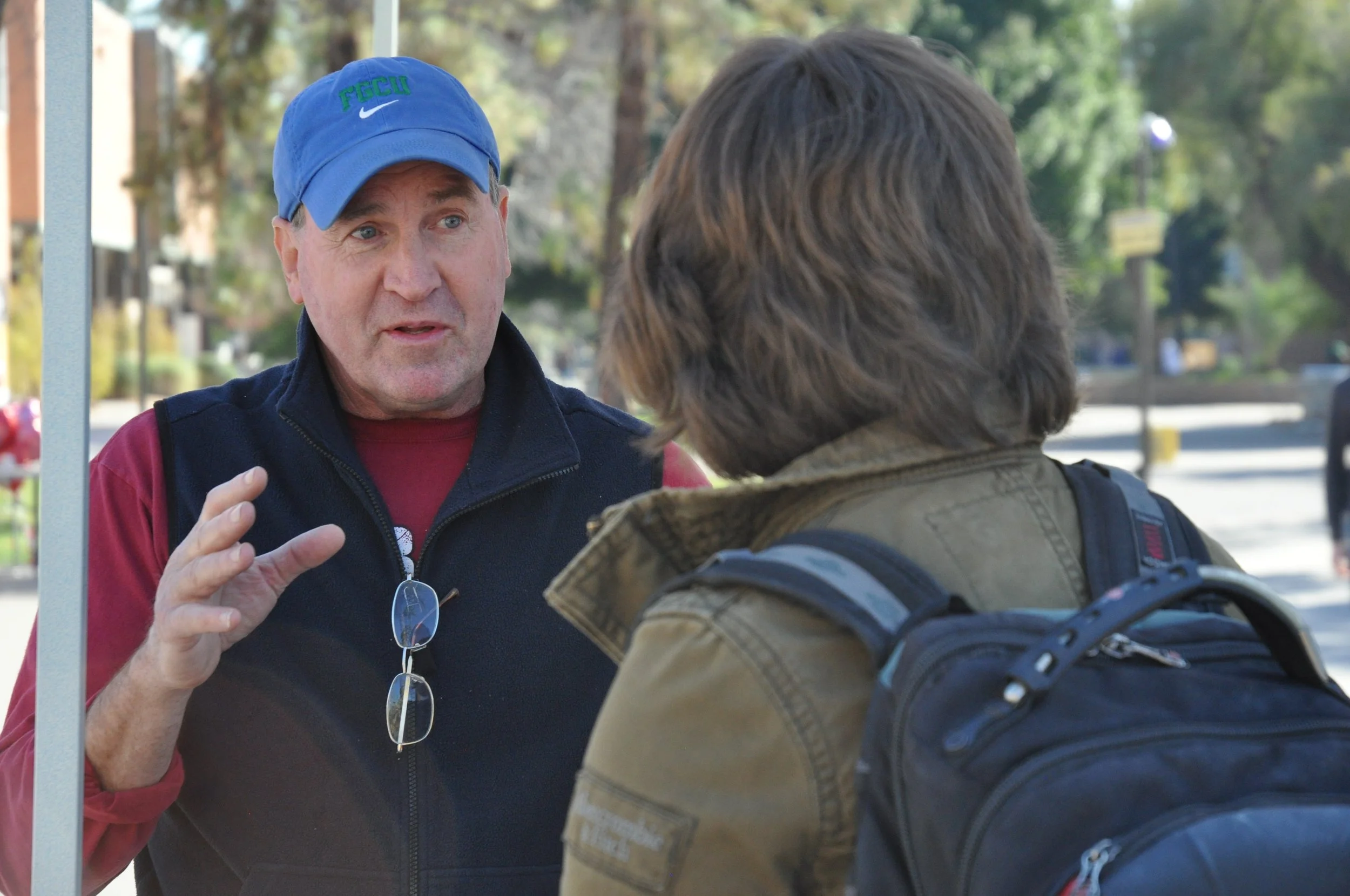
Maya (center left) and Steve (center right) talk to Kayla (hidden) and other students at UNM.

I knew Maya had had some difficulty creating conversation that day. Although she is incredibly sharp, Maya has a disability that means it takes her a little longer than most to get her words out, and she is also shy. What I said next was a gamble, given the high intensity of Kayla and other pro-choice people in the circle. They really seemed to be coming to the end of their patience. I trusted Maya, though, and even more importantly, I trusted that God would help her. I whispered, “I think you should say what you are thinking to Kayla. Would you like to?” Maya looked at me a little surprised, but I could tell she was also eager.

When there was a break in the back-and-forth debate responses from Matthew, I said, “Kayla, this is my friend Maya. She wanted to say something.” And Maya began. It took her awhile to get her first question out. Kayla listened intently, and I could tell she was rooting along with me for this young woman that many people would say was not going to be the best advocate because she speaks slowly and needs the listener to attend more carefully than usual. Maya asked a question that was right on point, but it was filled with understanding and calm kindness. She was being relational while also being intellectual. She was seeking to understand by asking for clarification. I only wish I could remember the exact words so I could replay them here for you. They were beautiful.

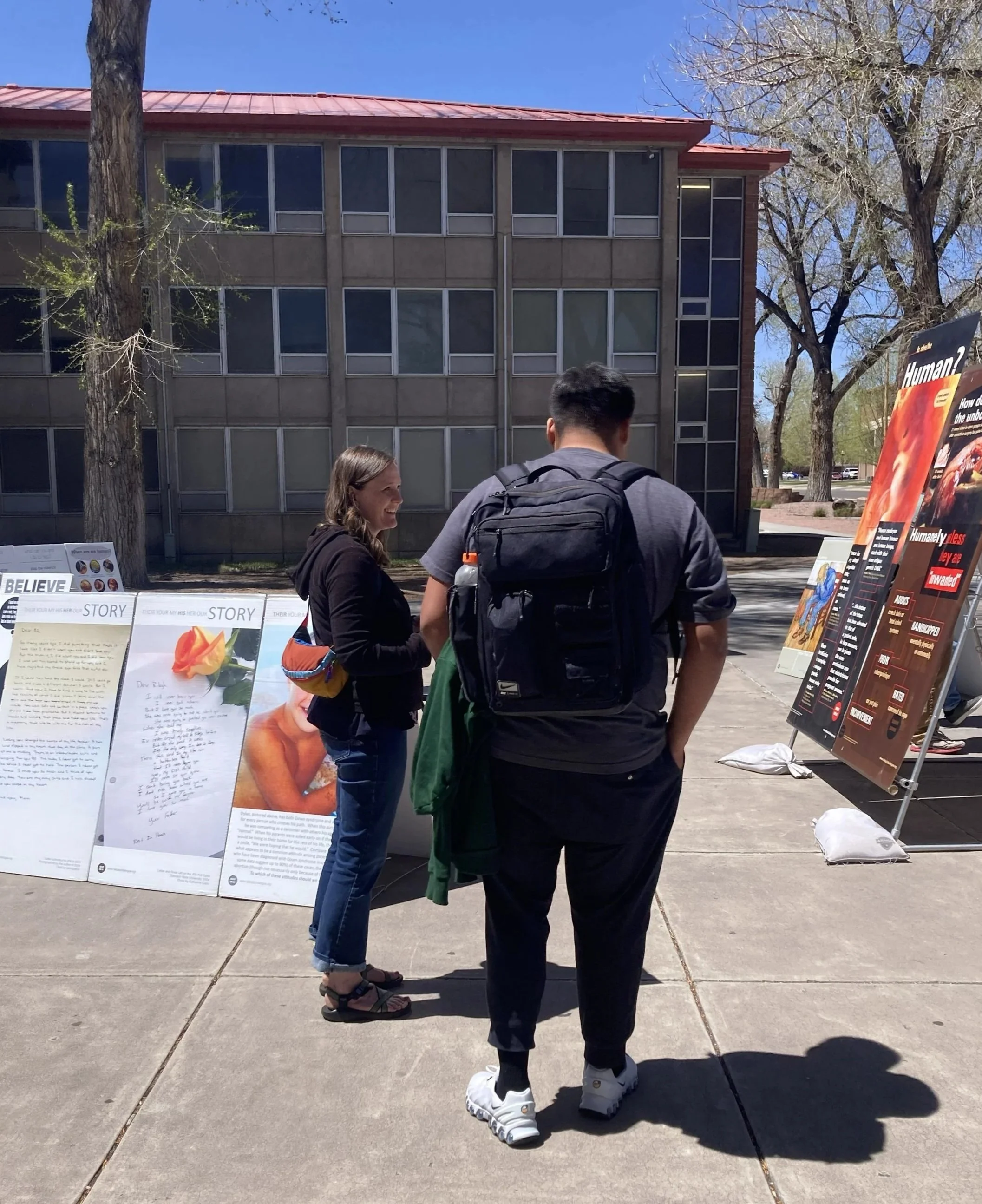
Maya (center left) and another Summit student named Luke (center right) conduct a survey at our UNM event. See below for more pictures from this and other recent events.

Kayla and Maya proceeded to interact for the next many minutes, and Maya accomplished what I had been unable to, and what Matthew seems not to have attempted: a personal connection with Kayla. Yet Maya did not accomplish this by setting aside the truth. She was beautifully weaving concern for the truth with concern for Kayla as a person, someone worth loving and challenging. I could tell Kayla was receiving Maya’s gift.

I felt privileged to watch our training bloom and flower in Maya’s life. As I reflected later, it struck me: Every Christian needs this training. There was only a small difference between Matthew and Maya. Both had zeal and concern for God and the truth and justice for small humans, but Maya had the additional benefit of Summit’s excellent faculty and curriculum along with JFA materials, interactive exercises, and mentoring. (To learn more about Summit, please see summit.org.)

Please consider giving a generous year-end gift to help our team as we work to bring this training to every Christian (jfaweb.org/donate), especially through partnerships with like-minded organizations like Summit. We are eager to help every Christian learn to use the simple skills that can transform their well-meaning debates into dialogue that changes hearts and saves lives, both the physical lives of the unborn and the spiritual lives of people like Kayla.

– Steve Wagner, for the JFA Team

Note: Please also read Maya’s beautiful reflection on this conversation below.

Partner with JFA to Train Every Christian to Change Hearts and Minds: Give a Year-End Gift Today

“No Excuses” - A JFA Volunteer Reflection by Maya

The UNM experience was unique for me because it wasn’t supposed to happen. I wasn’t there for the first part of the conversation with Kayla, and I probably wouldn’t have been there for the second half of it if it hadn’t been the Lord’s timing. Ironically, that particular day started off feeling like a failure. I remember being on campus wanting to start a conversation once the people were flooding in. Every time a person approached, I chickened out because I felt inadequate. I kept thinking oh, I should let my well-spoken friends speak to them because they would get it out more confidently.

Before JFA and Summit training, my thought process was that it was only the really strong conversationalists that can explain to people why the pro-life position matters. The JFA team loosened that idea for me but it was still ingrained into me. So I just listened to all the conversations because I still thought it was important to hear the other side. The crowd had died down to a couple of people around 11:30, so I ate lunch around that time.

Then a friend of mine (her name was Franziska) and I decided to go around the campus asking people questions about abortion. I let her do most of the speaking. My friend encouraged me to speak up, but, in the back of my mind, I had already decided that I wasn’t someone who needed to be heard. I hated that I hesitated, but the doubt was so heavy that I couldn’t push past it. Franziska and I did this for a while, and we weren’t making progress with many people, so we decided to go back to the display earlier than expected. On the way back I remember being really disappointed.

By the time we had walked back, all I could see was Mr. Wagner engulfed by a large crowd. Curious, I came up closer, and he was engaged in a conversation with Kayla. Then a man who was not with our group came into the conversation. The man was a Christian and a Republican. He and Kayla were getting into a heated discussion about rape and abortion. This man was incredibly intelligent, and I could see that this topic meant a lot to him. However I was paying more attention to Kayla. I was listening intently to hear what Kayla had to say and see where she was coming from. I could see she was breaking with every point she was trying to communicate to the guy because she was trying to make the guy see why it mattered to her. At that moment, I realized that she was just as scared as I was. All I felt was empathy for her.

At that moment I just drifted off to the side to think. Mr. Wagner was there, and I just said what I was thinking. “I don’t think his approach is very good. I think there should be a different approach.” Mr. Wagner’s next words shocked me. He asked me if I wanted to say what I was thinking to Kayla. Internally I was screaming, “No, no, no! Say no. I’m not the one you need.” Then out of the corner of my eye I saw Kayla, and I don't know why, but I automatically said, “Yes.” I fumbled through the conversation badly. But somehow I was able to get through to her. I think she could sense I was scared to death, and we were both rooting for each other. I listened to her, and she was listening to me. I thought it was a very fruitful conversation.

As I think back on the experience, it reminds me of the story of Moses. Moses gave all sorts of excuses and begged God to choose someone else. In the end, the excuses didn’t matter because we serve a mighty God who can handle our inadequacies. Philippians 4:13 says, “I can do all things through Christ which strengtheneth me.” It is only in God that I was able to say Yes in a situation where I would’ve said No.

– Maya, Summit Ministries Gap-Year Participant and JFA Volunteer

Get More Information about Summit Ministries
Invite the JFA Training Program
Printable Version

See More Recent Event Photos AND POSTS…
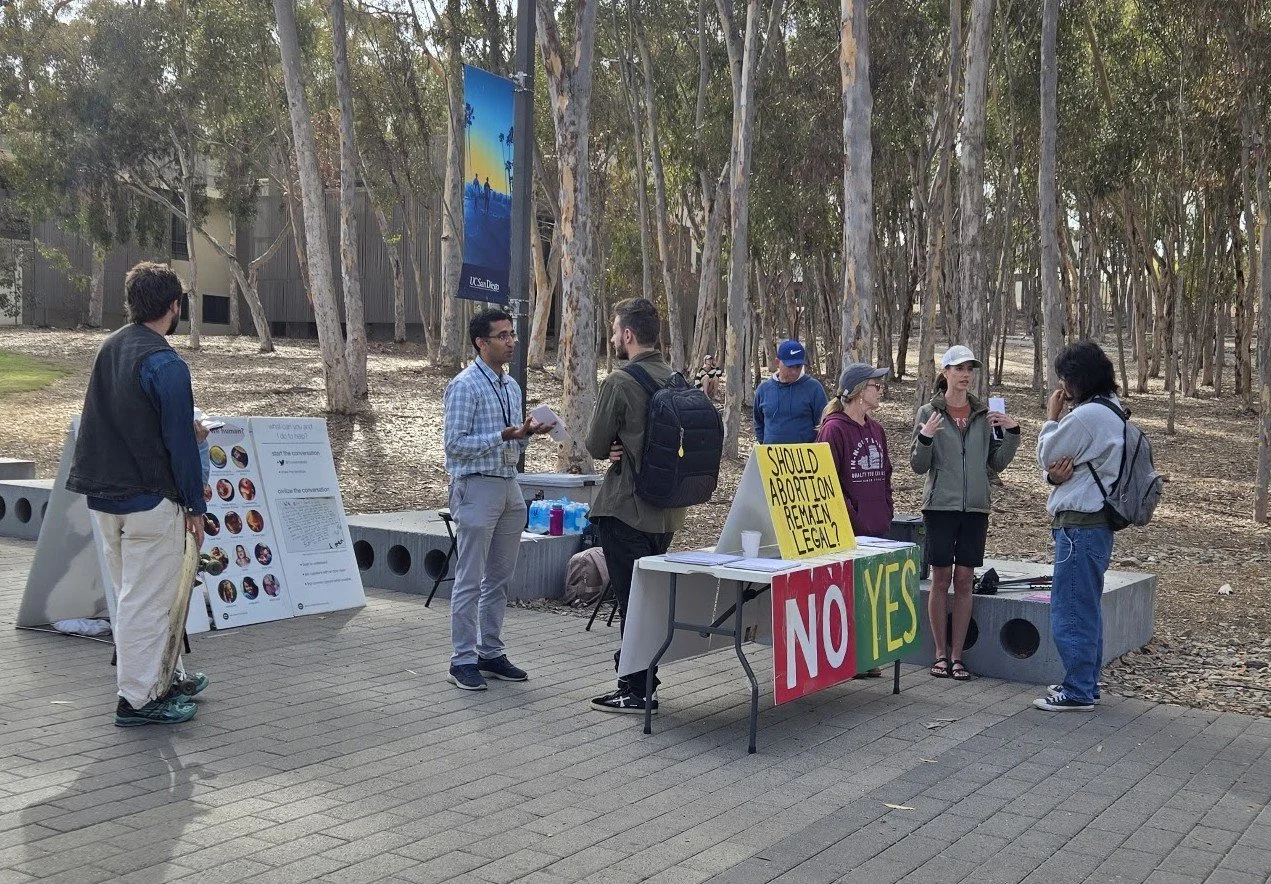
Putting a Face on Abortion

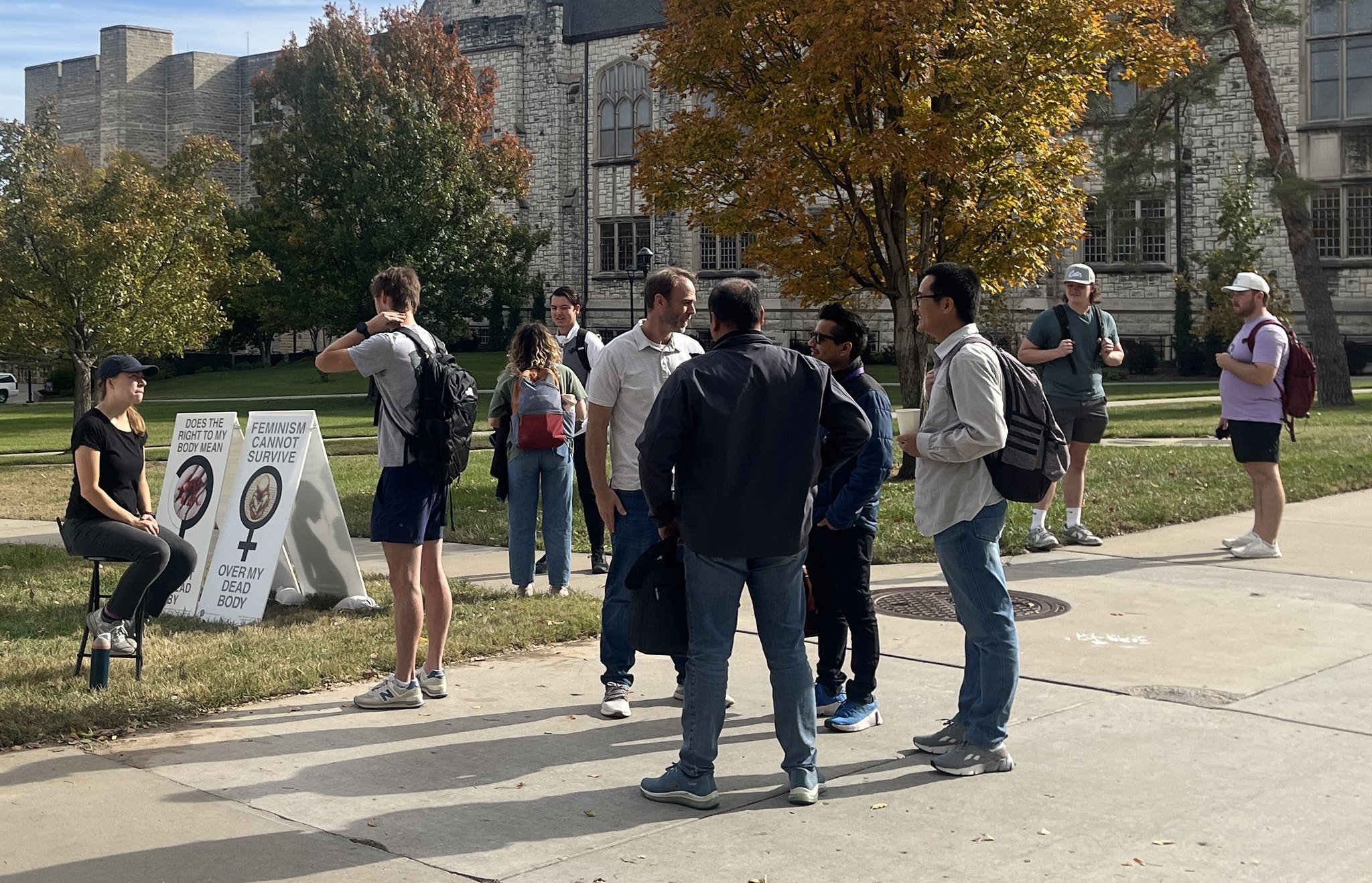
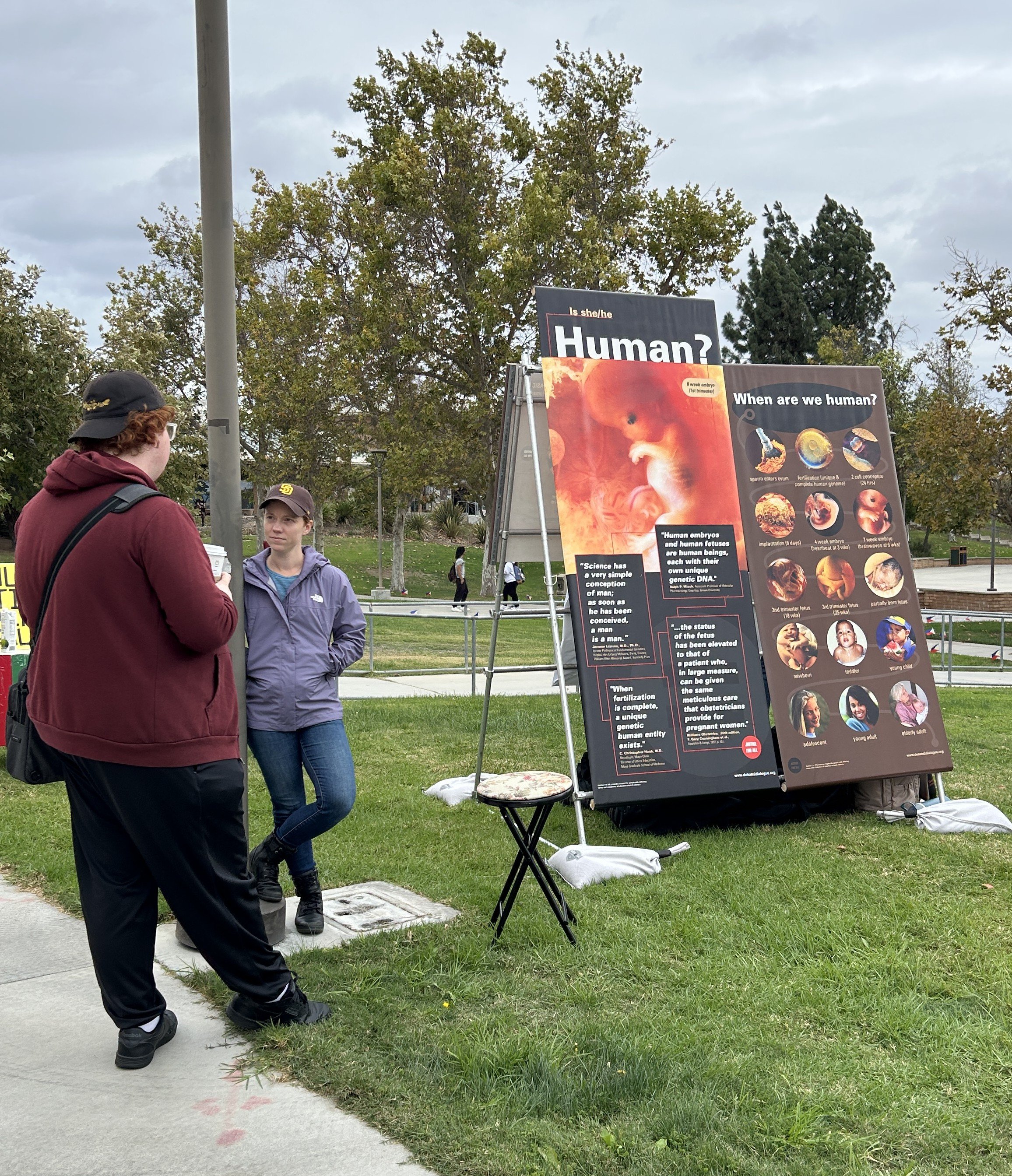
In a conversation with a student at Grossmont College, October 2025

Our culture claims that abortion is ‘healthcare’ and a "human right." Too many people don't really believe and understand that abortion kills a human being. But it does. It's harder to justify the injustice of abortion when you are looking at the body of a dead human being. I had a conversation with a student at Grossmont College in October who was not aware of what abortion really does to another human being. Here’s my recollection of the conversation:

Rebekah: What do you think about abortion?

Allie: I don’t really know what I think about the issue. I’m in the middle.

Rebekah: Okay. Do you think abortion kills a human being at a certain point?

Allie: At a certain point. Probably here. [pointing to the human fetus between 7-12 weeks]

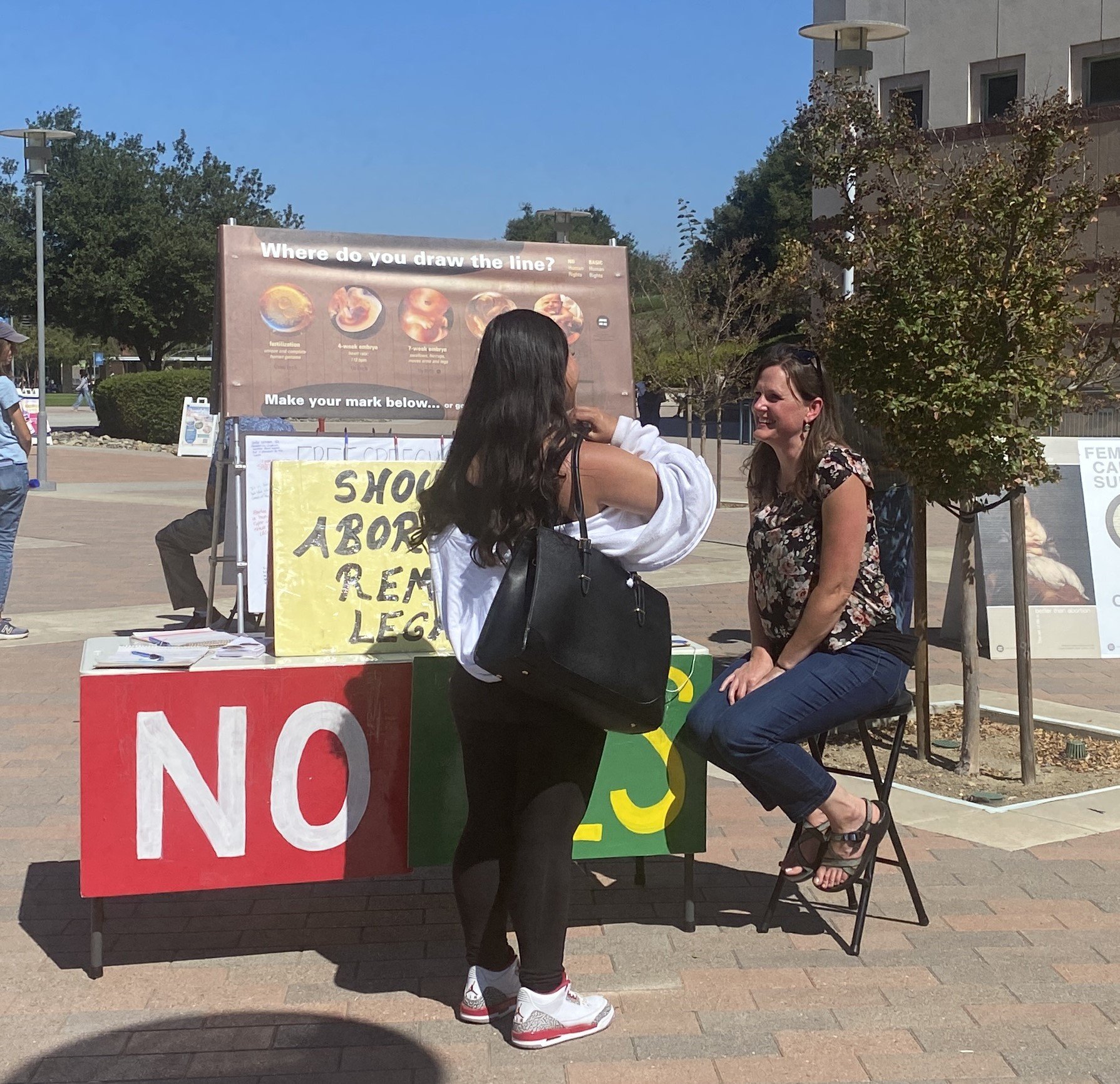
Colleen Smith (right) and me in a conversation at UCSD, October 2025

Rebekah: Okay. Is that because the human fetus at that point is more recognizable to us in that they have more distinct human features?

Allie: Yes.

We spent time discussing the biology, when human life begins, and what makes it wrong to kill human beings. Allie started verbally processing and told me she thought abortion should be legal because there are certain situations where a woman might not be prepared to have a child and can’t care for him, especially if she was assaulted. As she was saying this, she went on and said that even as the words were coming out of her mouth, she understood this wasn’t a good argument for abortion. She shared with me that there was someone very close to her who was raped and got pregnant, and this person continued the pregnancy and placed the child for adoption. I asked her how this person was doing now and expressed how sorry I was that she went through that.

As we continued discussing, I asked her:

Rebekah: Have you ever seen graphic images of abortion before?

Allie: No.

Rebekah: Would you be open to seeing them?

Allie: Sure.

We walked over to the image, and before I pulled back the paper covering the graphic photo, I said:

Rebekah: I understand why some people want to be in the middle on this issue as you brought up earlier. When you take a side on a controversial subject like this, that can be difficult. Before I show you this image, I want to ask you if you ever think it’s okay to do this to someone’s else’s body because of a difficult circumstance someone else is experiencing?" [I uncovered the graphic image of an 11-12 week aborted human fetus.]

Allie: [She paused as she looked at the image] I had no idea that’s what [abortion] looked like. I thought it was more like cells that get absorbed back into the woman’s body.

Rebekah: How do these images impact your view on abortion?

Allie: I think it’s a gray issue.

Rebekah: I think there can be a lot of issues that are gray. How can it be a gray area to mutilate and destroy someone’s body like this though? [pointing to the graphic image]

Allie said she didn’t know. I asked her if she wanted to continue the conversation or if she needed time to process on her own. Allie told me she needed time to think, so I politely ended the conversation.

While earlier abortions might not look as grisly as the image I showed Allie, all abortions, regardless of when they happen in pregnancy, end the life of another image bearer of God. Our culture tries to put a sanitized “face on abortion” and act like it’s just a simple medical procedure. I think it’s important we counter those lies by putting the real “face on abortion” by using graphic images in some contexts and presenting arguments in defense of the most vulnerable among us.


*To view the image I used in this conversation, go to jfaweb.org/brochure. To receive training on how to use graphic abortion images in conversations, take our online Love3 Workshops in December:

December 1, 8, & 15: Monday Evening Sessions (3 Weeks) 5-730PM (PT).

With JFA’s Love3 Workshops, you can learn to create conversations in which you love the woman, the child, and the person who disagrees with you equally at every moment of every conversation. Register at jfaweb.org/register.

Joseph Changes His Mind

Impact Report, January 2025

By Andrea Thenhaus

Over the past few months I’ve reminded you that just getting people to “stop and think” is a big part of what’s needed in order to initiate cultural change. (See this Oct. 2024 post and this Nov. 2024 post.) The moments people spend with our trainers and volunteers during campus outreach can be transformative. In this Impact Report, JFA trainer Andrea Thenhaus gives an example from a recent outreach event in California. (This post updates the original post from Nov. 20, 2024) Many of you responded to our appeals for year-end funding during the past two months. Thank you! It’s a privilege to partner with you to train followers of Christ to change hearts and minds on abortion. - Steve Wagner, Executive Director

Our team had the opportunity to engage with students on the issue of abortion at California State University San Marcos (CSUSM) and MiraCosta College in California in October 2024. At CSUSM, we were getting ready to take down for the day when two international students walked up to our poll table, and I engaged them in conversation. I will refer to the student who did most of the talking as “Joseph”.

Andrea: Do you think abortion should be legal for all nine months of pregnancy or only for a certain window of time?

Joseph: Oh, I don’t think it should be legal for all nine months.

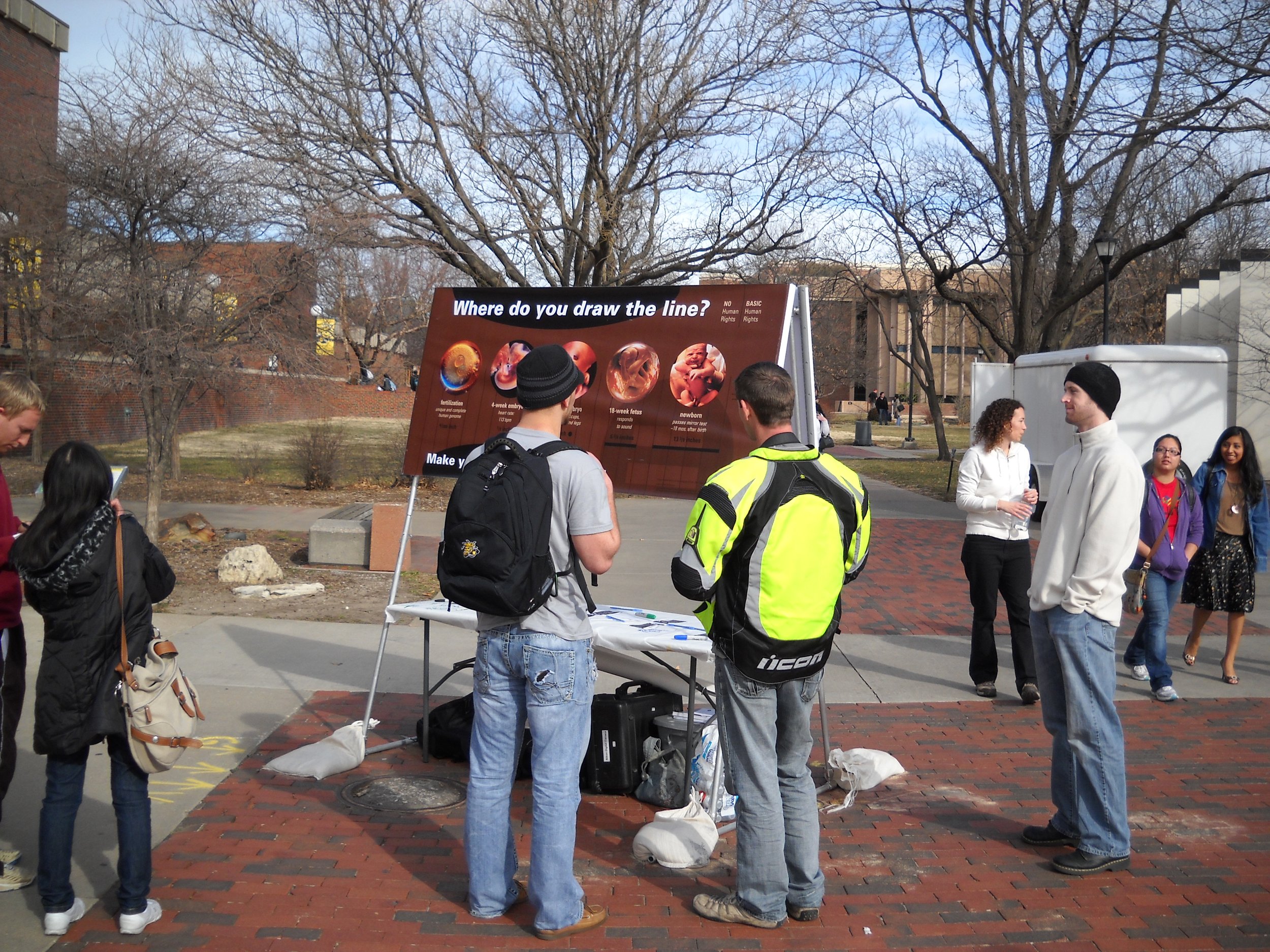
Andrea: Ok. I have our brochure here with images of the unborn at different stages of development (shown right). Where would you draw the line?

Joseph: I think abortion should be legal until the first trimester.

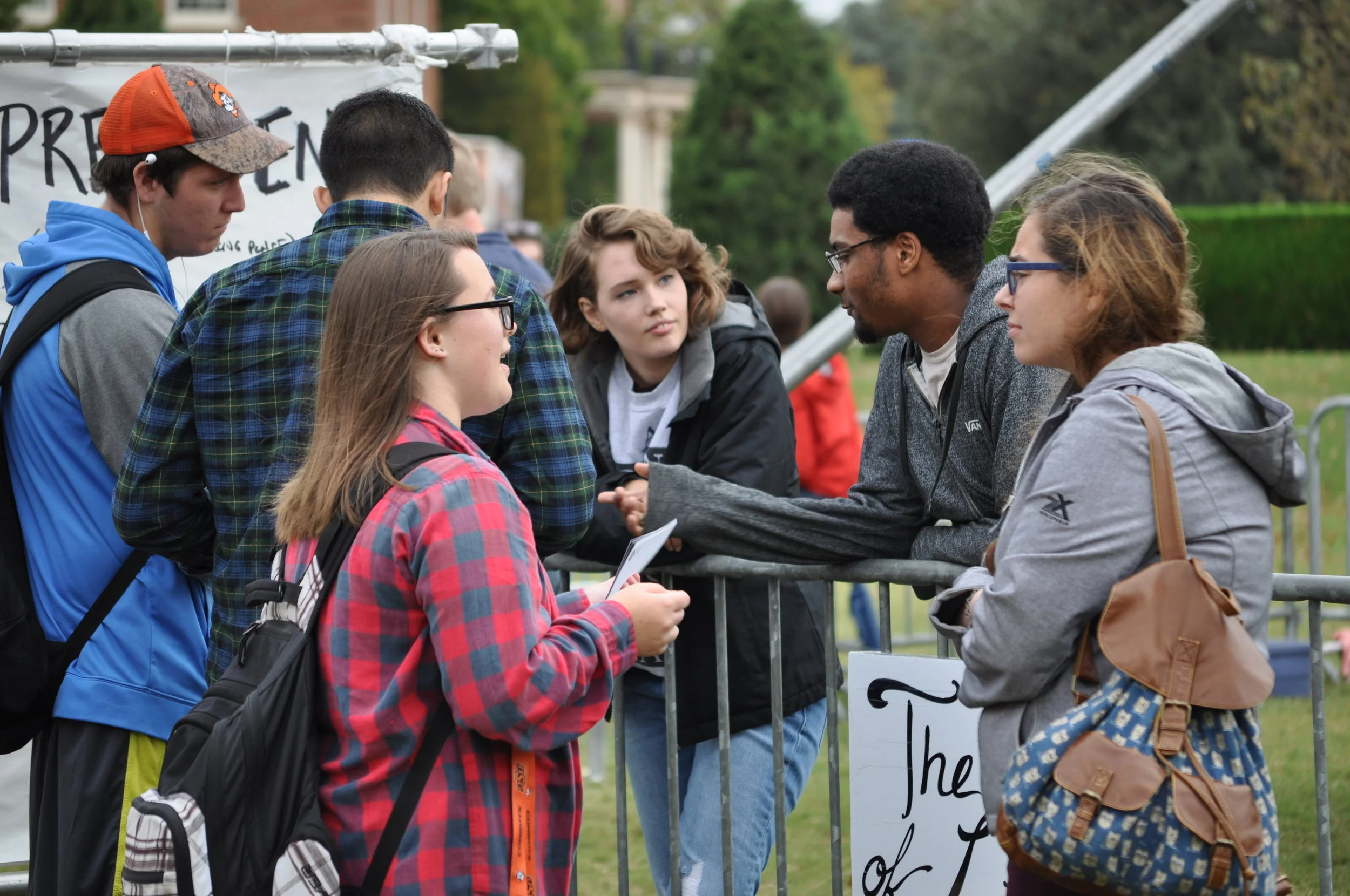
Andrea (center in hat) interacts with a student at the JFA outreach event at CSUSM in October 2024.

Above, Jon, Alora, and Andrea interact with students at JFA’s MiraCosta Outreach in October.

After talking through the legality and the circumstances under which these students thought abortion should be legal, I asked them when they thought life begins biologically speaking.

Joseph: I am not sure. I am not a physician so it’s hard to say.

Andrea: No problem. Obviously I’m not a doctor either, but do you mind if I share with you my understanding of the basic biology?

Joseph: Yes, totally.

Andrea shared pages 4-5 of our brochure with Joseph. Get your own copy at jfaweb.org/brochure.

Andrea: If the unborn is growing, would you agree it is alive?

Joseph: Yes, I would agree with that.

Andrea: If the unborn has human parents, would you agree it is human?

Joseph: Yes.

Andrea: Right. Living things reproduce after their own kind. Dogs produce dogs and cats produce cats, so it would make sense to say that humans produce human offspring. At conception, the unborn has a complete set of DNA. It just needs time to grow and develop. Are you familiar with Polaroid cameras?

Joseph: Yes.

Andrea: The development of the unborn is similar to a polaroid photo. After I take a picture, it takes time for the film to develop. However, as soon as I take a picture, that image has been captured. I just need to wait for it to develop in order to see it. From conception the unborn is a whole, living human organism. The unborn just needs time to grow and develop [for you to be able to see it]. Does that make sense? What are your thoughts on that?

Joseph: Wow. Honestly that makes so much sense, and this is making me change my mind on abortion.

Our conversation continued, and we talked about the realities of abortion. The students agreed that the process of abortion is horrible.

Outreach at Wayne State College, September 2024

Before Joseph and his friend left, I thanked them for taking the time to have a conversation. They thanked me and expressed again how our conversation had changed their minds. They now understand that the unborn is a living human being and that abortion is taking a life.

It was amazing to see God at work in these students’ lives. Students often do not think the unborn is a human being. Once they understand what science teaches about the beginning of human life, some students are more likely to realize the tragedy of abortion. I am thankful that Joseph and his friend were willing to have a conversation and that they were open to the truth.

The development of the unborn is similar to a Polaroid photo...As soon as I take a picture, that image has been captured…
From conception the unborn is a whole, living human organism. The unborn just needs time to grow and develop [for you to be able to see it].
Printable Version
Encourage Your Friends to Get Equipped with JFA's Stories and Resources

New Team Members and New Cities

(1) Kristine (right) talks to a student at Cal State San Marcos at JFA's outreach event in Oct. 2023

(2) Alora (center) interacts with a student at Wayne State College earlier this week (during the first week of her internship!).

Rejoice with us!

Kristine Hunerwadel (1) just joined our team as a trainer working from Denver, Colorado. Alora Tunstill (2) just began a fall internship, based in Northwest Arkansas. JFA trainer Kristina Massa (3) recently relocated to Kansas City. Kristine, Alora, and Kristina will help greatly expand JFA’s training efforts in these areas. Denver and Kansas City are established metro areas, and Northwest Arkansas is the 13th most rapidly growing metro area in the country.

(3) Kristina (center) at University of Nebraska at Kearney in May 2024.

We’re excited about these new team members and new cities, but we’re also excited about the ongoing local efforts of our trainers in other regions (see Metro Area list below). Look for us to do more in all of these areas in the coming year. Look for us also to continue our work in regions where we have dedicated volunteers and church connections even if we don’t have full-time trainers based there...yet (Arizona, Minnesota, Oklahoma, and others).

Our team is working across the country to train Christians through workshops and outreach events to change hearts and minds. Please pray that God will use these efforts to save unborn children and their parents from abortion. Would you give a special gift this month or commit to become a monthly partner to support the excellent work of these trainers?

  Steve Wagner, Executive Director

Help JFA Change Hearts and Minds in These Cities and BeyonD!
Printable Version

10 Metro Areas Where JFA Trainers Live

3,200,000 CA San Diego Rebekah

3,000,000 CO Denver Kristine

2,400,000 TX Austin Jeremy

8,100,000 TX Dallas Jon

590,000 AR Fayetteville Andrea, Alora

653,000 KS Wichita Paul, Tammy, Susanna

2,200,000 MO Kansas City Kristina

344,000 NE Lincoln Mary, Rebecca

2,100,000 OH Cleveland Kaitlyn

6,300,000 DC Washington Steve

(Population Numbers Refer to Metropolitan Statistical Area, per Wikipedia)


Upcoming Outreach Events

8/26-28 Wayne State College (Wayne, NE)

9/9-10 Colorado State Univ. (Fort Collins)

9/11 Univ. of Northern Colorado (Greeley)

9/30-10/1 Minnesota TBD

10/8-9 Mira Costa College (Oceanside, CA)

10/28-29 Univ. of Central Oklahoma (Edmond)

11/18-20 UTSA (San Antonio)

11/18-20 Johnson County CC (Kansas City Area)

See JFA’s Newly Redesigned Calendar Page for More Events, All Event Details, and to Register.

JFA Event Calendar

What God Can Do Through Every Human Being

What God Can Do Through Every Human Being

This month we report on a different kind of impact that God has created through JFA, specifically through the work of our office manager, Eva Heath. This is the story of the impact God produces through human beings many have written off because of their circumstances or disabilities. It’s also the story of one woman’s testimony that even if we can’t see the good that God is bringing from difficulties right now, we must hope in Him, loving every human being precisely because each person is made in the image of God. We bid a fond farewell to you this month, Eva, and we trust God will care for you in the new chapter of your retirement!

Thinking about the Unborn Child for the First Time

Stacey walked up to our outreach signs looking curious. We were standing on a busy walkway at Palomar College (CA) in December. I asked a few questions about her thoughts on abortion, and she clarified that she thought abortion should be legal until birth. Here’s my recollection of the rest of the conversation:

Steve: Do you believe abortion should be legal because you believe a woman has a right to her body?

Stacey: Yes. A woman’s right to her body is really important to me.

Steve: I agree that a woman has a right to her body, generally speaking, and I agree that’s really important. Women’s bodily rights have been trampled on and continue to be trampled on throughout the world with practices like slavery, rape, and domestic violence. I think those things are horrific and wrong.

Palomar College Outreach in December 2022: Steve (center, black shirt) and other JFA staff members interact with students.

Stacey: I agree.

Steve: Do you agree with me that a woman’s bodily rights are not simply created or determined by the state? Instead, they’re fundamental. They’re like other human rights. If the state didn’t protect those rights, the state would be wrong.

Stacey: Yes, that’s true.

Pages 4-5 of JFA’s Invitation to Dialogue Brochure.

Steve: I have some pictures over here that might be helpful to our conversation. [I showed her the signs that show pages four and five of the Invitation to Dialogue Brochure.] Look at this young woman pictured here. Can we agree that she has bodily rights that the state should respect?

Stacey: I agree with that.

JFA’s setup at the National Mall on April 26-27 included the signs Steve referred to in his conversation with Stacey.

Steve: Now, what about this toddler? I assume we would agree he shouldn’t be killed. Can we agree he has bodily rights that are fundamental?

Stacey: Yes.

Steve: So the woman and the toddler have the same bodily rights. And those rights are fundamental, so the situation would have to reach a really high bar to justify limiting something so important as a person’s bodily rights. Perhaps the only legitimate way the state could limit those rights is if these people were using their bodies to take away someone else’s bodily rights.

Stacey: That’s a good point.

Steve: Does it make sense to you that if their rights are fundamental, they had them from the moment they began to exist? When did this toddler begin to exist?

Stacey: That makes sense, but I guess I’m not sure. What do you think?

Steve: Well, from fertilization [pointing at image on sign], when the sperm and the egg came together, both ceased to exist, and a new organism came into existence. All that’s been added from then until the toddler stage is food. If we have something as important as fundamental human rights now, I don’t think we could gain those rights by eating. So, I think the woman and the toddler began to exist at fertilization, and that’s also when they gained their fundamental right to their bodies. But that would mean that the embryo has a fundamental right to his body just like the toddler and the woman.

Our conversation continued for ten minutes or so. (Indeed, Stacey contributed much more detailed responses than what my memory has allowed me to include here.) We discussed how the embryo is very different from us (in looks and functions) but is also the same kind of being that we are—a being with the same human nature we have. If this is true, the woman’s fundamental right to her body would not include the right to abortion, because then abortion would be killing a human being with the same bodily rights.

As Stacey got ready to move on from the conversation, she eagerly accepted a copy of the Invitation to Dialogue Brochure that included the same pictures we had been discussing. What she said in parting really surprised me:

Stacey: I never thought about the fetus as a separate person—that it has its own rights we would be taking away. I’ll have to think about that!

At the beginning of this conversation, Stacey sounded completely pro-choice, and frankly, I think I suspected she wouldn’t have much interest in an alternative opinion. She showed the exact opposite throughout our conversation. It’s a lesson I’ve learned again and again: Don’t make assumptions from appearances.

As I found common ground with Stacey repeatedly about bodily rights, showing relational sensitivity to the emotionally heavy topic of what a woman can do with her body, I think she became open to my perspective about the unborn child. That’s the sequence we teach any chance we can: Be relational…then be intellectual. That approach helped Stacey to consider the possibility there was a whole other person involved in the abortion question, and she showed genuine interest in thinking further about that.


Jan. 2025 Update: Note that this letter is the second of a series of three letters Steve wrote from February 2023 until March 2024 - letters focused on conversations skills we teach volunteers that help them get started having conversations and encourage them to stay active. Here are links to the series, including this letter, so you can see how it fits in the flow of thought:

  1. “Be a Playmaker” (Feb. 2023): on the importance of setting the right expectations for results and seeing your advocacy as one piece of a bigger puzzle

  2. “Thinking about the Unborn Child for the First Time” (this letter, May 2023): on being relational then intellectual

  3. “Only Two Questions?” (March 2024): on the two clarification questions that can help you make an impact in any conversation

Printable Version
Read “It’s Her Body” for More on Bodily Rights

See the Letters in this Series

Growing Up with Justice For All

Printable Version (Including resource bulletin)

One of the most critical parts of our work is training Christians to have conversations about abortion so that they can change people’s hearts and minds. It is always great to see this process working in the real world. I saw it recently at a seminar I gave in Phoenix when one of the participants, Rylei, told me her story.

This is Rylei after a conversation at her first outreach event at Colorado State University in 2017.

We initially trained Rylei as a junior in high school at Faith Christian Academy in 2017. Often when we train Christian students, they tell us that they don’t know who to talk to because all of their friends are pro-life. One of her high school classmates commented, “Because of our culture, I rarely even considered abortion and its morality. This [experience with JFA] really helped show what it is and the impact it really has in America.”

The value of our training, however, lasts throughout these students’ lives. In Rylei’s case, she is now a student at Arizona State University with two pro-choice roommates.

I asked her how her JFA training helped her talk to her pro-choice friends about abortion.

Most of my pro-choice friends haven’t thought through their position very much. I was writing a paper for my class on the pro-life position, using the same arguments you guys gave me. While writing the paper, one of my roommates saw me watching a video of a pro-life person having a conversation with a pro-choice person, and said, “Wow, he is really destroying her pro-choice arguments.” So she’s hearing the arguments as I’m researching my paper. So I find ways to naturally bring up the topic of abortion with them.

Rylei also has a passion for doing outreach at her campus. That passion was born from the outreach she did with us in high school. I am always thinking of how difficult it must be for a high school student like Rylei, who was 16 her first time doing outreach, to engage college students on a difficult topic like abortion.

Rylei’s first exposure to Justice For All was during our seminar at her high school in 2017. Here JFA trainer CK Wisner (center, curly hair) leads her mentor group in interactive exercises and discussion as Rylei (facing CK) listens.

That is what makes outreach such an important part of our training program. Once someone overcomes the initial fear of talking about abortion, this newfound confidence can even last a lifetime. One of her classmates at that first outreach experience said, “Outreach taught me that getting uncomfortable is a really good thing. When God is with you, you don’t have to fear.”

I asked Rylei about her outreach experiences during high school.

I love it. Every time. It is so rewarding, honestly. I know the first time I was super nervous, [and] I got thrown right into a conversation. But after you get through the first conversation I feel like it gets a lot easier.

During her senior year in high school in 2018, Rylei joined us for outreach again, this time at Metro State University in Denver.

Rylei is a living example of our training program in action. Rylei left high school with good arguments for the pro-life position, good skills for conversations about them, and courage to actually have conversations about abortion with those who disagree with her position. She was totally equipped for dealing with her pro-choice roommates and reaching her largely pro-choice campus.

Because of your support of Justice For All, we were able to be there to help Rylei each step of the way. She attended a JFA seminar and then an outreach event at CSU in 2017. She participated again in 2018 at Metro State University. And just last week because of a JFA seminar event, we had the privilege of encouraging her to become active at Arizona State University, where she is now a student. Thank you for partnering with us as we serve students like Rylei, so that they can become effective advocates of their pro-life position to their future pro-choice friends—many of whom will face an unplanned pregnancy in their future.

Find practical next steps in JFA's monthly resource bulletin

"My Mom Wanted to Abort Me."

Featured Resource for October 2018
By Jeremy Gorr, JFA Training Specialist

Printable Version

Sometimes it’s not a logical argument that makes people open their minds about abortion, but a story. In the case of Amin, a student I met this fall at Kennesaw State University, that story came from the person standing right next to him.

When we started talking, Amin was quite rude. He kept interrupting me. When some others joined the conversation, he started interrupting them. In fact, when someone asked him to stop interrupting, Amin cursed at him, and I thought he was close to starting a fist fight. Amin wouldn’t listen to what anybody had to say.

Still, I was trying to connect with him, explaining why our conversation was so important.

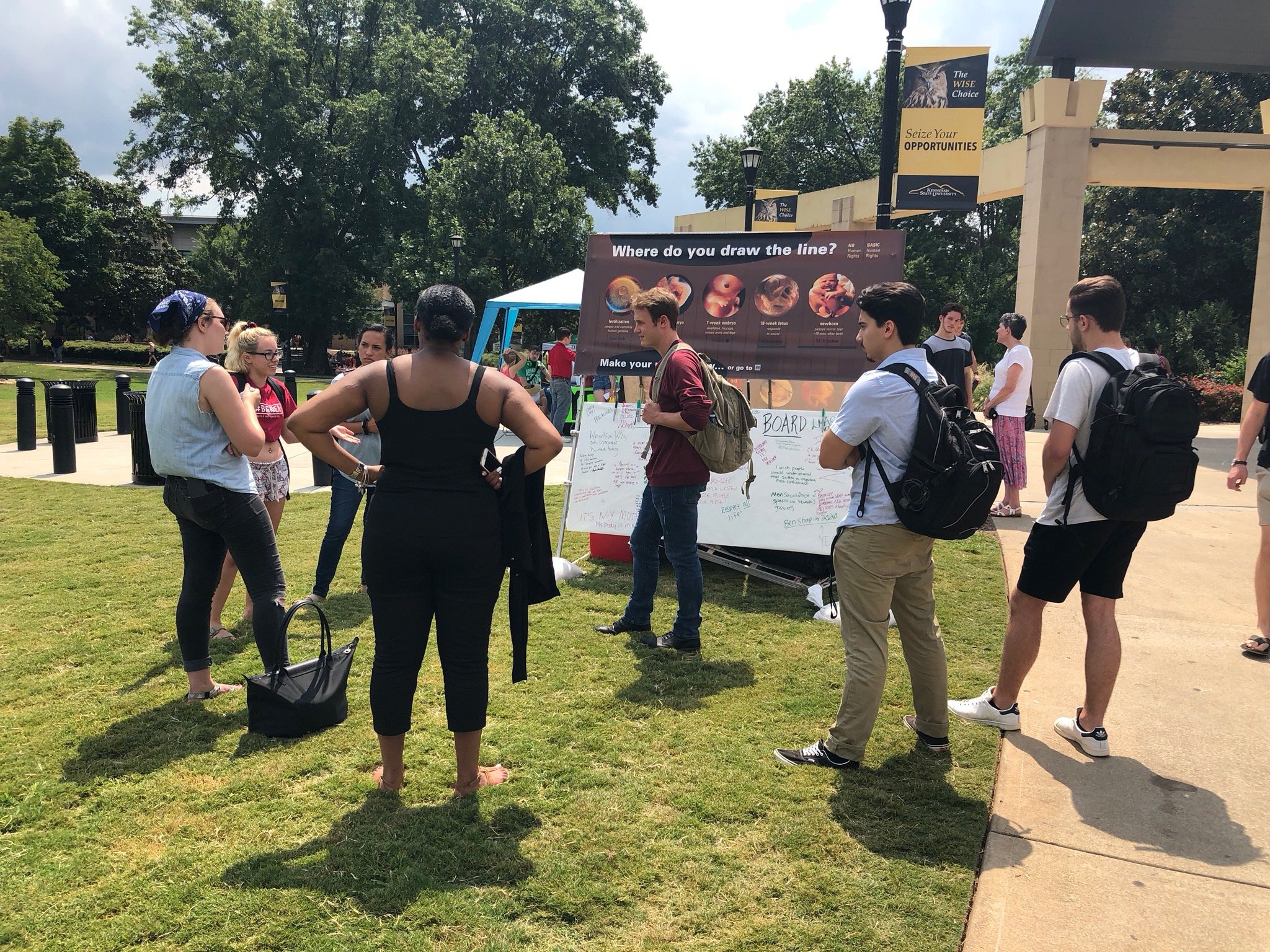
Grace (left) and Jeremy (right) interact with students near our poll table at Kennesaw State University (KSU).

Jeremy: The reason we should both be listening to each other is that over 925,000 lives are lost to abortion each year in this country, and I think if we listened we could find a way to save those lives.

Amin: Would we actually be able to save those lives, though? How many of those children would make it to age 25 with the kind of upbringing they will probably get? If a mother wants to have an abortion, and she can’t get one, how do you think that kid will be raised?

Jeremy: I don’t think we can say for sure what kind of life that child will have.

Amin: But probably it will be bad. If my mom didn’t want to have me, and then she did, I don’t think that I would be her top priority.

At that moment, standing right next to him, a woman named Ima decided that she had to respond.

Ima: I don’t think it is a fair assumption that those kids are going to have horrible lives.

Amin: I’m saying if the mother wanted to have an abortion, they are pretty much guaranteed to have horrible lives.

Ima: My mom wanted to abort me, but instead she put me up for adoption. And I have had a successful life. I don’t think it’s fair to assume that the children we’re talking about will have horrible lives. They can be put into loving environments like I was.

Amin: But you got adopted. There are tons of children who don’t.

Frequently, group conversations spontaneously formed during our three days of outreach at KSU.

Ima: But there are also tons of parents that want to adopt children. I think we can find a way to help more people adopt them. I just don’t think you’re considering both sides and considering adoption as an option.

Amin: You make a good point. I don’t think we should go straight to abortion as the only option.

After Ima shared her story, Amin finally started listening. Ima, Amin, and I then discussed many of the arguments against abortion. By the end of the conversation, Amin admitted to me that he had gained a whole new perspective on the issue.

Amin: I’m glad we had this conversation. You do bring up many good points. Because I started listening I was able to hear you. It is a human life, and I have to put that perspective in my head. Ima, your story was great, and you allowed me to see other sides of the story when it comes to abortion.

Jeremy: Thank you for having an open mind.

Amin: This is good. We all got to talk. We all got to share our opinions. I apologize for snapping at you and interrupting initially. When you started talking you seemed passionate, and you seemed informed. I’m glad I started listening. I’m honestly not very well-informed on this topic.

Amin realized that while he was eager to dispute all of my arguments, he could not dispute Ima’s life. She was proof that he was wrong to assume all children in situations of unwanted pregnancy would have horrible lives. That realization caused him to start listening to my arguments and reconsider his overall perspective on abortion. That’s one of the things I like most about Justice For All’s outreach events: they create a space for people like Amin to meet people like Ima, a space where they can discuss their views on abortion together. Many times that’s all it takes to change hearts and minds.

Find practical steps in JFA's monthly resource bulletin

Worth the Interruption

Spencer Stewart, a high school teacher and long-time JFA volunteer, is passionate about the training opportunities that JFA provides to Christian communities like his school (Veritas Christian School in Lawrence, Kansas).  In recent years, Spencer has invested personal time and effort in equipping his students for dialogue during class time.  In March, after teaching students using JFA materials, he brought twenty students to our University of Kansas outreach event to watch JFA mentors in conversation and to give the students an opportunity to join in.  In this Impact Report, Spencer and several of his students share about their experiences.  (Student quotations have been edited for length.)  We are always eager to come alongside teachers like Spencer who have a heart for discipleship, providing the tools and experiences they can use to help their students “speak up for those who cannot speak for themselves” (Prov. 31:8, NIV).  - Steve Wagner, Executive Director


Spencer Stewart talks with a University of Kansas (KU) student at a JFA outreach event in April 2015.

I have attended about a dozen Abortion: From Debate to Dialogue seminars by Justice For All, often in order to bring new volunteers, as well as multiple outreaches on different college campuses.  For two years now, it has been my privilege to teach JFA’s material to juniors and seniors in my Worldview and Apologetics classes over the course of the week leading up to a campus outreach.  They have eagerly engaged with the training.  I love that the Three Essential Skills (asking clarifying questions, listening to understand, and building common ground without compromise) prepare them to be better humans and better conversation partners on any topic.

All of my students know that they should be pro-life, but I love to see lightbulbs switch on as they learn more precisely why – and how to help others see it for themselves.  At the outreach, we pair students with an apologist with Justice For All so they can listen in on and pray through the conversations taking place.  Having received the training in class, they are able to track with the JFA apologist and better learn the nuances of these kinds of dialogues.  Some of our students even jump in and engage in conversations of their own.  All of the students have been enthusiastic about the experience.  It opens their eyes to the diversity of thinking on campus, and they all benefit from JFA staff members modeling both kindness and conviction in the midst of a controversial issue.  The juniors always want to do it again the following year. The hope is that the second time around will help them internalize the approach and increase their confidence to lead this kind of conversation.

Spencer (left) talks with a University of Kansas (KU) student at a JFA outreach event in April 2016. Students whom he brought to that outreach event listen in.

It obviously interrupts the flow and takes a chunk of time away from our regular content, but I believe it is worth it, without a doubt.  In terms of scope and severity, I consider abortion to be the greatest injustice on the planet, and God’s people are called to partner with Him in seeking justice, especially for the weakest and most vulnerable among us.  With this issue, I believe partnering with Justice For All is the best way to do that, especially because they also work to connect students who are considering abortion (or who need healing from one) with local pregnancy care centers.  We are wired to be heroes, and we can literally save lives at these outreaches, and in our daily walk, once we have been prepared in this way.  I pray that more and more churches and schools will open themselves up to be blessed by JFA and equipped for life on mission.

- Spencer Stewart, Veritas Christian School Teacher

Spencer (right) listens to a conversation at one of the first JFA outreach events in which he participated, at Wichita State University in January 2012. 

[The JFA in-class preparation] taught me how to communicate an important point with someone in a non-threatening way, and it made me really think about my reasons for being pro-life.

- Marianna, Veritas Christian School Student

Spencer (right) and his students listen as Rebecca Hotovy describes JFA’s Art of Life Exhibit at the recent University of Kansas outreach event in March 2018.

The JFA outreach was beneficial to me because I have never gotten the chance to talk to a stranger about my beliefs and ask about theirs.  It was great to [hear] someone else’s belief, and for them to hear mine.  Using the finding common ground technique worked great because they felt differently about the message we were sending after we talked.

- Rondre, Veritas Christian School Student

The JFA [in-class preparation] showed me how to better listen and not just attack a person based on their opinion.  It helped my confidence when speaking to non-believers about scriptural things.  The JFA outreach was super cool to be a part of because we were doing the work of God.  Watching older, wiser people listen and have Godly conversations was helpful spiritually.  The JFA outreach showed me just a glimpse of some of the opinions on campus, and the need for God.

- Quinton, Veritas Christian School Student

JFA impacted me by helping me understand the facts about abortion and how to talk to people in a relational way about this topic.  It strengthened my reasoning for what I believe and opened my eyes to other people’s views.

- Leandra, Veritas Christian School Student

The JFA training impacted me by making me feel more prepared to share about abortion with others and get into meaningful conversations.  The techniques they taught us were very helpful and will be useful going into next year.  The JFA outreach was different than what I thought it was going to be, but in a good way.  The exhibit [was] very thought provoking and a good way to get people to ask questions.

- Emma, Veritas Christian School Student

The JFA [in-class preparation] made me think of most debates or disagreements in a different way.  It gave me a different method to approach them.  The JFA outreach was interesting because it showed the actual beliefs of real people, not just hypothetical responses and answers.

- Anonymous, Veritas Christian School Student

Printable Version
Download free training materials from jfa
Find practical steps in jfa's monthly resource bulletin

A Popsicle Poll (and a Conversation)

Impact Report, January 2017

Introductory Note: I'm eager to share this Impact Report with you.  Written by 20-year JFA veteran Tammy Cook, it allows you to see a model conversation unfold, nurtured through Tammy’s skillful choice of questions and information.  You get to watch a student rethink his position on abortion, and you get to see the JFA poll table, a stalwart conversation tool we’ve used since 2001, in a new twist that JFA trainers Jon Wagner and Paul Kulas came up with during a late-night run to Walmart.  The “popsicle poll” was one of the tools we used along with our large Art of Life Exhibit to start conversations about abortion at Oklahoma State University in November 2016.  Go to the photos page for the event to see these tools in action, as well as two other new twists on classic JFA conversation tools.  We turned one free speech board into a straw poll on the presidential election (we couldn’t help ourselves—it was election day), and we used another to ask people which particular abortions they thought should be legal, in terms of timing and circumstances. - Steve Wagner, Executive Director

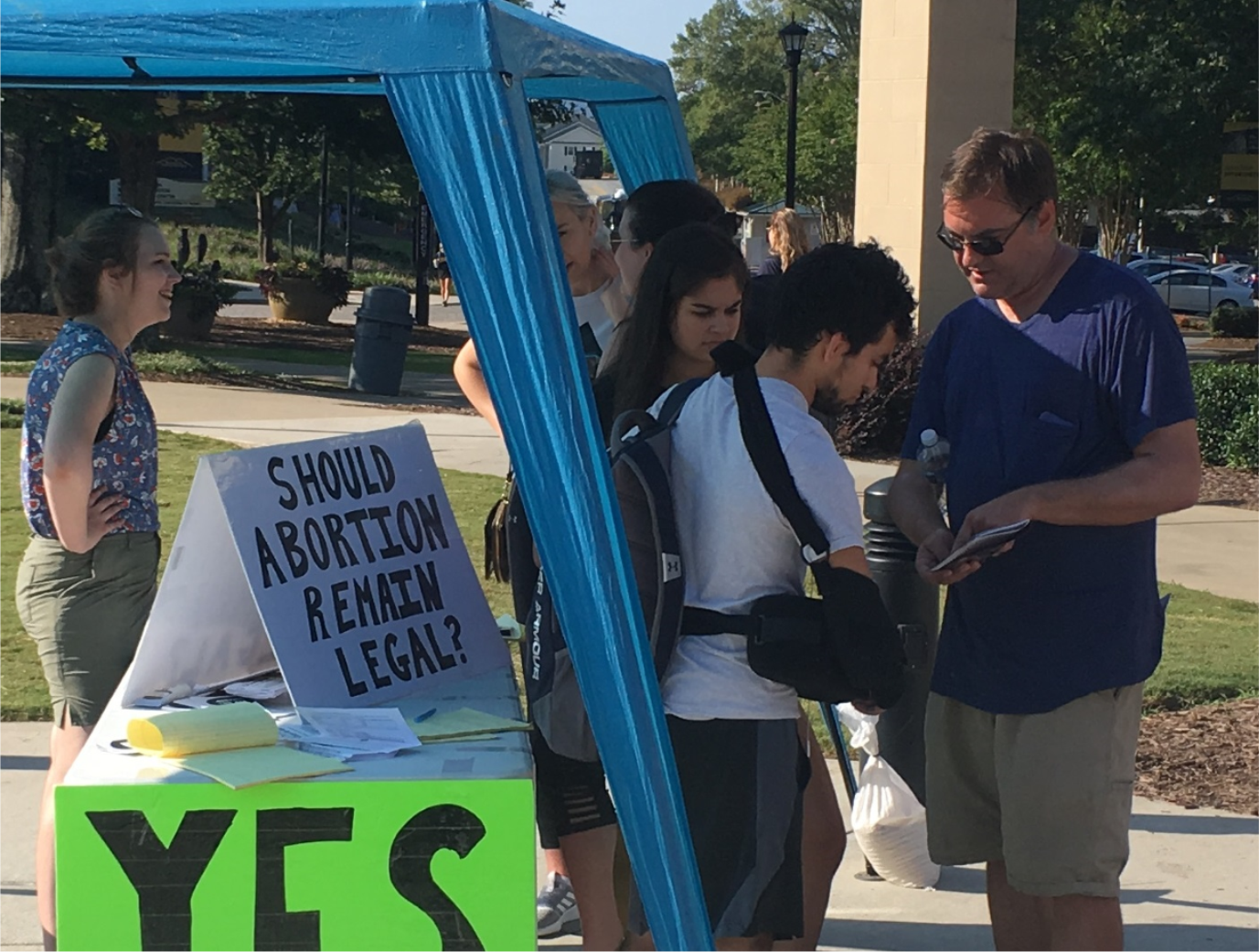
Having conducted many campus outreach events in unpredictable weather, the JFA team has learned to make quick adjustments on the fly.  Our latest challenge?  How to keep poll table notebooks dry in the rain.  The notebooks allow students to sign Yes or No in response to our poll question, Should Abortion Remain Legal?  The poll is one of our best tools for starting conversations, so when it was raining at Oklahoma State University (OSU) in November, our team got creative.  Popsicle sticks and Styrofoam to the rescue!  Students could now vote by signing a Popsicle stick and putting it in either the Yes side or the No side.

During the lunch hour, “Hudson” stopped by to vote.  He placed a popsicle stick on the Yes side.  I thanked him for voting, introduced myself, and started a conversation:

Tammy:  I’m curious—do you think abortion should be legal through all nine months of pregnancy?

Hudson:  Well, I don’t know, but I don’t think the government should be in people’s lives. 

Tammy:  I would like to better understand your view.  Can you give me an example?

Hudson:  I don’t think the government should make a law that says a woman can’t have an abortion.

Tammy:  Ah.  So basically you’re saying that you don’t want the government to tell you what you can or can’t do?

Hudson:  Yes.

Tammy:  I can see that.  I agree that there are times when the government shouldn’t interfere with our choices.  For example, I think people should be able to choose if they want to go to college.  I do think, though, that the government should make laws that protect our citizens.  Would you agree with the laws that stop people from driving 100 miles per hour on the freeway while intoxicated?

Hudson:  Yes.

Tammy:  Why?

Hudson:  Because that’s not safe, and it would risk harming or killing other people.

Tammy:  I agree.  So, do you agree with the current laws that prohibit rape, murder, and theft?

Hudson:  Yes, I agree with those laws.  But when it comes to taking away choice, I don’t agree with the government taking away a woman’s choice.

Tammy:  Got it.  Let’s take a moment to talk about human beings and look at biological development.  When do you think we become human?

Hudson:  I’m not sure... maybe in the third trimester?

Tammy:  Okay.  So, do you agree with me that this is a human being?  [I pointed to the third-trimester fetus on page three of our brochure, pictured right.]

Hudson:  Yes.

Tammy:  Okay.  Let’s look at earlier stages of human development.  [I pointed to the first seven circles on page three.]  Would you agree that if the unborn is growing, it must be alive?  And if it has human parents, it can only be human?  And living humans like you and me—we’re valuable, aren’t we? 

Hudson:  Hmmm... [seriously contemplating what I’ve shown to him]

Tammy:  And did you know that from the point of fertilization, all that is added to the embryo is adequate nutrition and a proper environment?  Nothing essential is injected along the way to make an embryo into an organism.  So, if you and I are whole organisms now, the embryo must also be a whole organism at fertilization.  Would you agree?

Hudson:  Maybe so, but I still think abortion should be a woman’s choice because abortion is legal.

Tammy:  Okay, so it sounds like legality is important to you.  Let’s look at slavery, which used to be legal.  Should our country have kept slavery legal? 

Hudson:  No.

Tammy:  I agree.  We should restrict people from choosing to own a slave because that is a violation of human rights.  For the same reason, don’t we also have an obligation to restrict people from choosing abortion?

Hudson:  [pausing to think]

Tammy:  And I think it could aid our discussion if we include images of abortion.  Are you willing to view them?

Hudson:  Sure. 

Tammy:  This is what abortion looks like.  [I showed him an abortion image on page five of the JFA Exhibit Brochure.]

I feel like I want to break the popsicle stick in half and put half in the Yes side and half in the No side..
— "Hudson" (an OSU Student)

Hudson:  Wow, you’ve given me a lot to think about.  I see it a little differently now.  The slavery comparison was really helpful.  I’ve never thought about it that way before.  I need to go think about this.  I feel like I want to break the popsicle stick in half and put half in the Yes side and half in the No side.  Can I have one of those brochures?

Tammy:  Yes, absolutely.  Thanks for taking time to talk.

Our team had two wonderful days of outreach at OSU, even despite the rain.  And the popsicle poll brought a great response.  There were 190 people who voted Yes (abortion should remain legal) and 120 who voted No (abortion should not remain legal).  I spoke to about 25 pro-choice students over two days, and I saw more than half of those students rethinking their views like Hudson did.  Some even had a complete change of heart and agreed that abortion should not be legal.

printable version
get a paper copy of the jfa exhibit brochure

Small Decisions and Big Results

Impact Report, November 2016

read Steve's special introduction encouraging you to partner with jfa

Grace Fontenot and Clare Lavergne, two young women from Louisiana, had only been interns with JFA for two months, but they had already been inspired by JFA’s emphasis on creating conversations about abortion every week.  The goal?  Help those who are pro-choice come to their own settled conclusion that abortion is unthinkable, and help those who are pro-life become active advocates for unborn children.

Clare (blue, behind table) and Grace (right) interact with Wichita State students.

Seeing that there was one week in their internship with no outreach event scheduled, Grace and Clare grabbed a survey clipboard and headed to Wichita State University to start conversations.  Clare described what happened next:

“After a few surveys that resulted in one lengthy conversation about abortion, we asked a few more students to take our survey, but they declined.  So we decided to ask one final person before leaving campus.  The student whom we happened upon was Zachary Lee-Watts.  

“Right off the bat, Zachary told us he was completely pro-life.  He then shared with us that he was raised by a single mother in an impoverished area in Los Angeles.  He felt that his mother’s situation had made him a prime target for abortion.  Not only that, but he has also seen firsthand the lasting psychological effects of abortion on women who are very close to him.  

“Zachary was so excited to meet people his age who were passionately pro-life like he was, and he asked us how he could get involved.  We invited him to a seminar that took place the next week, and shortly after that, he accompanied us for two days of outreach at Oklahoma State University (OSU), where he engaged in many conversations of his own.  Then he attended another outreach event, this time at Wichita State.  He truly believes that God intended for him to meet us that day on campus and that our friendships and JFA have already had a great impact on his life and faith journey.”

Zachary shared a bit about his experience:

Clare (right), Zachary (second from right), and Grace (third from right) interact with three Oklahoma State University students at JFA’s recent Art of Life Exhibit at OSU.

“At OSU we set up an exhibit titled The Art of Life, which is beautiful in itself, and is quite impacting.  The entire experience was beautiful, insightful, passionate, and just awesome.  Speaking to students about such a ‘controversial’ topic never seemed so peaceful and amicable.  Not just that, but to also be able to connect with individuals on a personal level was splendid. 

Zachary, right, near JFA’s Art of Life Exhibit at OSU.

“I recall speaking to a young guy named David, who was more aligned with the pro-choice side, but we connected because we came from similar backgrounds.  Eventually, I convinced him enough to at least keep his mind open and do research himself on the personhood of the unborn and their intrinsic value.  There was also this fellow named Brent with whom I had a really in-depth conversation.  He was pro-choice.  He said his opinion didn’t matter because he was a guy.  I found that quite ludicrous, so I managed to persuade him that his opinion did matter; that the subject of abortion was not just for women...that it was for humans in general.”

Grace Fontenot interacts with a student at Fort Hays State University in Hays, Kansas, in September 2016.  Grace is raising support to work full-time with Justice For All.  You can support her work with JFA by making a donation here (look for Grace's designation or put her name in the notes).

Zachary also described his approach to abortion prior to meeting Grace and Clare, and prior to participating with JFA:

“Admittedly, on any given day I was not one to prompt the seriousness of abortion.  I did understand why it was wrong, and in a general sense how to defend my belief, but not sufficiently enough.  After listening in on JFA dialogues and reading the JFA Exhibit Brochure, I understood how to convey the seriousness, and how to treat individuals who were opposed to my stance in a more comforting way.  I felt more urgency to bring up the seriousness and assured that I could do so more wisely.”

The story of Grace, Clare, and Zachary is really just a story of small decisions, small decisions which ended up yielding big results.  Grace and Clare made a decision which probably seemed somewhat insignificant at the time, a small decision to go and do the hard work of creating conversations about abortion.  In the course of their impromptu outreach event, Grace and Clare happened upon a pro-life advocate, Zachary, who wasn’t doing much to make abortion unthinkable.  They befriended him, encouraged him to participate in our training program, and now he has begun to create conversations about abortion.  He has now made his own series of small decisions to seek to change minds about abortion and encourage pro-life advocates to do the same.

Clare Lavergne discusses the value of the unborn child with a student at Oklahoma State University, while a deacon from a local Catholic parish listens in.  Clare is raising support to work with JFA again in Spring 2017.  You can support her work with JFA by making a donation here (look for the Intern Scholarship Fund or put Clare's name in the notes).

If you think about it, each one of us in our own small decisions each day can have the same big impact, as we prayerfully trust God for help.  Indeed, JFA’s big, “impossible” mission of “training thousands to make abortion unthinkable for millions, one person at a time” can only be accomplished through the small decisions of each one of us.  What part can your small decisions play in JFA’s mission?  Are you able to give one or more years to work as an intern with JFA?  Are you able to partner with JFA financially?  Are you able to pray regularly for our team?  Are you able to encourage others in your community to learn more about JFA?  Are you able to participate in JFA outreach events, creating conversations that change hearts and minds?  Each of these activities requires only a small decision like the decision Grace and Clare made that day to just go out and talk to students at Wichita State.  Yet one of these seemingly insignificant, small decisions can even change the course of someone’s life, someone like Zachary.  When we reflect on the fact that Zachary is now doing the same for others, by God’s grace, JFA’s mission no longer seems impossible at all.

- Steve Wagner, for the JFA Team

printable version

How JFA Helped Me Reach My Campus

August 2016 Impact Report

By Meredith Boles

Introduction by Steve Wagner

INTRODUCTION

printable version

In this Impact Report, Meredith Boles describes a conversation that took place at JFA’s new Stop and Think Exhibit (shown below), illustrating how the public display of abortion images, a gracious manner, and thoughtful responses to tough questions can help pro-choice advocates “stop and think” about abortion in a new way. 

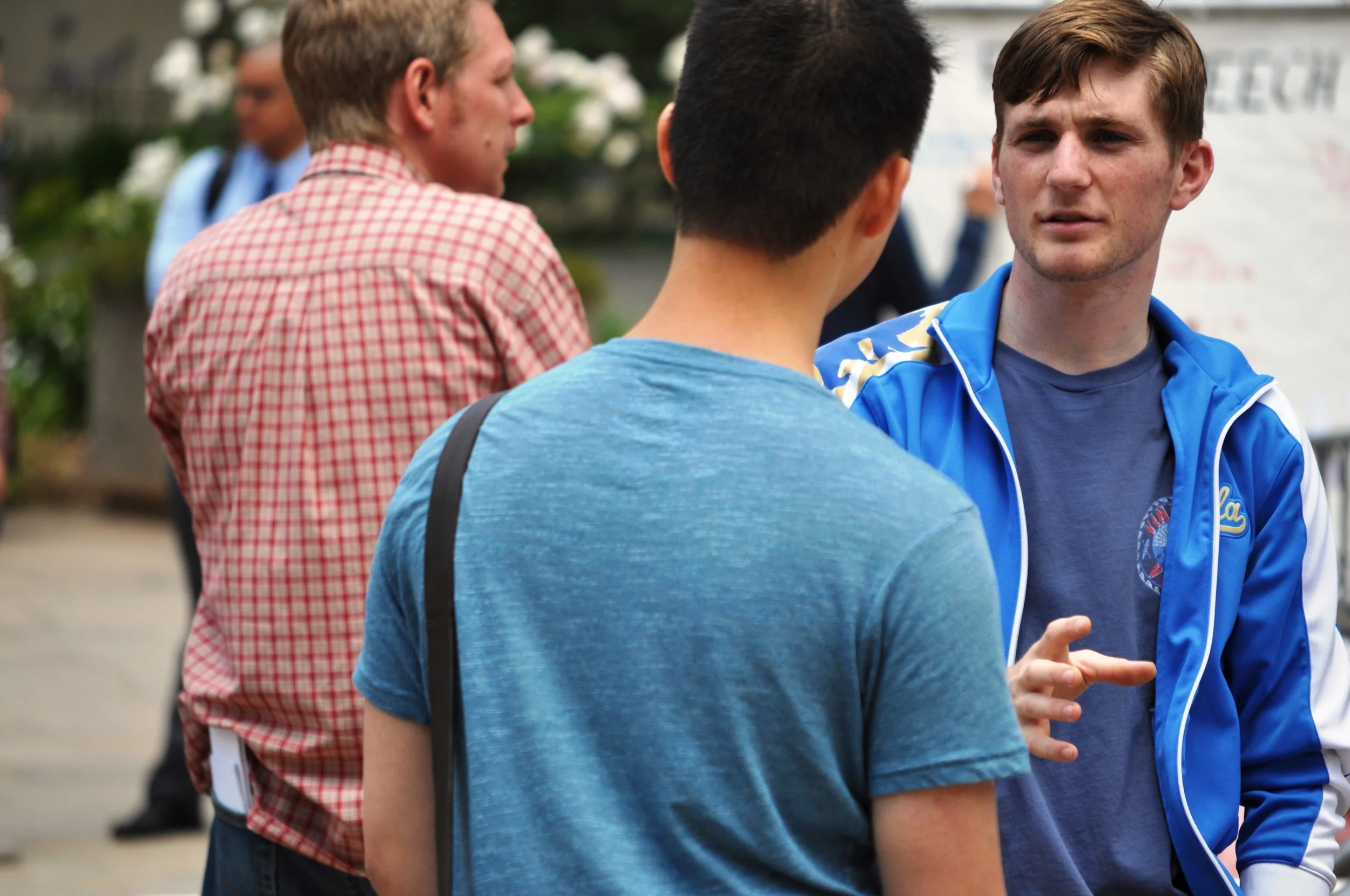
Meredith and another UCLA student talk in front of JFA's new Stop and Think Exhibit in May 2016.

Meredith also shares what it was like for her club, Live Action UCLA, to partner with JFA to carry out large JFA events on the UCLA campus two years in a row.  We cherish the hard work of Meredith, Ines, and other members of their club who share our passion for creating hundreds of conversations about abortion in a single day of outreach.  Meredith and Ines helped invite JFA to campus, participated in conversations themselves, and rallied other club members to participate.  The result?  Together, JFA and Live Action UCLA trained more pro-life advocates and reached more pro-choice advocates than either organization could ever have done on its own.

P.S. This Impact Report is the second in a series showcasing our newly-expanded large exhibit outreach program, which also includes another new exhibit that was displayed at UCLA, The Art of Life.  For an introduction to both new exhibits, including more pictures, see JFA’s July report, “Two New Exhibits: A First Look.”

-Steve Wagner, Executive Director

THE STORY

I just graduated from UCLA, and throughout my four years there I was actively involved with the pro-life group.  In both my third and fourth years, I coordinated with Justice For All so that we could bring them onto our campus for a training seminar and then for an outreach event.  I cannot recommend JFA enough for a club event that is both educational for club members and influential for our peers on campus. 

Throughout this past year I had to meet periodically with the staff of the club events office in order to get the training sessions and the outreach exhibits approved, as well as to reserve outdoor spaces, classrooms, equipment, parking, etc.  This process was difficult at times because it was very obvious that the campus administration was not pleased with our event, so it felt like I was pulling teeth at times. It was also difficult because not everyone in my club was comfortable with the idea of displaying graphic images of abortion, and so I did not have enthusiastic support from all my club members.  But with their consent, and the help of two club members who were fully on board, combined with the guidance and assistance from the JFA staff, and the conviction that this was a great opportunity for my last year in college, we made all of the arrangements. 

We had one day of training on a Sunday, and then two days of outreach at two different locations.  We needed one club member at all times present at the exhibit, and we used a group chat to coordinate this.  All of my club mates told me afterwards that it was a great experience, that they had some tricky conversations, some fruitful conversations, and that by the end they felt much more confident about having these conversations.

Meredith interacts with a fellow UCLA student in front of the side of the Stop and Think Exhibit focused on feminism and women's rights.

I myself had a very good conversation with a student named Amanda.  She was walking slowly past Justice For All’s Stop and Think Exhibit when I asked her what she thought of the exhibit.  She said she didn’t really understand what it was about, so I offered to walk around it with her and explain it.  We walked slowly, side by side.  Once we had circled around I asked Amanda what she thought.  She replied, “I know it’s a tricky issue.  It’s really hard to know.  I just think it should be up to the mother.  Do you think that abortion should be illegal even if the mother couldn’t afford to have the baby?”

I wasn’t sure if Amanda was expressing this condition because it was her own story.  All I could do was express my sympathy for a woman in this situation, whether it was her own or not.  I told her I understood her concern – it’s a real one.  Students who get pregnant do not just have to put up with expenses for a year.  They become permanent mothers.  They either need to raise this child, love it, and provide for it, or give it up for adoption.  It’s so, so hard for these women on our campus who find themselves pregnant when they did not intend to.  Amanda was moved and said, “Yeah, I think adoption is an alternative.  People try to say that it’s worse but I think it is a great idea.  After all, a lot of couples want a baby.”

I agreed with her and told her there is even a waiting list for couples wanting to adopt.  Then I said, “Going back to your concern about women who get pregnant while in poverty.  Let me ask you something…”  I trotted out the toddler as we had practiced in the training on Sunday, and finished with, “So I know it’s an extreme example, but you wouldn’t say we could kill that toddler, right?”  She said, “Of course not,” and then paused and added, “I understand what you mean.”

Her voice got a bit more anxious when she said, “I don’t know, it’s just that this whole time I have been telling myself that I was pro-choice, but after seeing that picture…”  She was referring to the picture of the aborted baby on one of the panels of the exhibit.  “Is that really ten weeks?”  I said yes, and she said, “I had no idea.”

Working with Justice For All bolstered our club in our fight against abortion, and helped spread awareness of our club. I highly recommend it for every single pro-life group on college campuses.
— Meredith

I told her that the reality behind that picture is the reason why I am fighting to end abortion.  I asked her if she agreed that a procedure so brutal could never be the right option, and so it should not be legal to choose it.  She said yes, but asked, “But if abortion were illegal, would that mean women who get abortions would be criminalized?  Would you agree with that?”  I might have faltered at this point, except that one of the JFA trainers had walked us through this topic at the training.  If I truly believe abortion is killing an innocent human being, which I do, then of course a woman who willingly breaks a law that states abortion is an illegal act of murder should be penalized.  I told her that it may be the case that a woman who committed an abortion was under a lot of emotional stress, and so may receive less grave sentences, but she would still need to be penalized.  She agreed with my reasoning.  She said, “Thank you so much for talking to me about this.  This really helped me.”  I gave Amanda the JFA brochure, and we exchanged numbers.  [Editor’s note: See JFA's Extending Your Learning page for more on this topic.]

Not every conversation goes this well, but JFA gives us the tools so that every conversation is at least civil and intelligent, and almost all of them leave the other person pondering.  The conversations definitely confirm me in my beliefs; at the same time, talking face-to-face with another student who holds the opposite opinion to mine helps me to be more understanding.  It reminds me of the reason why I believe abortion should be illegal: every person, whether it is the pro-choice student who is standing in front of me, or the unborn baby in a mother’s womb, has dignity and ought to be loved. 

Working with Justice For All bolstered our club in our fight against abortion, and helped spread awareness of our club.  I highly recommend it for every single pro-life group on college campuses.

- Meredith Boles, Member of Live Action UCLA and JFA Volunteer

get free pro-life club resources and learn more about inviting jfa

CK and Jamie

June 2016 Impact Report

CK Wisner, Training Specialist

PART I: SEPTEMBER 2015

Things were getting out of hand.  Voices were raised and the crowd was visibly upset.  Gathered in front of Justice For All’s display at the University of Georgia – Athens (UGA) were several pro-life men, most notably Matthew and Isaac, engaging one pro-choice woman, “Jamie.”  I joined the debate hoping to turn it into a gracious dialogue. 

I started by addressing a question to Matthew.  As I was beginning to understand Matthew's point of view on abortion, Jamie interrupted him.  Soon after Jamie started talking, Isaac interrupted her.  We weren’t getting any closer to having a productive conversation, so I laid some ground rules.

Me: Excuse me, but I don’t feel like we’re getting anywhere with this discussion.  I propose that we take time to listen to each other and try to understand where everyone is coming from.  If someone else is speaking and you have something you’d like to say, please raise your hand and that will signify that you get to speak next.  Now, I hold to “ladies first,” so I’m going to let Jamie speak next.

Jamie: Well, I think that women are just in really difficult situations.  We don’t know what any given woman is going through or why she needs an abortion…

Matthew and Isaac: But wait!  There’s a baby in that situation…

At this point, Jamie was looking very angry.  Trying to avoid further outbursts, I decided to help the pro-lifers out a little bit by teaching them the concept of common ground.

Me: [raising my hand] Hey guys, I think Jamie is actually saying something about which we can all agree…if I understood her correctly, she is concerned about women who are facing really difficult situations.  I think we all are concerned for women in difficult circumstances.  Is that right?

Matthew and Isaac: Yes.  Definitely!

Me: I’m glad we agree on that.  I find that making note of the things we agree on is particularly helpful.

The dynamic of the conversation then changed.  Prior to introducing the concepts of listening and finding common ground, students were yelling their views and grouped together like a mob.  After adding structure and kindness, the group formed into a circle, and all of us started respectfully raising our hands when we had something to say.

Even though things were going well, I was becoming concerned for Jamie.  She was still highly emotional, and when I would aim to lovingly point out the flaws of her pro-choice position, she would admit that I was right, but then still cling with a passion to her views.  I could sense that something was underneath the surface that she was not sharing.

The conversation carried on for about 45 more minutes.  I heard the views of those who had joined our conversation.  Eventually it was obvious that everyone had said what he or she had to say.  As people were starting to repeat themselves, I raised my hand again.

Me: I’ve appreciated all of you sharing your views.  Can I see a show of hands on who understands what Matthew believes?

All hands rose.

Me: Who understands what Jamie believes?

All hands rose for a second time.  I continued asking this question about every person who had shared his view, and each time there was a complete consensus that everyone was at least beginning to understand what the others believed.  I then kindly ended the conversation.

Me: Now that we understand each other, I think it would be more productive to end the group discussion here, instead of each of us repeating our stances on abortion.  I think no one at this point is open to changing his or her mind in front of a group.  I’m more than happy to talk to each of you one-on-one.

The group disbanded, and I took this opportunity to pull Jamie aside.  I shared with her that I appreciated her sharing her view when nearly everyone had disagreed with her.  She thanked me, but she was still noticeably hurting.  I was becoming more and more convinced that Jamie had a personal connection with abortion.

Me: Do you know anyone who has had an abortion?

With that question, Jamie fell into my arms weeping.  I held her until she gained her composure.  Jamie then confirmed that she herself had an abortion in her past.

Jamie: [pointing at a photo of the aftermath of abortion] That photo condemns me to hell.

Me: Jamie, abortion is not the unforgiveable sin.  Jesus is just as willing and able to forgive the sin of abortion as He would be any other sin.  There is grace and healing in Jesus.  I’m not trying to take away your guilt [because I did believe what Jamie did was wrong], but I want you to know that redemption for your past mistakes is completely open to you.

Jamie: I just don’t know why I feel this way, because I don’t think abortion is wrong.

I just don’t know why I feel this way, because I don’t think abortion is wrong.
— Jamie

Me: [very gently] You don’t have to answer this question out loud, but I want to give you something to think about.  Are you sure abortion isn’t wrong, or are you just telling yourself that to justify your actions?

At this Jamie simply nodded her head.  We talked for a few more minutes, and I made sure to get her contact information so that I could connect her with resources for healing from her abortion.  Once I got back from Georgia, I did email Jamie.  Her message back to me showed me why I do this work with Justice For All.  She said,

“Thank you for this.  I have been thinking a lot since we met, and I want you to know that that has been good for me.  I've actually discussed the matter with my parents for the first time in several years, and it was a healing occasion for all of us.  Thank you for your help.”

When I returned to UGA in February of this year (2016), I had another conversation with Jamie.  (Continue reading below.)  I am confident that God continues to be at work.  He is at work in Jamie’s life, my life, and your life.  Let’s pray for Jamie to draw near to Christ that she might fully experience Christ’s healing work in her life. 

Note: Part I originally appeared in CK's December 2015 Newsletter.

The JFA Exhibit (2000) panels displayed at UGA on the day CK met Jamie.  Jamie was referring to the "Is this humane?" panel when she said, "That photo condemns me to hell," and CK was able to share the message of Christ's forgiveness with her.

printable version of part i


PART II: FEBRUARY 2016

In my December 2015 newsletter, I shared with you one of my favorite stories about a dear young woman, “Jamie.” I told you about meeting Jamie at an outreach event and shared how she had opened up to me about the abortion in her past. I was able to love Jamie in the midst of the short time I had with her and share with her the hope of healing. We then exchanged a couple of emails.

But the story doesn’t end there. I returned to Jamie’s campus in February of this year. I knew that I wanted to see her again, so I sent her an email letting her know that I was going to be there. Early Monday morning on the first day of our outreach event she came by. We greeted each other with a hug of friendship and then I asked her how she had been doing. For the next several minutes, I heard more of her story. The details were heartbreaking.

After I had listened to Jamie, she said something that surprised me: “I’m the closest I’ve ever been to being pro-life, but I just have a couple of questions.” I asked Jamie to share with me what her questions were, and together we began to address them. By the end of our conversation, she recognized the truth of my answers, but understandably she still needed to think about it. I didn’t expect her to change her mind right then and there because she has been pro-choice her whole life. If I had believed something my whole life, I would need time to process a big shift in thinking, too.

Jamie came back by our outreach event the next day as well, but just to give me a hug. I had written her a letter after we had talked the day before and I was able to give it to her. In the letter, I shared with her that she is beautiful and also shared with her about the love of Jesus. I am continuing to pray for her to see the Truth. I count Jamie as a dear friend and my heart longs for her to find complete healing in Jesus. In the brief time we’ve been able to spend time together, God has used her to encourage me and to grow in me a heart to continue loving the hurting.

see jfa's "healing after abortion" page for more stories and resources

Stories like Jamie’s remind me why I work at Justice For All. They show me how deep the need is to reach the hurting and the great opportunity I have to share hope with them. Here is an awesome reality: God is able to work through you to love those He has placed in your life, too. If you need a little help getting started and you have not been through JFA’s training program, I strongly suggest that you attend. It has not only laid the foundation for me to communicate with those who believe differently than me regarding the value of human life, but it has also helped me learn how to communicate in general.

Thank you for your prayers, financial support, and encouragement. God is working through you to enable our team at JFA to meet more people like Jamie.

Note: Part II originally appeared in CK's May 2016 newsletter.

Printable version of part ii

COMMENT

A woman walked up to me years ago at a JFA large exhibit event at University of Colorado (Boulder).  She was crying and could hardly speak, but she said something about our exhibit and her abortion.  As I attempted to show concern for her, she turned and walked away.  While I think that abortion images do a great deal of good when shown in public and that this woman’s grief might very well have been precisely what she needed to begin to grapple with her abortion, my heart breaks for this woman and others who for whatever reason weren’t able to find healing during their encounter with the JFA team.

Thankfully, some women who have had abortions are able to begin to embrace healing at Justice For All outreach events, even when abortion images are shown publicly.  In the story of CK Wisner and Jamie (above), we see through CK's beautiful example how a compassionate, gentle, and skillful ambassador for Christ can play a vital role in a person’s process of healing from a past abortion.   

- Steve Wagner, Executive Director

Donate: help jfa reach more people like jamie

Confidence Creates Conversations

Impact Report: March 2016

Note: Chris Haynes, one of the pastors at Trinity Baptist Church in Norman, Oklahoma, said this about JFA: "I know of no other group that does such an outstanding job of training and then guiding teams of people through the actual process of dialogue.  If you have one day and JFA training [team] comes close to you, don’t miss the opportunity.  Our church and specifically college students have been equipped to now be on campus and have meaningful, life changing conversations."  This Impact Report explains through the story of Andrew some of what motivated Chris to say these encouraging words.  We hope you hear through Andrew's story our heart for established Christian communities.  For example, we are eager to serve local churches as they carry out their God-given role of helping the disciples in their flock to grow in their ability to actively love those too often forgotten in relation to pregnancy and abortion - women and men in distress, the smallest humans on earth, and those who disagree with us.  We see ourselves as helping these established Christian communities fill a gap in their discipleship in this area, rather than doing the work of mentoring and discipleship totally apart from or in place of these communities.  - Steve Wagner, Executive Director

Before the JFA conference, I was hesitant to raise the topic of abortion with my peers.  — Andrew (right)

Like so many of us, Andrew did not often have conversations about abortion.  He was pro-life, but he lacked confidence.  Then he participated in the Justice For All (JFA) training program last fall.  His college pastor, Chris Haynes, and their church, Trinity Baptist Church in Norman, Oklahoma, have a very purposeful emphasis on “the equipping of the saints for the work of service” (Eph. 4:12), so this was one of many times that they have invited JFA to help train their students.  Later, Andrew said,

Before the JFA conference, I was hesitant to raise the topic of abortion with my peers.  While this was due mainly to my lack of knowledge about abortion, I also felt uncomfortable raising the subject due to my lack of experience in conversing about the topic with someone from another worldview.

Through these interactions, I learned not to categorize someone too quickly… you really don't know where someone stands on an issue until you ask specific questions.  — Andrew (left)

I’ve heard these same hesitations often.  Many people say that there is no way the average person is capable of engaging in productive dialogue with pro-choice advocates.  Andrew’s JFA experience proved the opposite.  JFA training helped Andrew develop (1) confidence in his own pro-life convictions, (2) confidence to begin creating dialogue, and (3) confidence to create further conversations in his daily life.

The first dose of confidence came for Andrew during the interactive seminar (Seat Work) portion of the training program.  In a mentor group led by Rebecca Haschke and me, Andrew and other students said they felt apprehensive about coming to our outreach event at the University of Oklahoma (OU) the following week.  As these students learned why common pro-choice arguments fail and practiced sharing the evidence which supports the pro-life position, however, their confidence grew.  Andrew reflected,

JFA not only has given me the tools I need to reach out to my peers, but also has helped me firm up my position on abortion as well as my reasoning behind my stance.

Even with this confidence, though, Andrew wondered if he personally could take these ideas and produce a good conversation with them.  Here’s how our outreach event at OU (Feet Work) enabled him to do just that.  At the beginning of the outreach event, Andrew got a second dose of confidence as he listened in to conversations that JFA staff members were having with pro-choice students.  The next day, he took the critical step of starting not just one, but many conversations.  He was surprised by what he learned:

During the time I spent in outreach with JFA, I had several opportunities to dialogue with other college students about their beliefs about abortion.  Through these interactions, I learned not to categorize someone too quickly.  To my surprise, many people who initially stated that they supported abortion were less supportive after receiving information.  Most of the people I spoke to were not the die-hard leftists I had thought they would be.  On the other hand, several people who thought abortion should be illegal turned out to support early abortions!  Through outreach with JFA, I discovered that you really don’t know where someone stands on an issue until you ask specific questions.

Andrew gained an understanding of pro-choice advocates and of himself through outreach that he could not have gained otherwise.  That’s why JFA has found Seat Work and Feet Work to be such a powerful combination.  Seat Work provides the tools for creating good conversations, but Feet Work gives a real-life opportunity to practice using those tools, to get rid of false caricatures of the people we’re trying to reach, and to explore ways to grow in dialogue skills.    

Andrew found that creating conversations during Feet Work gave him a third dose of confidence so that it was natural for him to continue creating dialogue about abortion after the JFA events (Repeat Work):

The [seminar] and outreach JFA allowed me to take part in have prepared me for several discussions since their visit to campus.  In dialogues with fellow students, finding common ground has been very important as have techniques such as “trotting out the toddler.”  I am thankful for the opportunity I had to volunteer with JFA and to develop my convictions and my ability to share them.

The [seminar] and outreach JFA allowed me to take part in have prepared me for several discussions since their visit to campus.
— Andrew

Andrew initially had the same hesitance to have conversations that most people have.  His biggest hurdle was his first conversation.  Once that hurdle was past, creating more conversations did not seem so daunting.  Andrew’s story demonstrates that gaining knowledge at a JFA seminar and taking a first dialogue step at a JFA outreach event can produce bold action on behalf of the unborn.

Are you someone who wants to be prepared for these kinds of conversations, but you’re hesitant like Andrew was?  Do you know someone in the same boat?  You can gain confidence like Andrew did by participating in JFA’s training program, including a Feet Work event.  You can find upcoming opportunities on the JFA Event Calendar.  Or, inquire about JFA Mission Trip opportunities.

We thank God that he used Justice For All, in partnership with Andrew’s very supportive college pastor and church, to help Andrew gain the confidence to be able to regularly and graciously share his views about abortion with his peers.  Thank you for supporting the mission of JFA so that we can offer Seat Work and Feet Work experiences to others who simply lack the confidence to start the conversation.  Through thousands of bold advocates like Andrew, we can truly make abortion unthinkable for millions – one conversation at a time.

- Jeremy Gorr, for the JFA Team

Printable version
Support jfa's work