
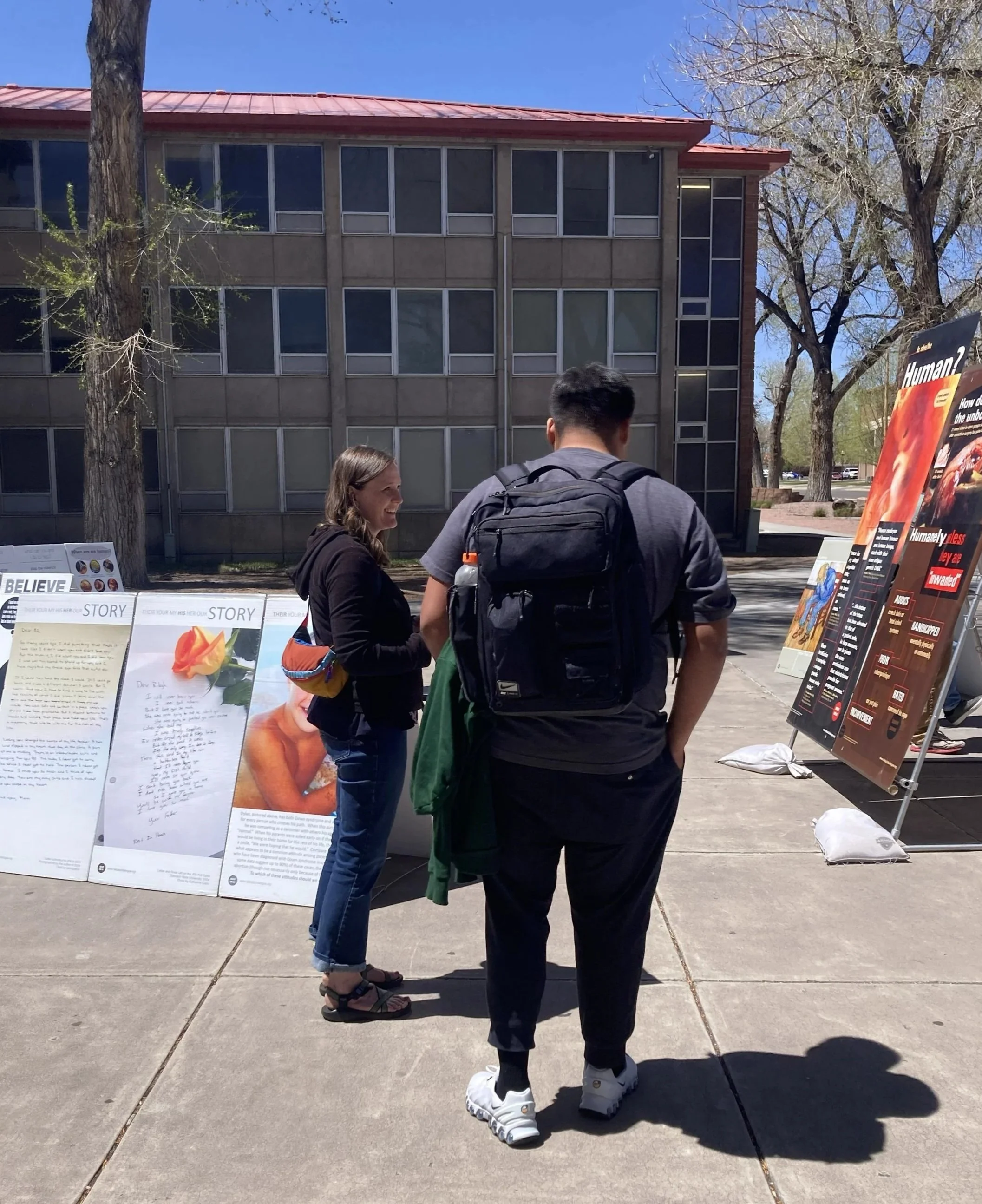
vivid descriptions

What about the Case of Rape?

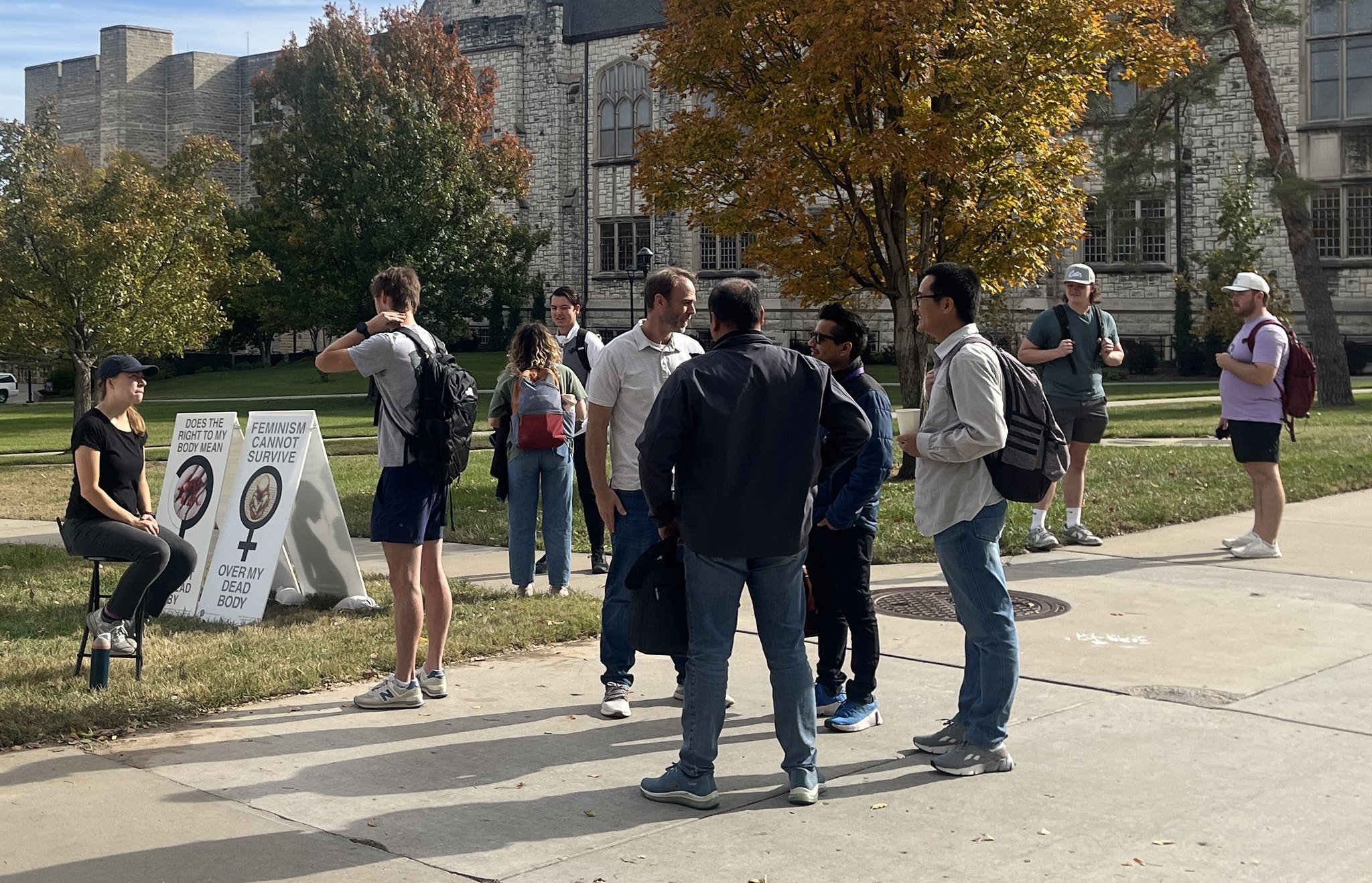
Texas State University (February, 2026)

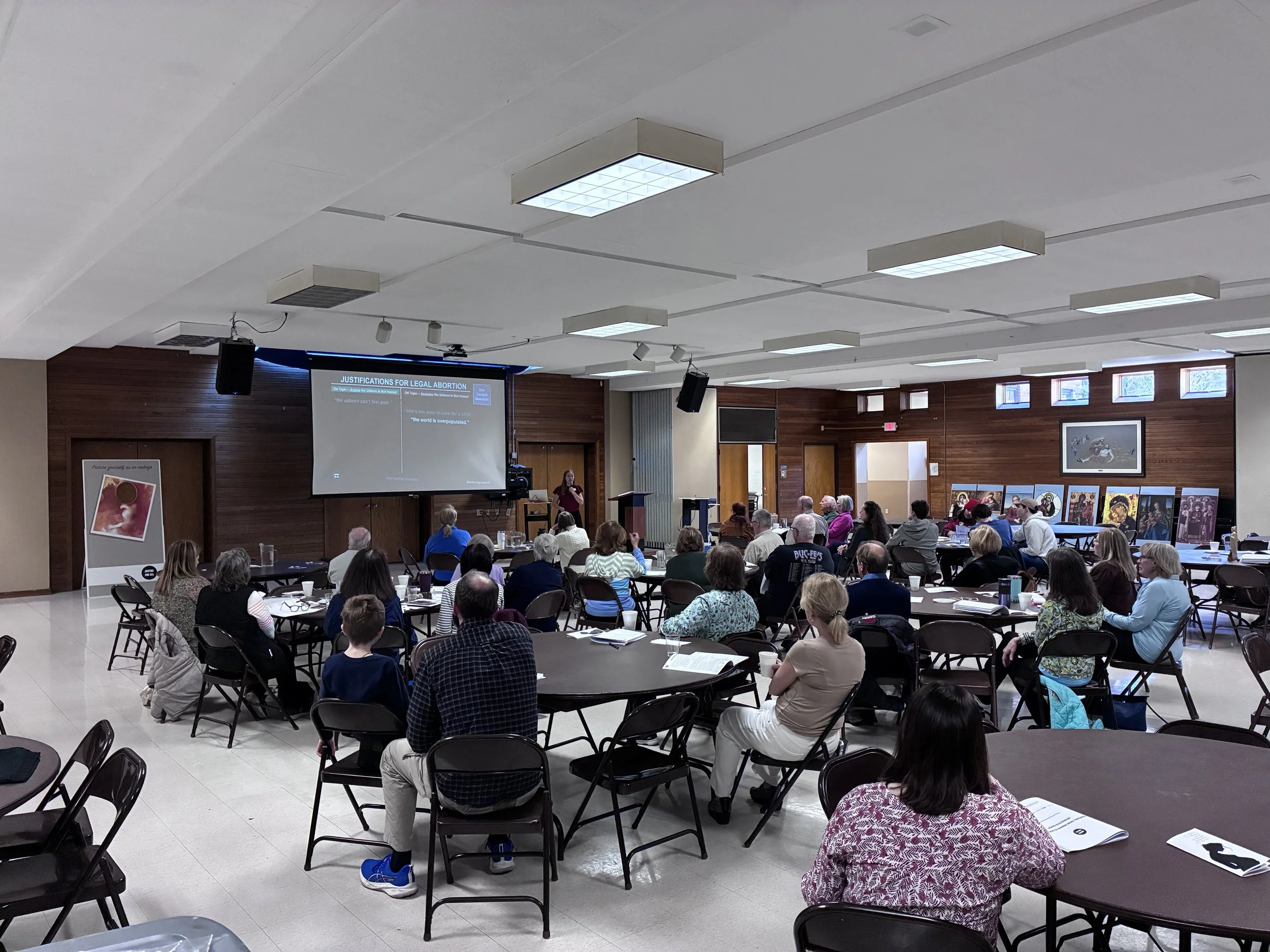
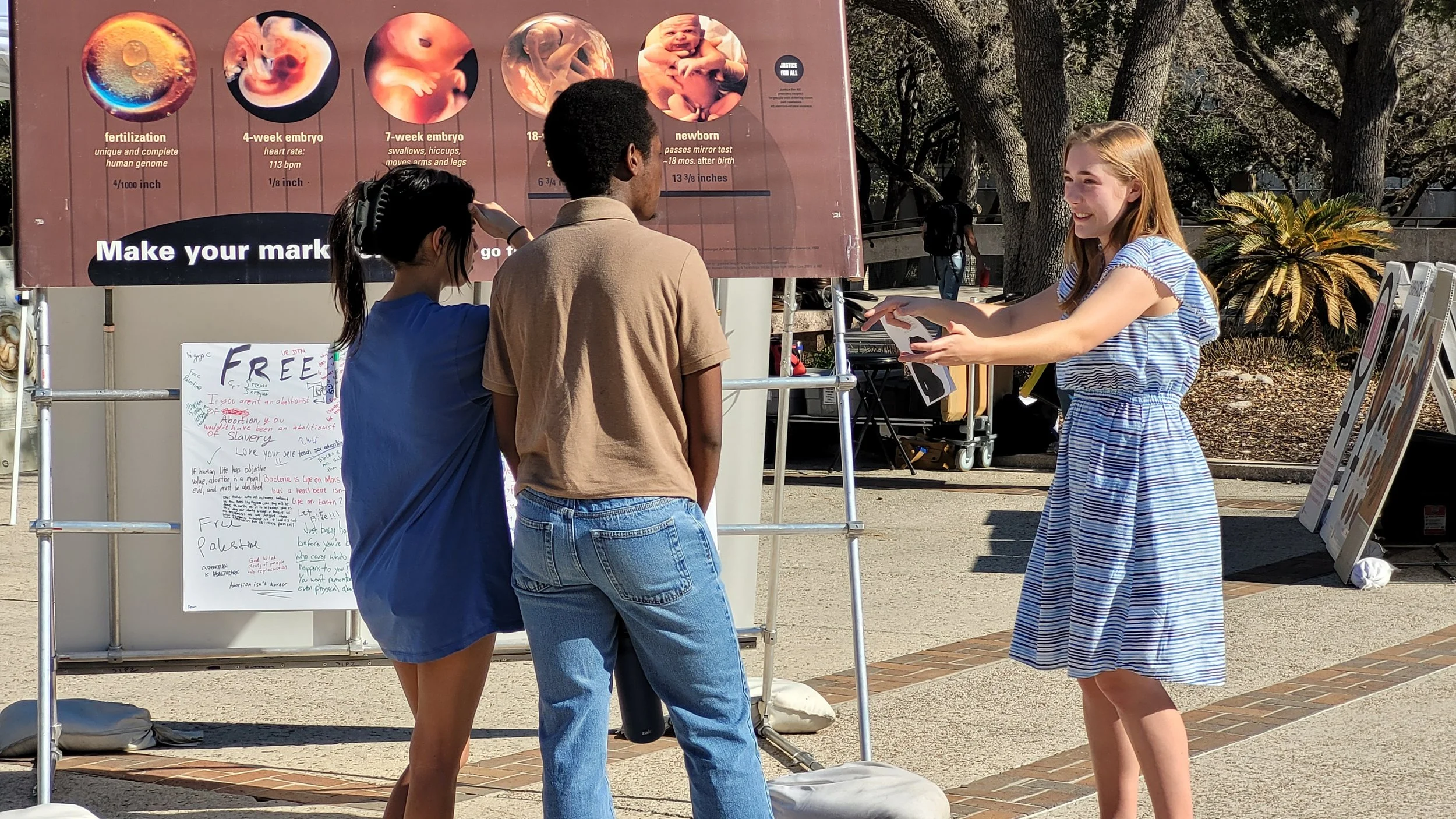
Since I last wrote I was able to travel to south Texas and conduct four days of outreach at Texas State and University of Texas at San Antonio (UTSA). Additionally, I was able to help with Justice For All’s interactive workshop for UTSA’s pro-life club. I am also happy to announce that taking all of the monthly pledges and special gifts into account, I am fully funded! A huge thank you to all of my generous supporters. I’m so grateful for my supporters who make it possible for me to have these important discussions. I would like to share a conversation I had on my Texas trip.

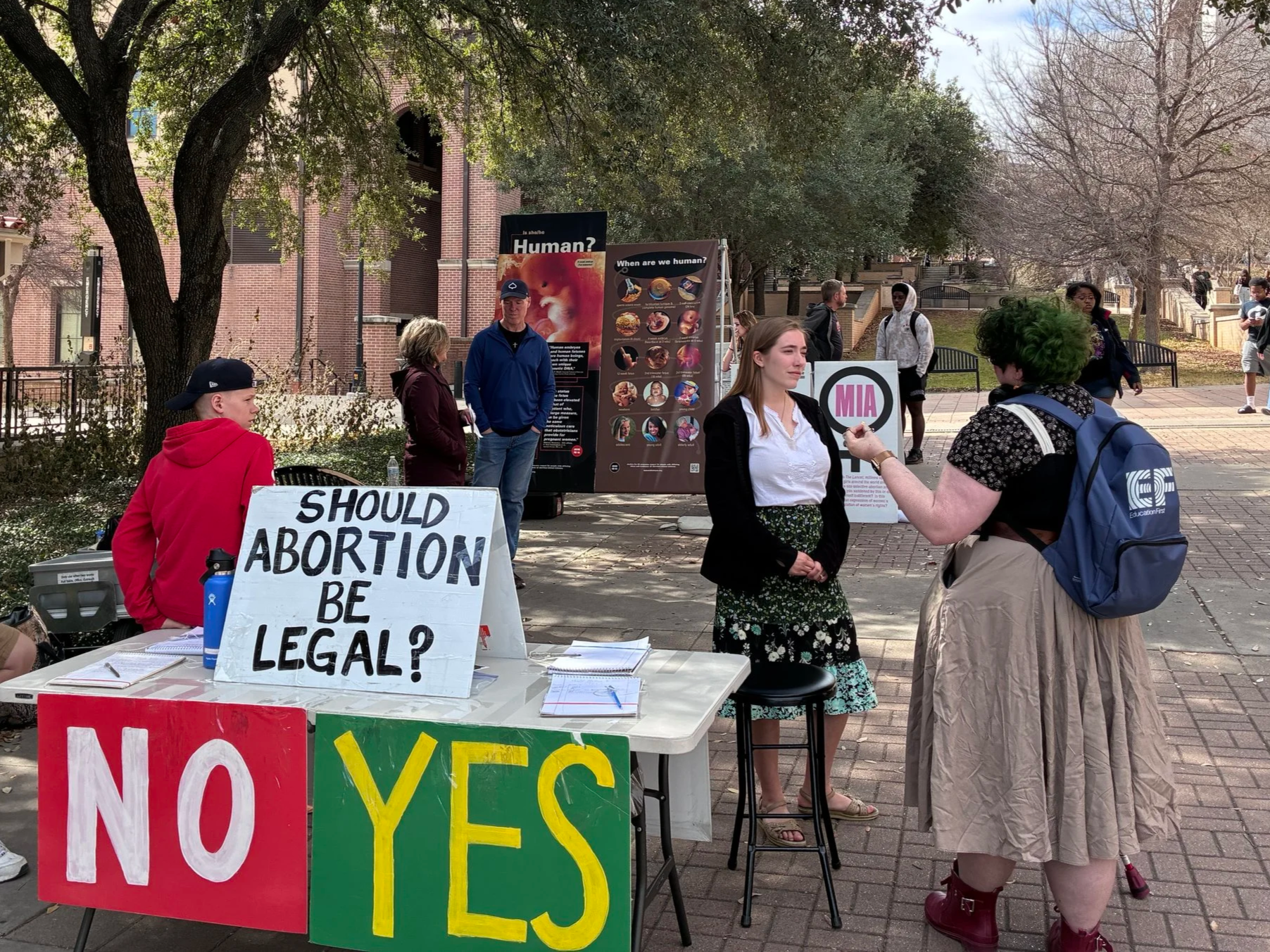
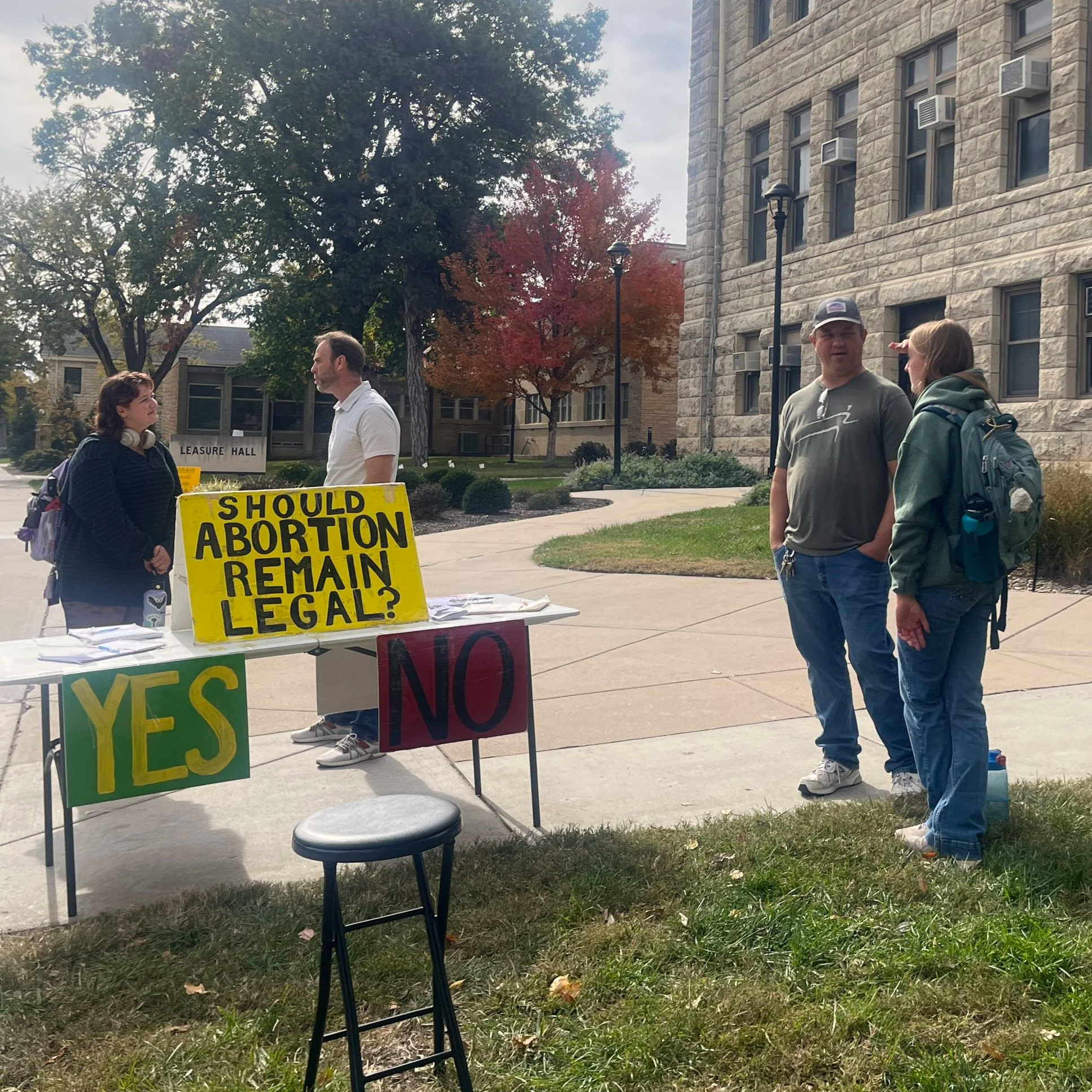
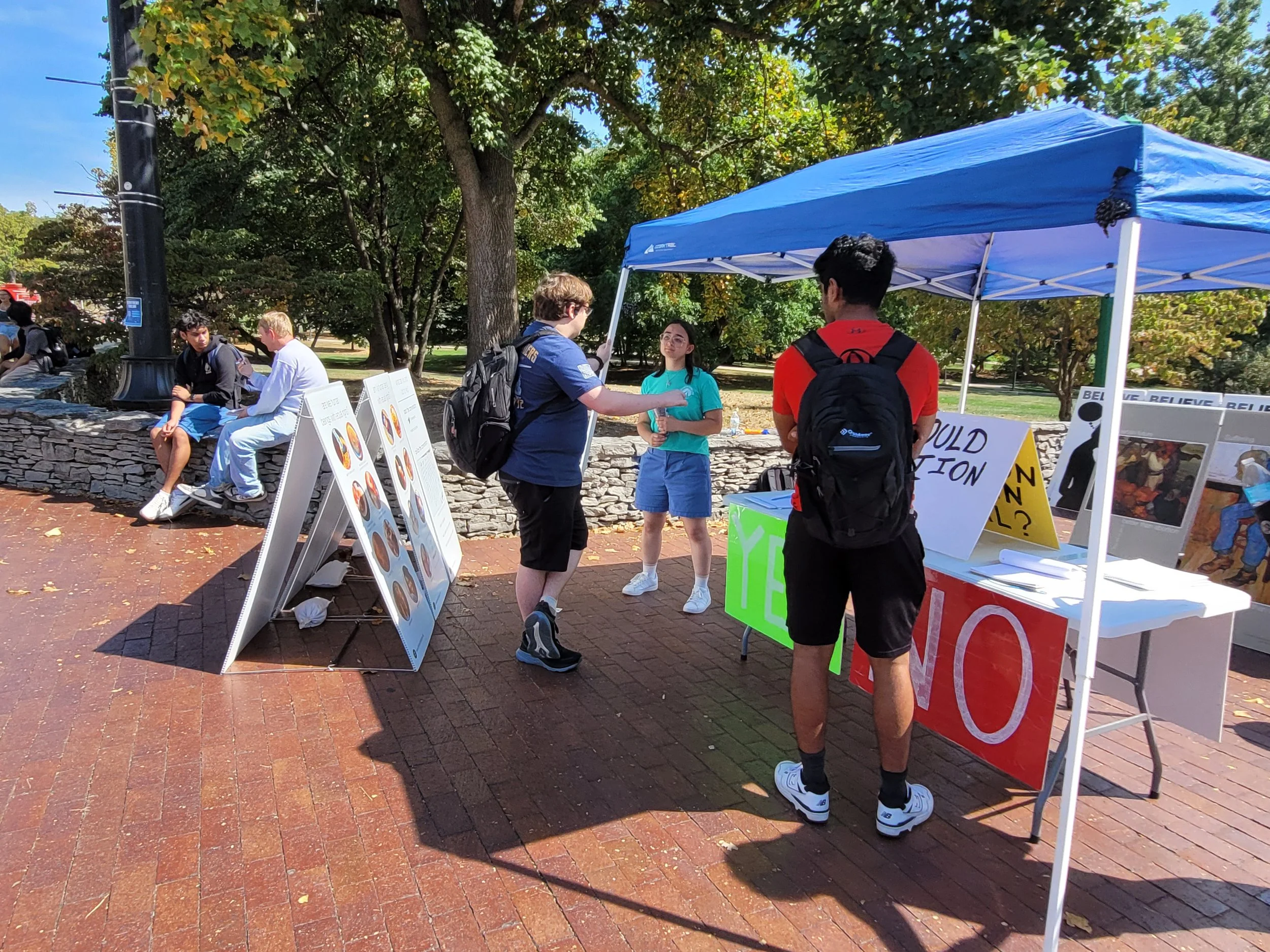
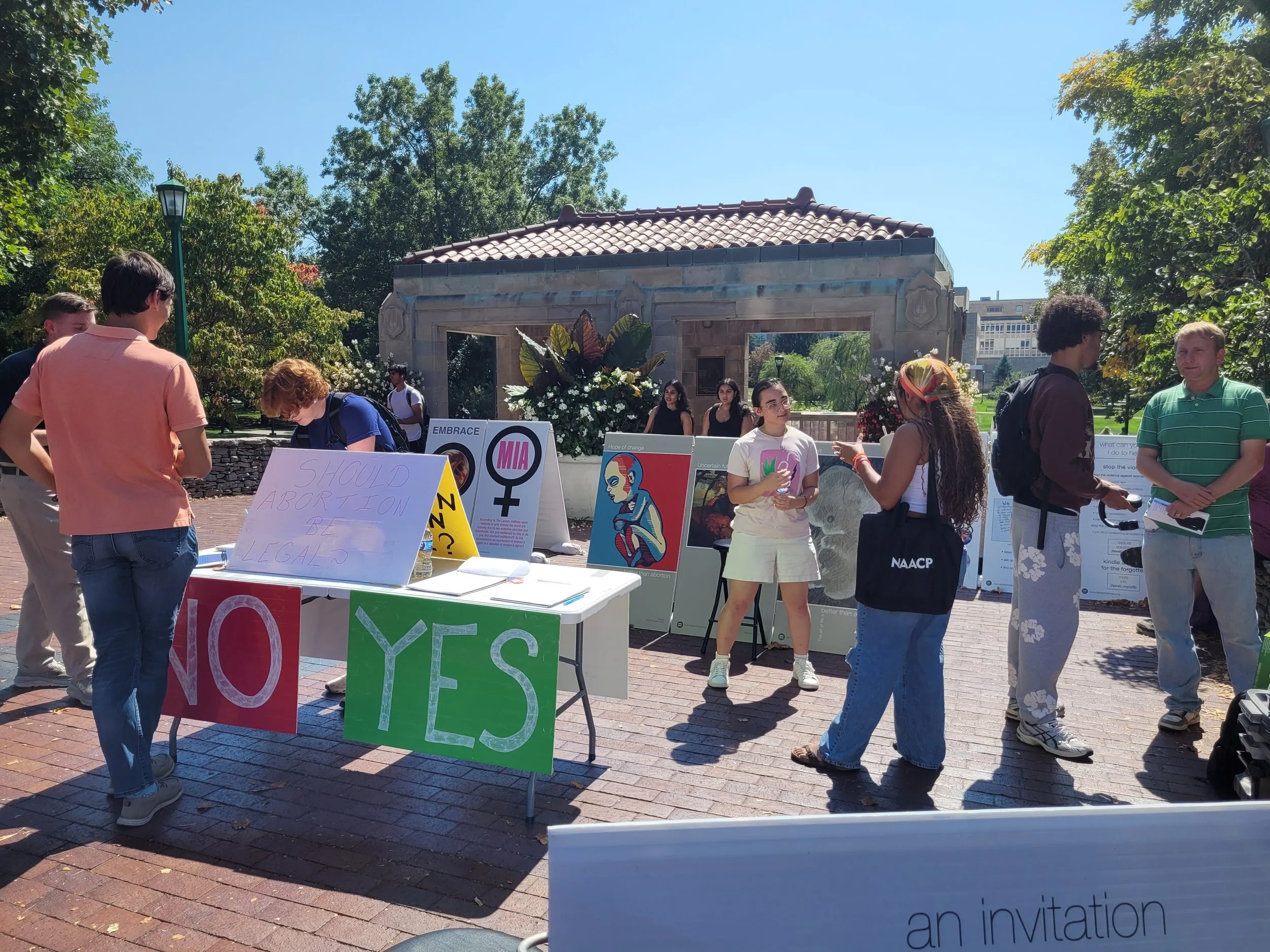
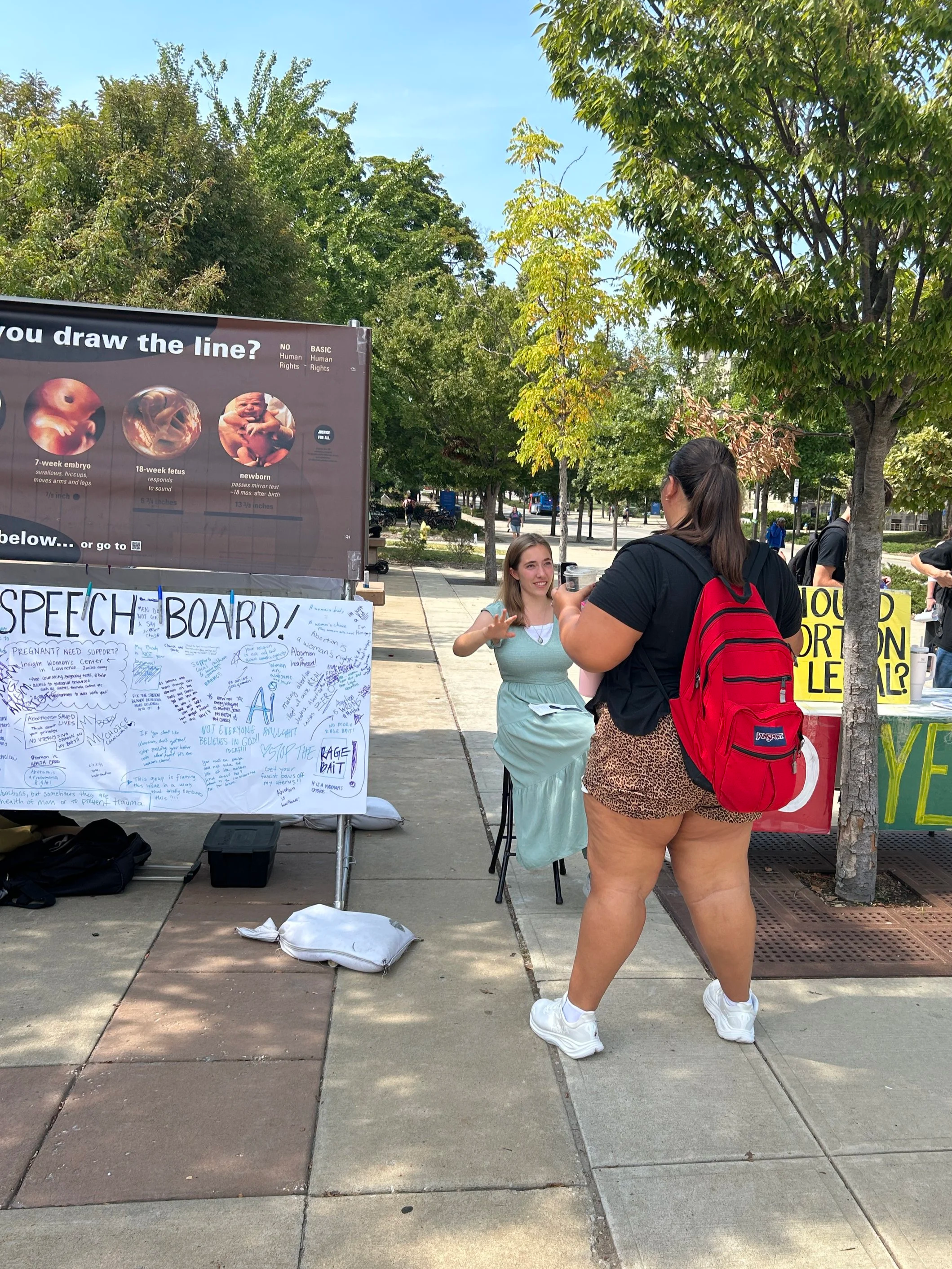
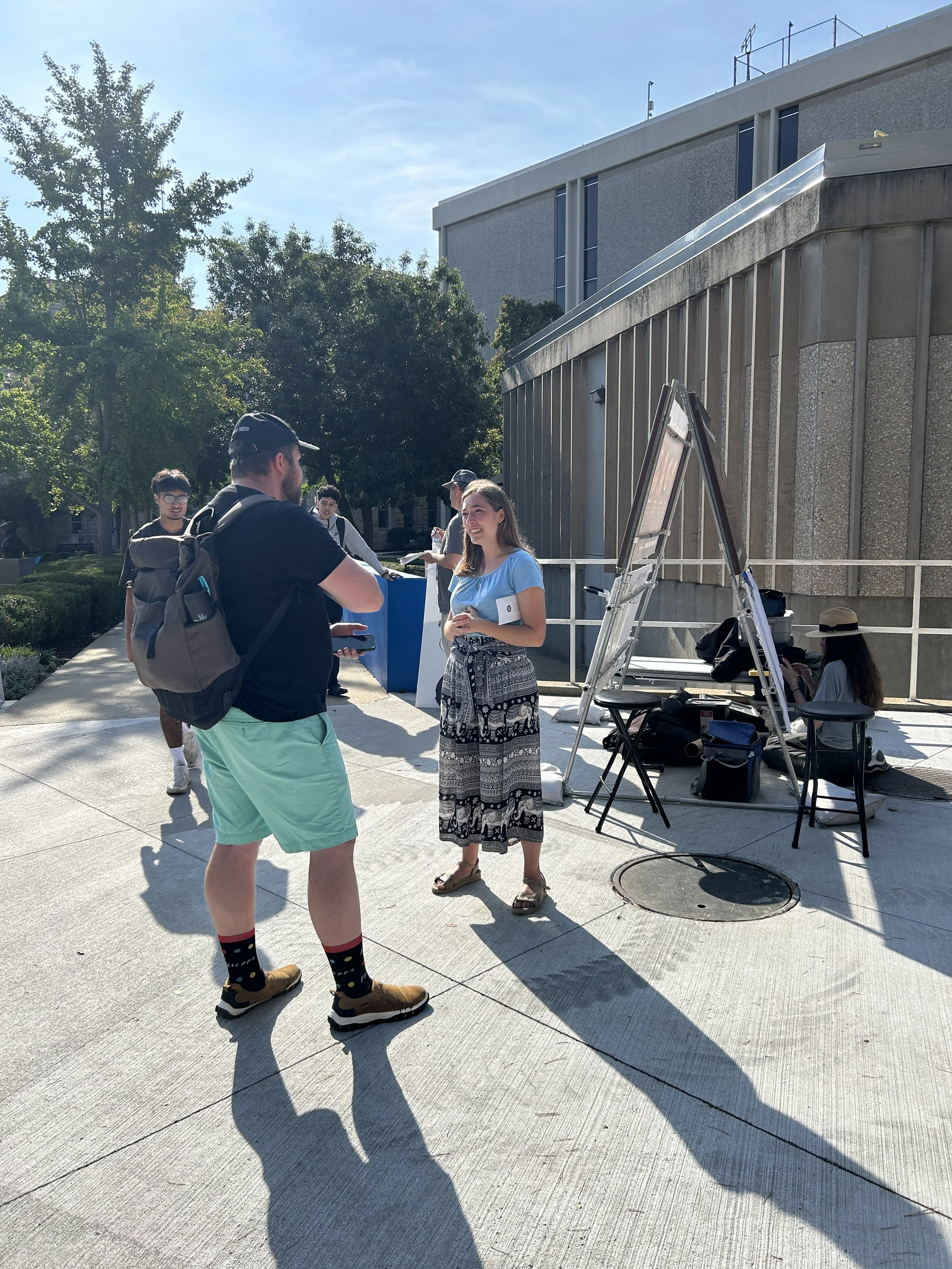
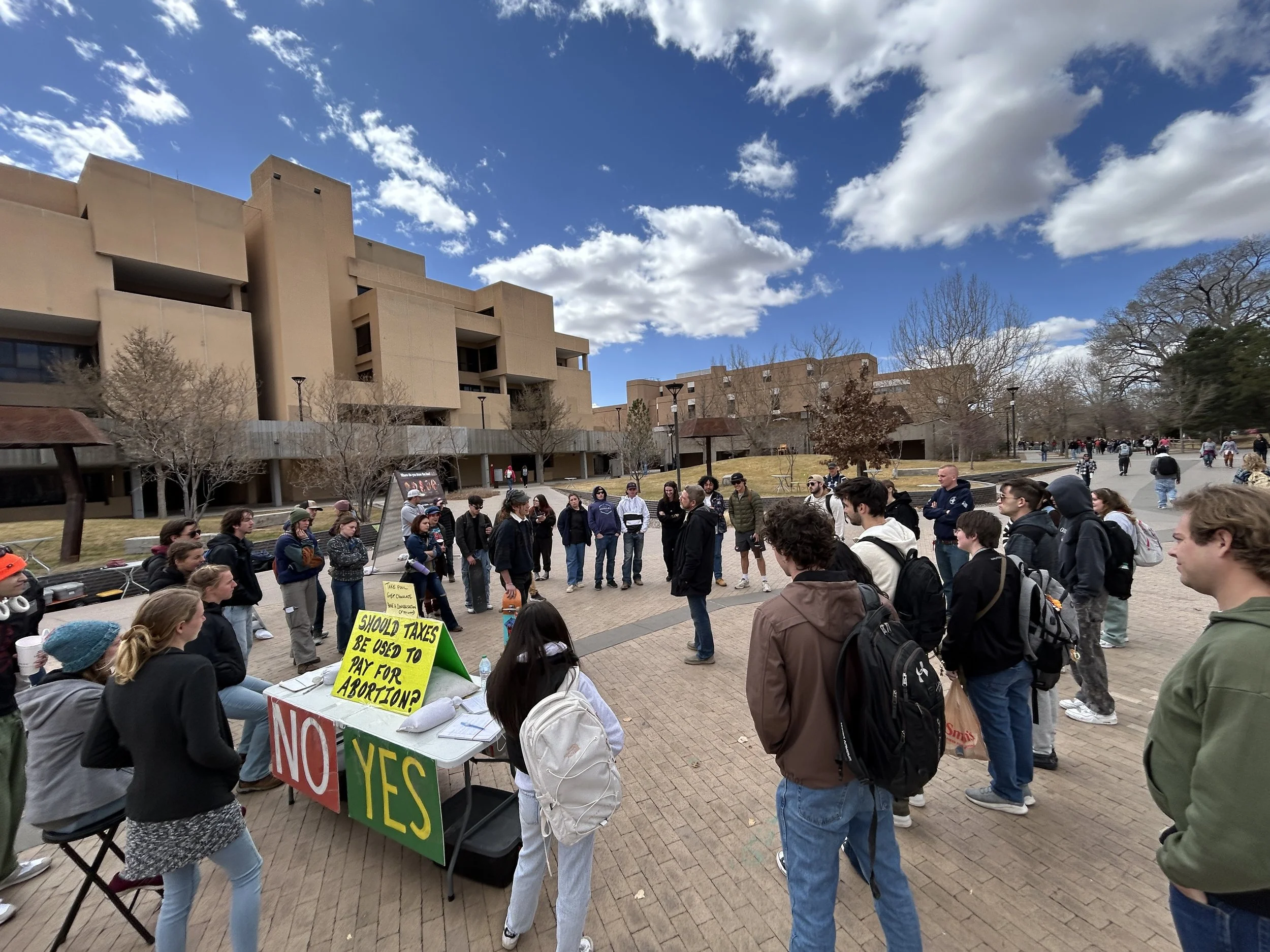
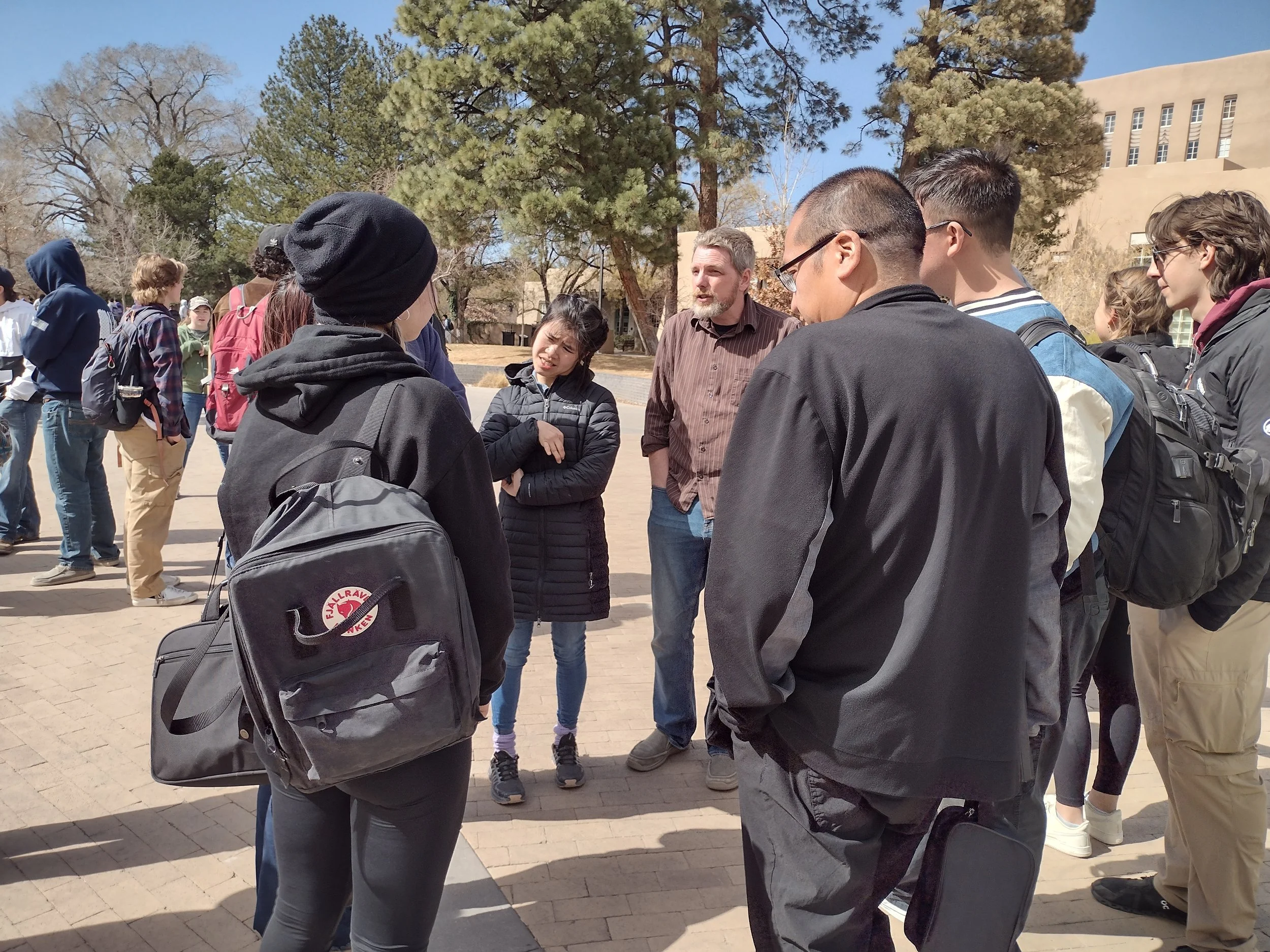
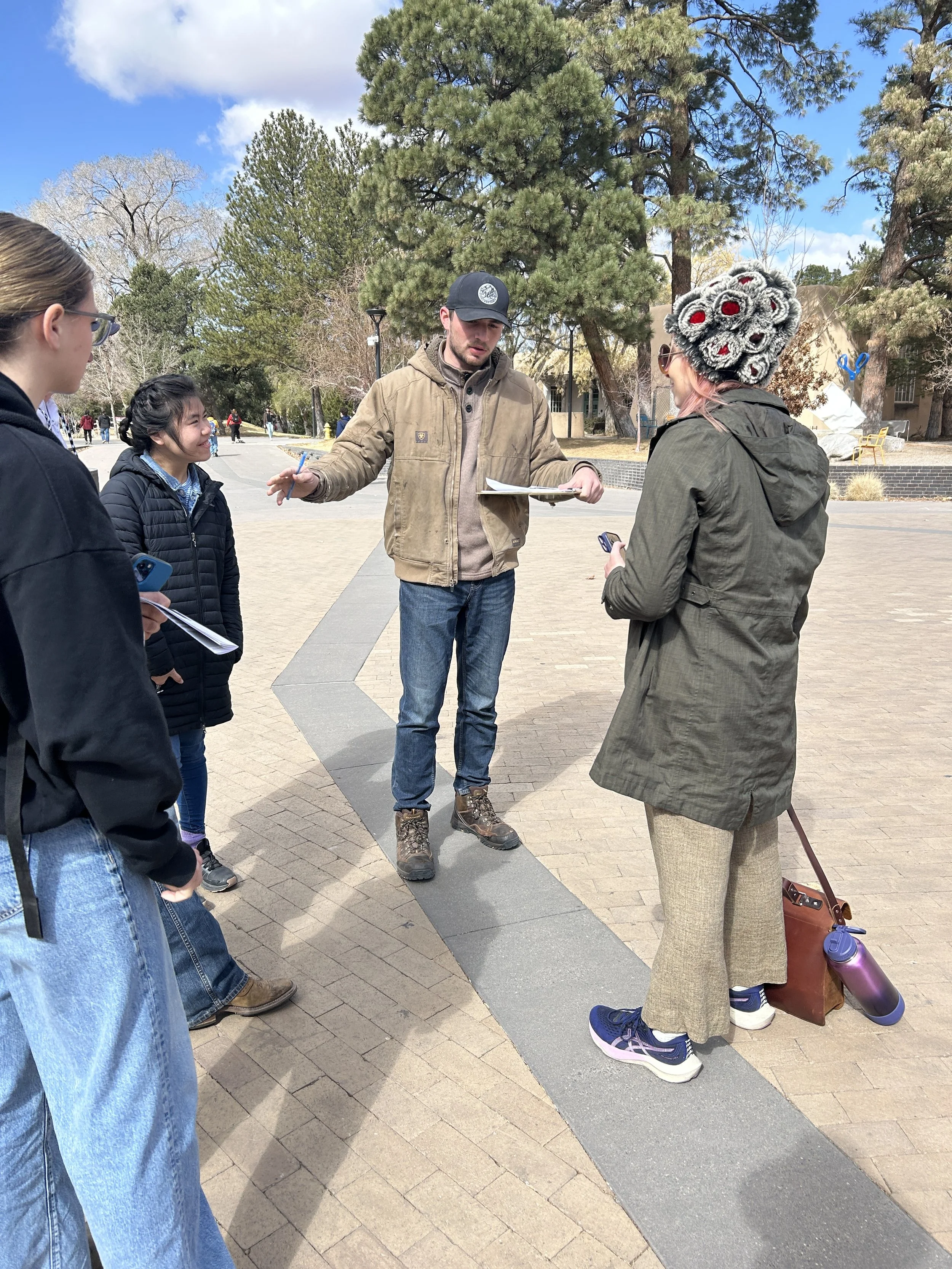
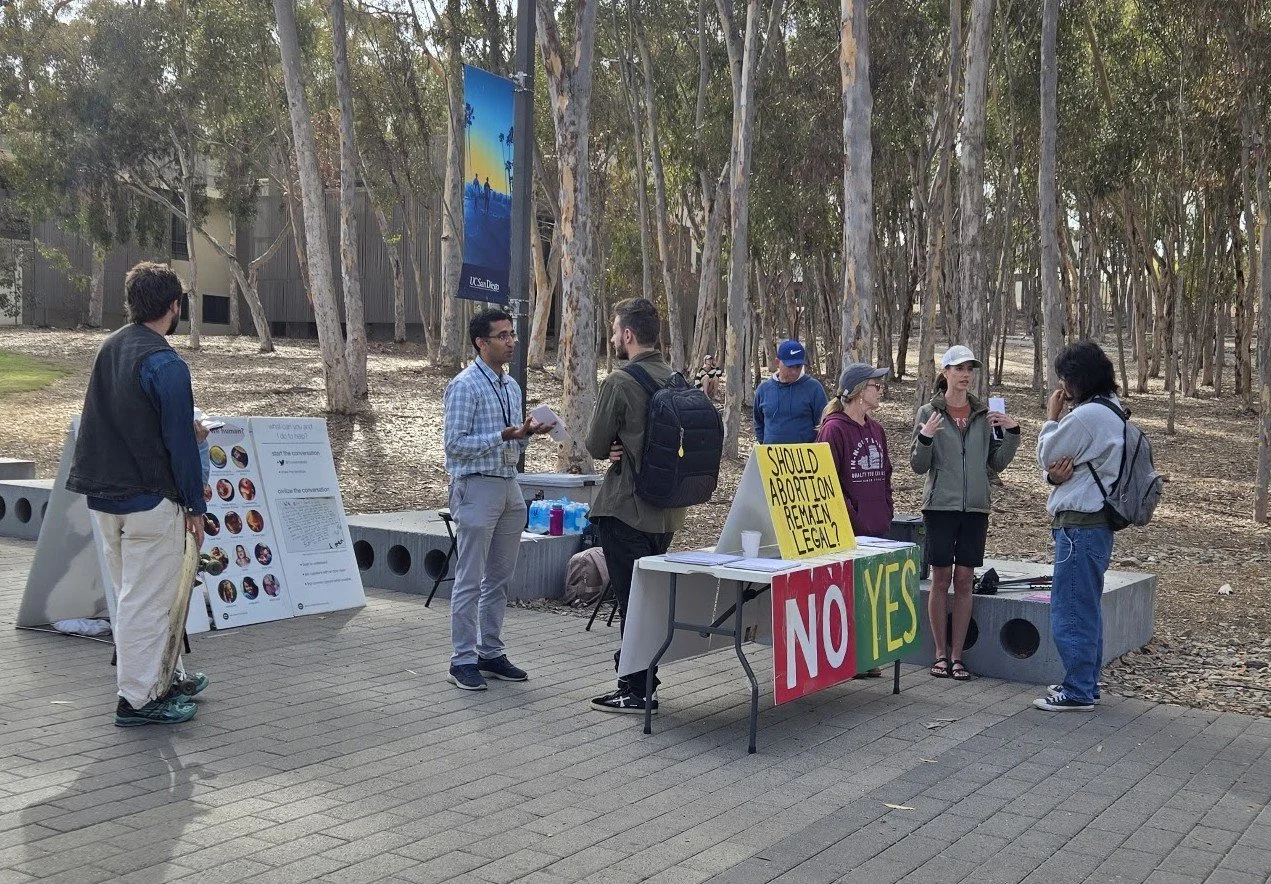
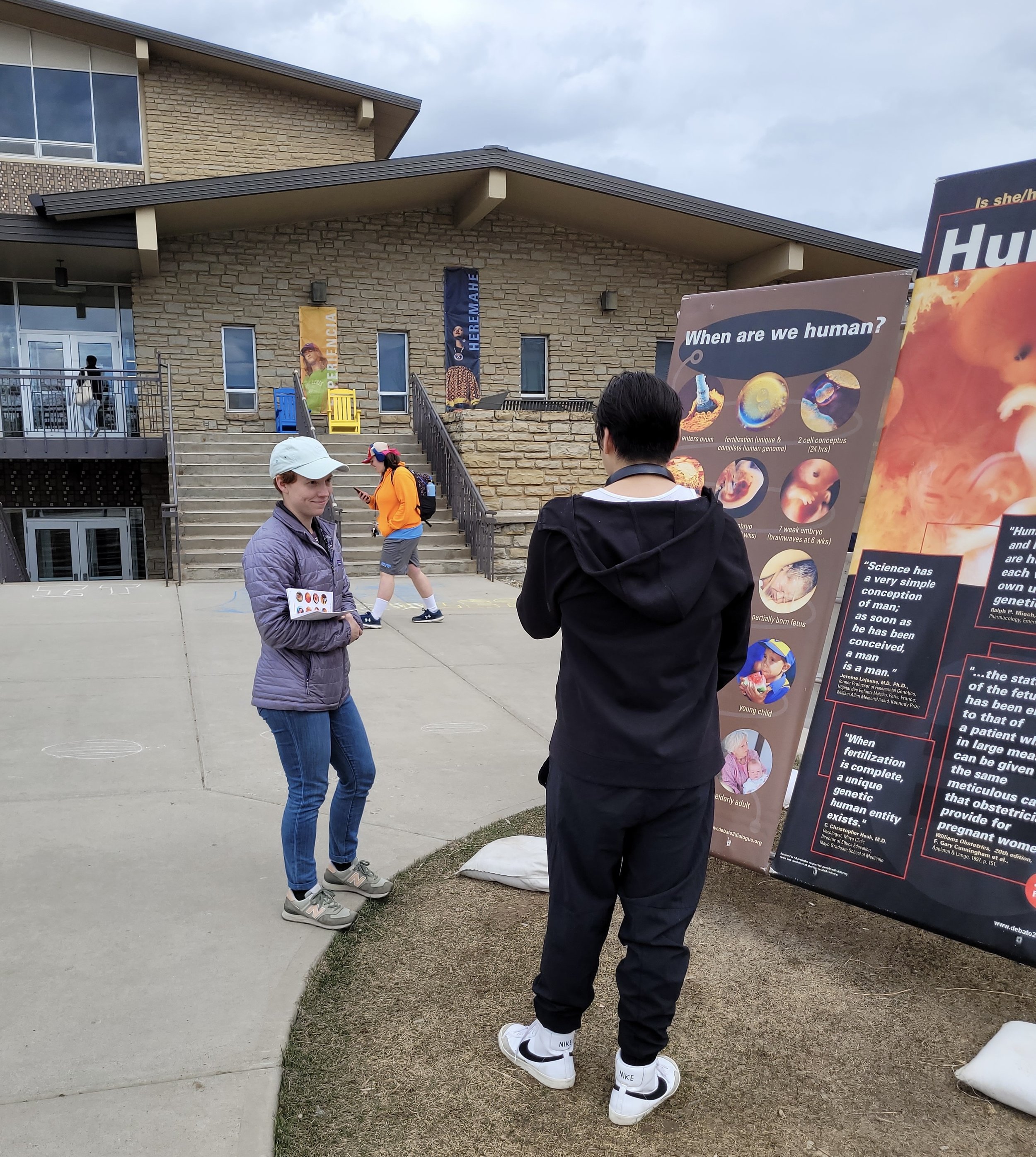
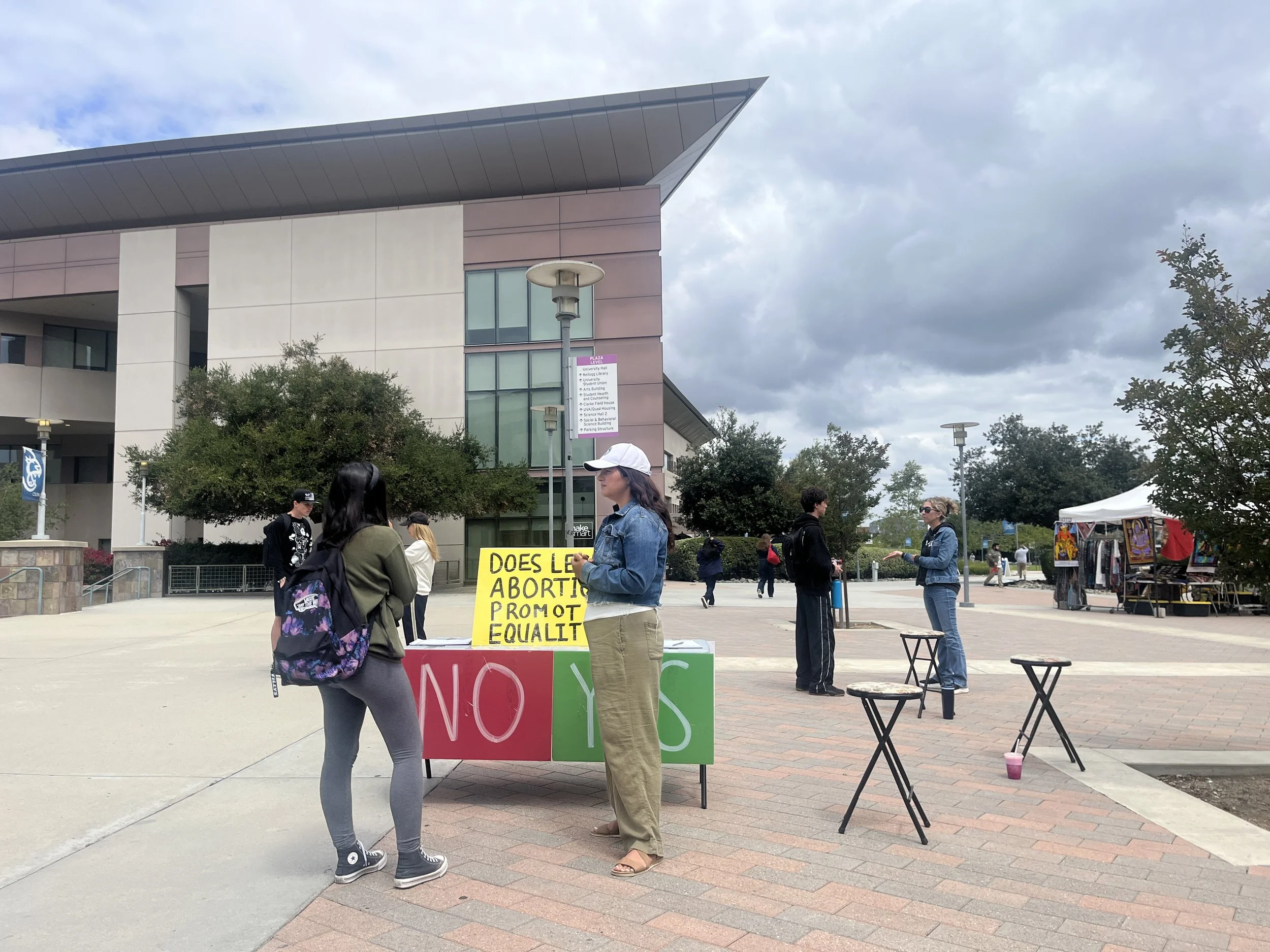
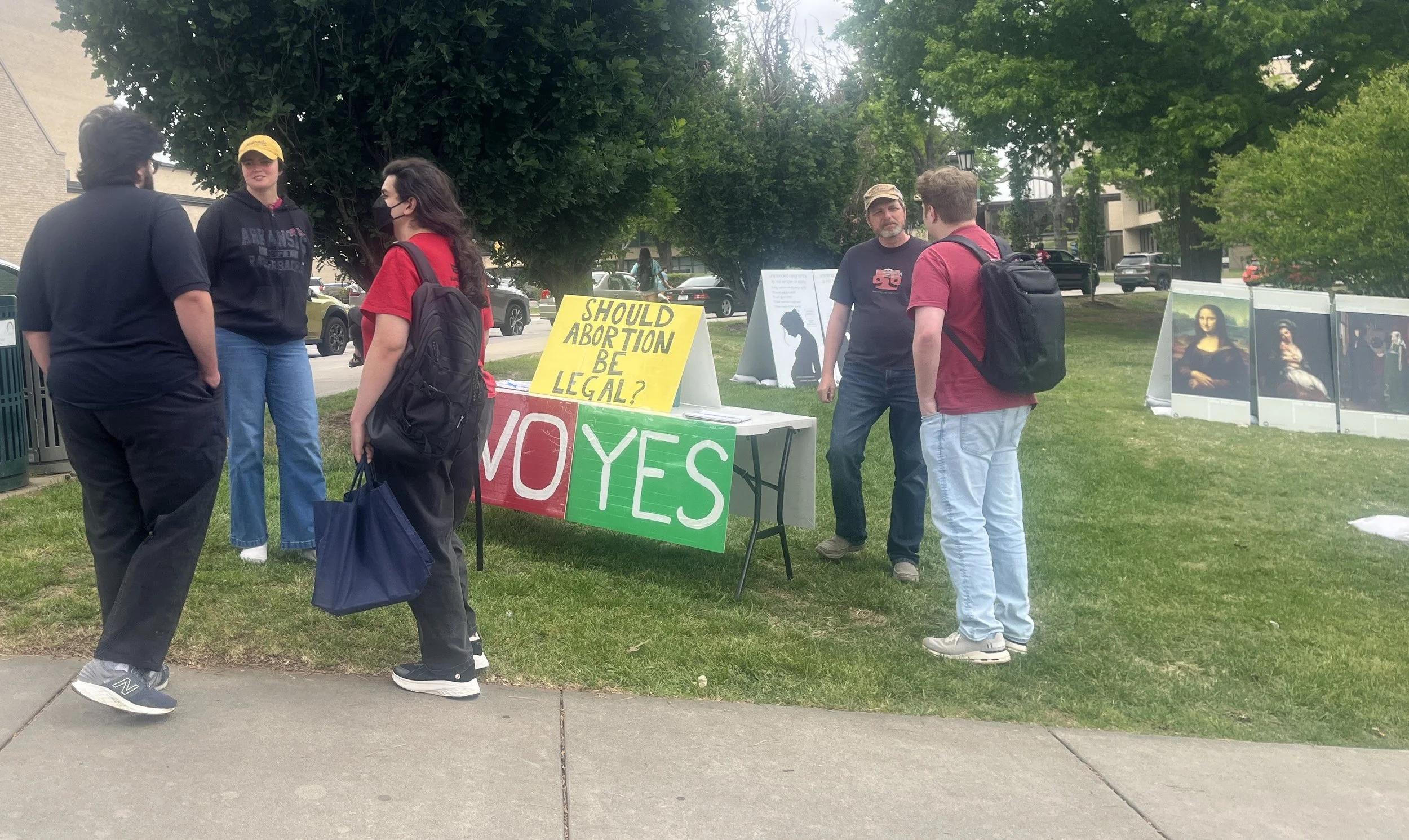
A student I’ll call “Max” at UTSA approached our poll table, “Should Abortion Be Legal?” (see images). After he had signed, I asked him what his thoughts were on abortion. He said that he was pro-choice. Using what I had learned from JFA’s workshops, I proceeded to ask him some clarifying questions about his view. First I asked him if he supported abortion through all nine months of pregnancy or if he thought there should any limit timewise. He replied that he did support abortion through all nine months. This initially made me think he had a more extreme view on abortion than most people, but I continued to inquire by asking him in what circumstances he supported abortion.

It turned out that he only supported abortion in the case of rape. This surprised me because a lot of people will bring up rape to support their pro-choice position, but they generally also support abortions for all sorts of other much less horrific reasons. Max was one of the first I’ve encountered during my internship with this view. (He also had said right off the bat that he did believe that the unborn is a human person.) Now that I understood his particular view, I focused on our common ground related to the evil of rape.

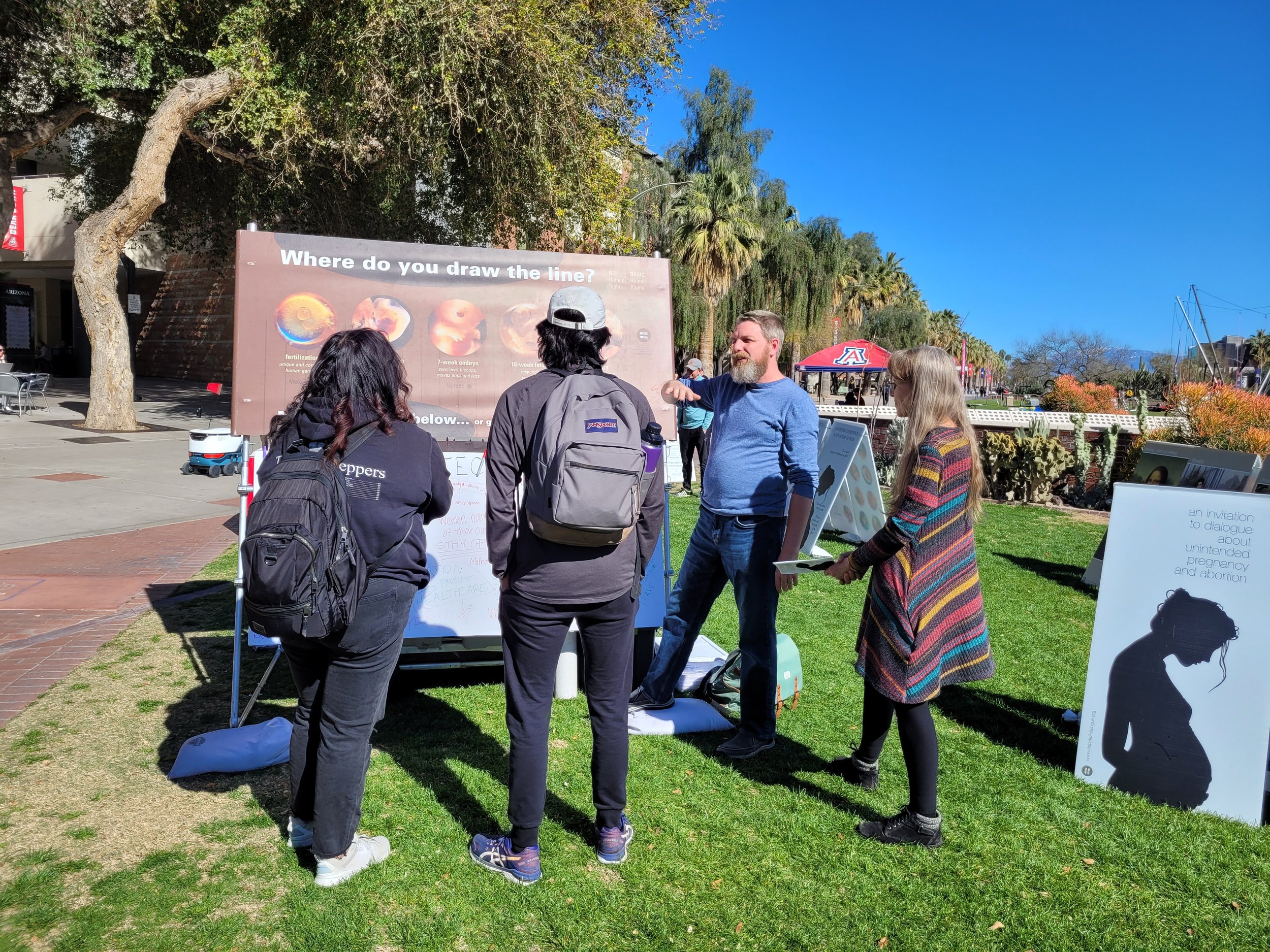
University of Texas at San Antonio (February, 2026)

I agreed with Max that rape is a horrific crime that leaves its victims severely traumatized. I told him that I think our society and we as individuals need to work harder to prevent these crimes from occurring. Moreover, we need to support victims and help them find healing. Additionally, we both agreed that a lot of our laws need to be much stricter in punishing the perpetrators of these sorts of crimes and that too often rapists are not prosecuted or get off with just a slap on the wrist.

I always try to start any of my discussions by finding common ground with the other person because it helps ease the tension and makes people so much more open to a differing view. When someone brings up rape, I try to focusing on sympathizing with his concerns and agreeing with everything that I can without compromising my view, all the more because it is such a sensitive and intense topic. Moreover, you never know if the person with whom you are speaking has experienced assault or if someone close to him has. Throughout my time with JFA, I have been saddened by how frequently college students have shared with me that they have experienced assault. I try to always keep in mind that when we are discussing rape, it very well might not be hypothetical for the student. I’ve often seen pro-lifers dismiss the case of rape by saying that it only constitutes about 1% of the abortions in the U.S., which is true, but if that is the first thing you say, it can come off as dismissive of the horror of rape. If the pro-choice person does not think that you care about sexual violence against vulnerable people in general, he will likely feel that your claim that you care about violence against vulnerable unborn people is not genuine.

Once I had established some of what we believed in common, I began to gently challenge his view. Here is the gist of the rest of our conversation:

Martha: Can I present you with a hypothetical situation?

Max: Sure.

Martha: Imagine there are two women who tragically have been raped and both become pregnant. One of the women is now two months pregnant and the other has a toddler as a result. Now this is going to sound like a crazy question, but please bear with me. Could both women kill their children?

Max: Of course not! It would be murder for the woman to kill her toddler.

Martha: I completely agree! Again this will probably sound like a ridiculous question, but I think it will actually help us get at something crucial. Why would it be wrong for her to end the life of her child who was conceived in rape?

Max: Well, I guess because he’s a human being.

Martha: I totally agree. If the unborn is a human being, as you mentioned earlier, just like the toddler, then shouldn’t we protect the unborn child regardless of the circumstances of his conception the same as we would protect the toddler conceived in rape?

Max: I’d never thought about it that way before.

Martha: After all, both of these women are in the exact same circumstance. The only significant difference is the age of each child. Now this is not necessarily going to be every woman’s experience and every woman is different, but some women who have experienced rape and have gotten abortions have later said that the abortion was more traumatic for them than the rape.

Max: Really? I’m kind of shocked to hear that. I never really thought about how getting an abortion could also be traumatic for a woman.

Martha: I think that often people feel like abortion can “fix” or “undo” the rape. I think this comes from a good place of wanting to help the victim and erase the horrible thing that happened to her. The problem is that abortion won’t “undo” the rape. If a woman conceives, even through something as evil and horrific as rape, she is still a mother. Abortion will only make her the mother of a dead child; it will not heal her trauma.

Throughout the conversation Max was agreeing with me. At the close of our conversation he thanked me and said that abortion should not be legal even in the case of rape. I was really encouraged by this distinct shift in Max’s view from thinking that abortion in the case of rape should be legal through all nine months of pregnancy to thinking that even in the case of rape abortion should be illegal. Thank you again to all those who support my work through your prayers or financial gifts and help me to come alongside people like Max to help them think more clearly about the value of unborn children.

Two Campus Reflections

Impact Report March 2026

This Outreach Update features a short reflection from JFA trainer Kaitlyn Donihue from our Kansas State outreach in November 2025 as well as a testimonial from Maria, a student leader who invited JFA to her campus twice last year. In addition, our teams have been working in Texas, Minnesota, New Mexico, and Colorado over the past few weeks. You can see pictures and updates on our Instagram (@picturejusticeforall). Thank you for praying for us and for supporting our work with your generous financial gifts.

-Steve Wagner, Executive Director

Meeting Beth at Kansas State

JFA Trainer Kaitlyn Donihue

During our Kansas State outreach in November 2025 (pictured), a JFA volunteer named Michael talked to “Beth.” She shared that she had almost been aborted. She was struggling with sadness and depression and whether her life mattered. Knowing that her parents hadn’t wanted her was deeply painful.

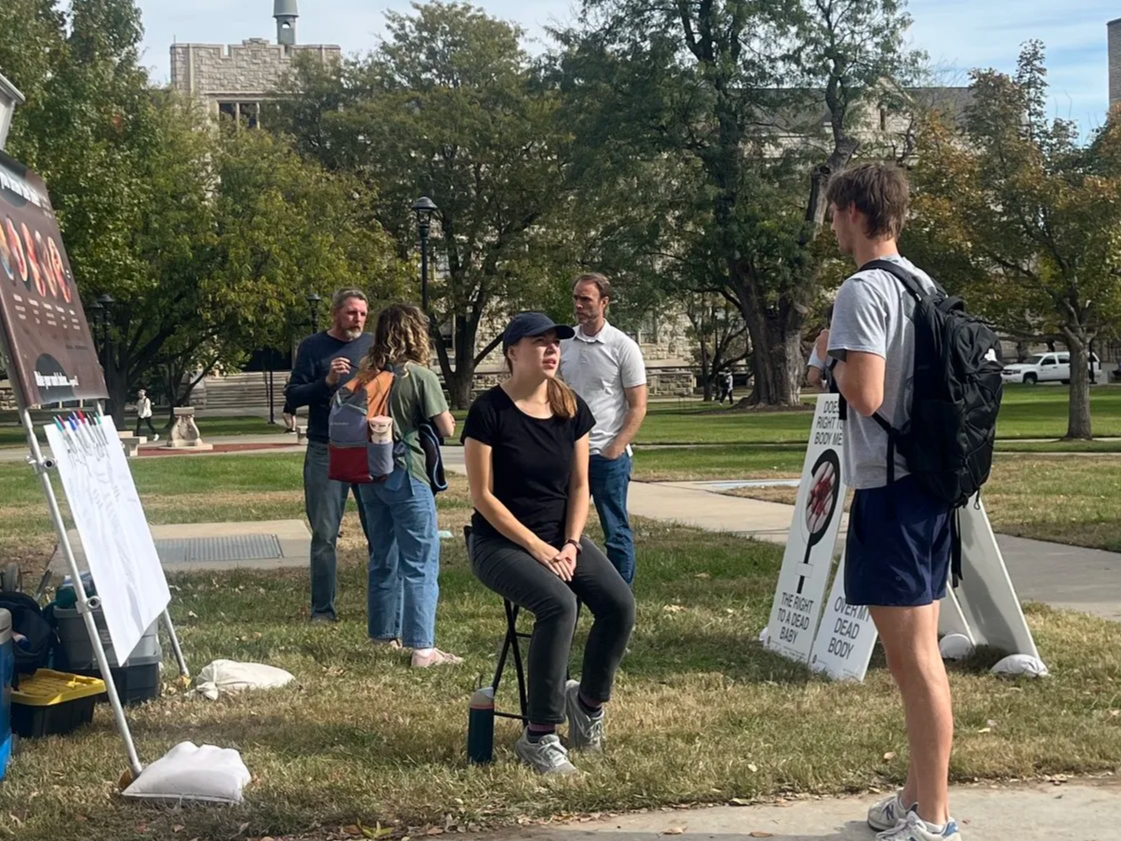
Jonathan Hupp, a local pastor (Left, white shirt) and Paul Kulas, JFA’s Director of Operations (Right)

Michael affirmed Beth’s value and shared about Jesus with her. He asked Beth if she believed in God. She said she didn’t, but she also didn’t believe in coincidences. She said she had never walked on that sidewalk across campus before, but for some reason she decided to do so that day, and she ran into us. She felt that maybe the God she didn’t believe in was pulling her to Himself.

Michael agreed and asked if he could connect her with his wife so that she could explore her questions about God and the world in a deeper way. She said she would like that, so he connected the two of them, and they have plans to meet for coffee. Hopefully this will turn into an ongoing relationship where Beth can experience Jesus and begin to understand her value. Wanted by her parents or not, she is wanted by the Creator of the universe.

Conversations around the topic of abortion often open the door for our trainers and volunteers to meet people in some of their deepest pain and share the message of hope in Jesus with them. We consider it a high honor to get to do that.

-Kaitlyn Donihue for the JFA Team

How JFA Made a Difference at IU Bloomington

Maria

We had tabled with other pro-life organizations before, but Justice for All training us was an absolute game changer.

Our Students for Life group has always been eager to engage our campus in genuine conversation with those who disagree about abortion, but many members have very different levels of experience with apologetics and pro-life philosophy.

Maria (Center, White Shorts) and Jon Wagner, JFA’s Director of Community Engagement (Right, green shirt)

JFA’s training helped all of us get on the same page with real conversation advice that works; after

one training, it was obvious not only how many more people we were able to speak with, but also how much more honest and fruitful every conversation was.

Having been a pro-life student leader for the entirety of my high school and college experiences, I can think of no other group more effective than Justice for All at changing hearts and minds on campus, and I wish I could have brought them in sooner!

– Maria,

President of Students for Life at Indiana University Bloomington

Personally Pro-Life

Impact Report, February 2026

Martha Depew began as an intern with JFA in July 2025 and is continuing her internship this spring. In this Impact report, Martha gives a window into her work through one special conversation she had recently, and she shares a principle that is helpful to all Christians as they seek to change hearts and minds. In addition, the tools Martha used here to help Becky are not hard to learn, and they can make a big difference for people who characterize themselves as “personally pro-life” and don’t want to “push their views” on other people through the law. Following Martha’s reflection, please take note of the partial list of recent and upcoming outreach events. Thank you for your support of our work through prayer and giving.

-Steve Wagner, Executive Director

University of Kansas (Sept. 2025)

During my internship I have had many amazing opportunities to conduct outreach and help with Justice For All’s interactive workshops in Colorado, Arkansas, Ohio, Pennsylvania, Illinois, Missouri, Kansas, and Texas.

I’ve also spent time learning to give sections of our training and furthering my knowledge of the abortion issue.

I wanted to share a conversation I had at Colorado State University that was such a great reminder to me of how God might use one person to plant a seed and another person to water it.

University of Missouri in Kansas City (Sept. 2025)

I asked a student I’ll call “Becky” what she thought of our display. She explained she had actually talked with one of our volunteers the previous day. She said that prior to that conversation she had been pro-choice, but at its conclusion she had significantly shifted her position to being “personally pro-life.” She meant that she was morally opposed to abortion, but felt uncomfortable saying that it should be illegal for others. I began by empathizing with her concern. I agreed with her that there are certain things to which I am morally opposed, but which I still think should be legal. For example, I said that while I believe that it is morally wrong to take God’s name in vain, I think the U.S. government would be overstepping if it started arresting people for this. After finding common ground with Becky, I then moved on to gently challenge her position. I pointed out that while there are some things we both agree the government should not regulate, there are other things in which the goverment has a duty to intervene, such as when an innocent person is being threatened with harm. We brought up various examples and discussed when the government should and shouldn’t intervene and into which category the abortion issue falls. At one point in our conversation I brought up the example of slavery. I helped Becky see the parallel to someone who said a similar thing about slavery when it was legal: “I am personally against slavery, but I don’t want to ‘force’ my view on others by saying it’s wrong for my neighbor to own slaves.” (I was very careful in framing this so that Becky would not feel like I was accusing her of anything, but instead simply drawing out the flaw in her way of thinking through an analogy.) Becky seemed struck by my analogy and was honest enough to admit the sense in it. I also used the example of being morally and personally against child abuse but not wanting to “impose” that view on others.

Becky had already become convinced the day before that abortion hurts an innocent child, so at this point in the conversation she had to admit that she agreed with me. Yet, I could tell that there was still something stopping her from fully shifting from only personally thinking that abortion is bad to thinking it should be illegal for other people. We had been talking for a while and built a lot of rapport, so I felt that I could be pretty direct with her. I asked her if the reason that she couldn’t bring herself to become fully pro-life was because she was scared to hold such an unpopular opinion. Becky frankly admitted that this was how she felt. It is an understandable fear because holding the opinion that abortion should be illegal, especially at a secular university, would practically guarantee losing friends. For someone like Becky who had probably grown up with the idea that being pro‑choice was essentially tantamount to being a compassionate, reasonable person who cares about human rights, it’s so difficult and requires a lot of bravery to recognize the truth about the humanity of the unborn. I was honestly impressed that she was even willing to consider something that would push her so far out of her comfort zone and belief system. At the close of our conversation I encouraged Becky that if she truly believed that abortion takes an innocent life then she must take a stand in defending unborn children, even if it is unpopular. Becky concluded by saying that she needed to think about it all more, but she seemed pretty convicted.

At Justice For All we talk about planting a seed, but this was the first time that I got to see so clearly firsthand how each conversation can be one step in someone’s journey. Because our volunteer had covered so much ground with her the day before, I was able to focus more specifically on helping her see that if abortion ends an innocent life, then it is not a subjective matter that should be left up to each person to decide, but an objective injustice against which we must take a stand. I’m so grateful that God allowed me to witness the growth in Becky.

Martha Depew, for the JFA Team

“Everything Is Relational”

Impact Report, January 2026

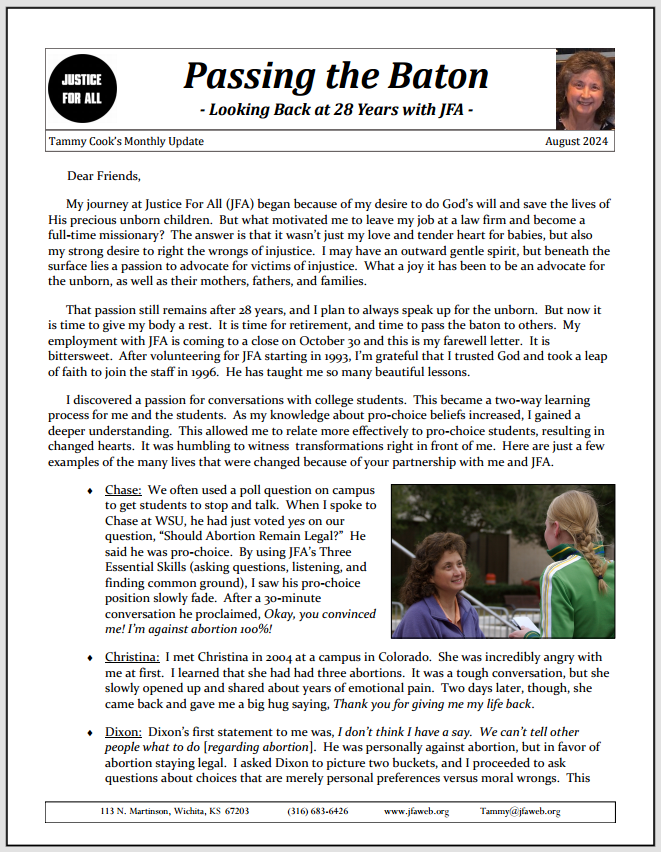
In this Impact Report, we pause to give (much overdue) thanks to God for one of our dear friends, Tammy Cook, who retired from 28 years of employment with JFA in fall of 2024. Tammy continues to serve JFA in volunteer roles behind the scenes. Throughout her time working for JFA, Tammy and I had many conversations about how we should approach dialogue with those who disagree. I remember her saying, almost as a way of summarizing all she had learned through thousands of conversations: “Everything is relational.” With this Impact Report I wanted to honor Tammy’s work and God’s work through her while also explaining this statement a bit, because it provides important counsel for all of us seeking to change hearts and save lives. See also Tammy’s own retrospective on her years with JFA in her farewell letter (“Passing the Baton” - jfaweb.org/tammy-farewell.

Steve Wagner, Executive Director

“Everything Is Relational” — A Tribute to Tammy Cook

Tammy talks to a student at the University of Kansas (KU) in 2016.

Tammy Cook was standing in front of the JFA Exhibit in Colorado in 2004 and asked a student passing by what she thought about our Exhibit. The student, visibly shaken, said, “What do you think I think? I’ve had three of these [abortions].” Tammy’s response at that moment could make or break the conversation. She softened her facial expression, showing compassion and concern for this young woman, Christina. She continued weaving compassion into the rest of their interaction. Tammy listened to her story and walked with her to the local pregnancy center table set up nearby (at JFA’s request). Tammy waited with Christina and introduced her to the director of the center once she was available. Then they parted, and Tammy trusted God to care for her. The next day Christina returned looking so happy she was almost unrecognizable. She explained that she had decided to participate in a post-abortion healing Bible study and return to her Christian faith. She hugged Tammy and said, “Thank you for giving me my life back.”

Tammy and other JFA team members came to Kansas State (K-State) in 2005. In November 2025, Tammy returned to K-State with our team, this time as a volunteer (pictured here).

What was the key component in this interaction? Tammy realized the key to reaching Christina’s heart was to be relational. She emphasized love and sensitivity without compromising truth. She was compassionate about Christina’s feelings and circumstances. This allowed Christina to reckon with truth that would then set her free.

Just as Tammy’s conversation cast this shadow on our Free Speech Board (left), Tammy’s impact over so many years has and will continue to make its mark on our team and volunteers.

Tammy shared many stories like this over the years in our debrief sessions and in newsletters. (Read many of Tammy’s letters at jfaweb.org/tammy-cook). We were often amazed at the impact she reported, and she always gave the glory to God, but she would also say she had learned a most important lesson about how to reach people’s hearts and their minds. Even though Tammy had mastered the intellectual facts, information, and arguments through long hours on campus and on the road debriefing with our team – she was always learning – she had found that one thing was more transformational than any intellectual argument. She would later sum up the lesson with the words, “Everything is relational.”

See Tammy’s final letter, “Passing the Baton,” (below) to read her reflections and see more pictures from her decades-long tenure with JFA. You can find it at jfaweb.org/tammy-farewell.

What Tammy meant is this: When seeking to persuade people, we have to focus first and foremost on understanding the other person, on showing concern and compassion for the person’s feelings, emotions, and circumstances. We need to find the person’s “why.” Being relational means listening to her story, seeking common ground, and taking her seriously as an intrinsically valuable person, even if she never changes her mind. This is essential not just when people defend abortion with statements that have an obvious emotional component, such as rape or life-endangering pregnancy complications. It’s essential in every conversation about any argument for abortion. I think Tammy would respond with a chuckle, “It’s essential in every conversation about anything.”

Tammy isn’t implying being intellectual is unimportant. Tammy is trying to make sure you reach the heart of the person with whom you’re speaking so your arguments and reasons can have their proper effect. When does Tammy think we should do this relational work in the conversation? At the beginning, in the middle, and at the end. After re-reading her writing on this recently, here’s how I summarized her approach:

Be relational, and patiently continue to be relational even longer than you thought necessary, then be intellectual, but make sure to continue to be relational even while being intellectual.

This may represent only a small tweak to the approach you’ve used in the past. Yes, make arguments and respond with intellectually sound answers. But all the while, make relating to the person your greater priority because sometimes that relating is what makes the greater impact.

As a pro-life advocate just starting out in my mid-twenties, I cut my teeth at Justice For All outreach events. Just as it was for Tammy, these regular outreach engagements changed me from being focused mainly on the arguments and helped me to see how important it is to be relational even while being intellectual. (See jfaweb.org/RI to explore the “relational and intellectual” approach Tammy helped JFA develop.)

These outreach engagements that made such a big difference in my development as a pro-life advocate and Christian ambassador would never have happened at all, though, if it hadn’t been for Tammy’s work behind the scenes. God worked amazing logistical miracles in large part through Tammy’s efforts in

those days as she helped create the road system we still use decades later, with our staff and volunteers still aiming to eat meals with families and sleep in host homes rather than going to restaurants and purchasing hotel rooms. That road system has enabled us to have vibrant connections with pro-life advocates all over the country while also making the most of supporter dollars. It’s great, but it takes a lot of time and energy to make all those connections.

Tammy was one of JFA’s chief connections officers, spending long hours before, during, and after trips. For example, twice each year we would train 88 students from Focus on the Family Institute (later Focus Leadership Institute) for three days, and JFA shouldered the burden of finding a bed and a breakfast for each of those students in local homes near our campus outreach in four different Colorado cities on a two-year rotation cycle. Well, actually, Tammy shouldered much of that burden, and she loved every minute of it. For the better part of a decade during our tenure at the Institute, Tammy loved connecting with each host and student, getting to know each one, and making sure the students’ basic needs were taken care of so that they could make the most of the life-changing training they got to experience for two days during the JFA campus outreach event.

Back in the JFA office in between trips to Colorado, California, Arizona, New Mexico, Texas, Missouri, and other states, Tammy served at various times as HR Director, Secretary of the Corporation, Regional Team Lead for Wichita, and she also served as advisor to JFA’s founder, David Lee. She hosted a number of JFA’s interns in her home over the years, as well as many JFA staff meetings. Although short in stature, this spunky woman filled the room with her bright smile and joyful laughter. She often reminded the team we needed to not just do serious work, but also have fun together. As a member of a small team, she did many other jobs that needed to be done, including raising her own support team that was faithful through almost three decades. (Thank you!) Tammy did all of this while also parenting three children with her husband and chief supporter, Kevin.

Tammy’s favorite JFA work, however, was seeking to change hearts and minds about abortion. She loved speaking in our seminars and talking with pro-choice students on campus, and probably more than anything else, she loved training up the next generation of pro-life advocates as a mentor in our “Seat Work and Feet Work” program, beginning in our seminars in interactive small groups and moving out to our campus outreach events where she would model our training in real-time for the students and then give them support and encouragement as they followed in her footsteps. Many of those beautiful moments of training were only possible, though, because Tammy was willing to sustain brutal physical stress. I have many memories of our team putting in very late nights searching for a host home address with only the help of a myriad of MapQuest printouts Tammy had kindly placed in folders for each vehicle. (Yes, there was a time very few people had GPS!) I remember many meetings with supporters, very early mornings setting up campus outreach exhibits, and long outreach days in the bitter cold or the bright, hot sun. Tammy and our team weathered wind, rain, and even snow. Tammy maintained a joyful spirit through it all, for she loved the people we trained and the people whose minds and hearts we sought to change.

Finally, I must mention one other strength Tammy brought to our work. She trusted God implicitly, even through health challenges and other roadblocks she and our team experienced. She placed her faith well, and I believe God was pleased to work through that faith in many instances.

In early November, Tammy made the drive from Wichita to Manhattan to join our team for an outreach event at Kansas State University. We joked that now she would need to sign a volunteer agreement … for the first time in thirty years! I watched as Tammy eagerly stationed herself near the exhibit and began engaging students in conversation. A master was back at the work again. I even was able to snap a special picture of our free speech board with Tammy’s silhouette without disrupting her conversation. What a special momento!

Thank you, Tammy, for all of your work over the years. We miss you in the daily work here at JFA, but our team and supporters are praying for you as you continue to serve Jesus in a well-deserved retirement!

Everyone Needs This Training

Impact Report, Dec. 2025

During this Advent and Christmas season, as we think about the Son of God taking on flesh in order to save the world, we pause and thank God. We pray you are able to pause with us to worship our great God.

In this Impact Report, I share the story of two eager pro-life advocates, Maya and Matthew. Both joined me in a special conversation that took place at the University of New Mexico (UNM) when we partnered with the Summit Ministries Gap-Year Program to conduct outreach there in March. Maya, a Summit student, made a special impact in this conversation where Matthew didn’t, and that was in part because of the special gifting she has from God and in part because of Summit’s priority on providing JFA’s training for their students. There’s still time to give a special year-end gift to help us train more Christians like Maya in the coming year. Please consider giving a generous gift today at jfaweb.org/donate.

Steve Wagner, Executive Director


I think the conversation lasted for about three hours.  It all began when a student stopped to talk at our intern Alora and my daughter Elsie who were stationed near our poll table at the University of New Mexico (UNM) in March.  The young man with a skateboard wanted to know why they were hurting women.  So I spoke up and said, “I’m the Director of the organization, so I’m happy to talk to you.”  Well, based on what followed, I’m not sure he was happy to talk to me.  He proceeded to tell me what I believed and all about views I held...that I don’t actually hold.  When I attempted to answer a question he asked, I barely had three words out before he would cut me off.  It was ugly.

At University of New Mexico (UNM) in early March, a crowd formed as Steve (center right) engaged a heated skateboarder in dialogue.

I was in my element, though.  A crowd began to form, made up of JFA volunteers and UNM passersby.  Soon a shorter female student with bright pink hair stepped up and said she wanted a turn.  Evidently I was either a sounding board or a punching bag for each of these students to share their thoughts.  I carefully listened, and I worked hard to live out the tools we had been training our volunteers to exemplify: listening to understand, asking questions with an open heart, and finding common ground when possible.

Soon a student named Kayla confidently joined the conversation, and the large crowd continued to listen for awhile before our volunteers did what I had hoped they would do – turn to their neighbors and ask what they thought.  Kayla and I and a few others ended up in a smaller circle continuing to dialogue. 

That’s when a UNM student I’ll call Matthew joined our conversation.  Matthew was very intelligent, very conservative, and very confident.  If I remember correctly, he also said he was a Christian.  As I listened to the conversation between Kayla and Matthew, I became concerned.  When Kayla mentioned women who were raped, Matthew quickly pointed out that only 1.5% of abortions happen due to rape.  I don’t remember each of the next exchanges, but they all followed a familiar pattern: Kayla would share something about the plight of women, and Matthew would give an intellectual response to show how her point didn’t justify abortion. Kayla was getting more and more agitated, and her anger and annoyance were palpable. Matthew was unfazed.

A student named Maya had joined our circle and motioned that she wanted to tell me something. “I don’t think the way he’s doing this is very good. I think he should use a different approach.” Maya said this humbly, with a spirit of concern for Kayla and not an intent to criticize. Maya was serving as a volunteer on our mission outreach team, along with about 40 other students and faculty from the incredible Summit Ministries Gap Year program. (Cheryl Kaye Davis, who served on JFA’s training team from 2012-2016, helps direct this program and helped arrange our partnership.)

Maya (center left) and Steve (center right) talk to Kayla (hidden) and other students at UNM.

I knew Maya had had some difficulty creating conversation that day. Although she is incredibly sharp, Maya has a disability that means it takes her a little longer than most to get her words out, and she is also shy. What I said next was a gamble, given the high intensity of Kayla and other pro-choice people in the circle. They really seemed to be coming to the end of their patience. I trusted Maya, though, and even more importantly, I trusted that God would help her. I whispered, “I think you should say what you are thinking to Kayla. Would you like to?” Maya looked at me a little surprised, but I could tell she was also eager.

When there was a break in the back-and-forth debate responses from Matthew, I said, “Kayla, this is my friend Maya. She wanted to say something.” And Maya began. It took her awhile to get her first question out. Kayla listened intently, and I could tell she was rooting along with me for this young woman that many people would say was not going to be the best advocate because she speaks slowly and needs the listener to attend more carefully than usual. Maya asked a question that was right on point, but it was filled with understanding and calm kindness. She was being relational while also being intellectual. She was seeking to understand by asking for clarification. I only wish I could remember the exact words so I could replay them here for you. They were beautiful.

Maya (center left) and another Summit student named Luke (center right) conduct a survey at our UNM event. See below for more pictures from this and other recent events.

Kayla and Maya proceeded to interact for the next many minutes, and Maya accomplished what I had been unable to, and what Matthew seems not to have attempted: a personal connection with Kayla. Yet Maya did not accomplish this by setting aside the truth. She was beautifully weaving concern for the truth with concern for Kayla as a person, someone worth loving and challenging. I could tell Kayla was receiving Maya’s gift.

I felt privileged to watch our training bloom and flower in Maya’s life. As I reflected later, it struck me: Every Christian needs this training. There was only a small difference between Matthew and Maya. Both had zeal and concern for God and the truth and justice for small humans, but Maya had the additional benefit of Summit’s excellent faculty and curriculum along with JFA materials, interactive exercises, and mentoring. (To learn more about Summit, please see summit.org.)

Please consider giving a generous year-end gift to help our team as we work to bring this training to every Christian (jfaweb.org/donate), especially through partnerships with like-minded organizations like Summit. We are eager to help every Christian learn to use the simple skills that can transform their well-meaning debates into dialogue that changes hearts and saves lives, both the physical lives of the unborn and the spiritual lives of people like Kayla.

– Steve Wagner, for the JFA Team

Note: Please also read Maya’s beautiful reflection on this conversation below.


“No Excuses” - A JFA Volunteer Reflection by Maya

The UNM experience was unique for me because it wasn’t supposed to happen. I wasn’t there for the first part of the conversation with Kayla, and I probably wouldn’t have been there for the second half of it if it hadn’t been the Lord’s timing. Ironically, that particular day started off feeling like a failure. I remember being on campus wanting to start a conversation once the people were flooding in. Every time a person approached, I chickened out because I felt inadequate. I kept thinking oh, I should let my well-spoken friends speak to them because they would get it out more confidently.

Before JFA and Summit training, my thought process was that it was only the really strong conversationalists that can explain to people why the pro-life position matters. The JFA team loosened that idea for me but it was still ingrained into me. So I just listened to all the conversations because I still thought it was important to hear the other side. The crowd had died down to a couple of people around 11:30, so I ate lunch around that time.

Then a friend of mine (her name was Franziska) and I decided to go around the campus asking people questions about abortion. I let her do most of the speaking. My friend encouraged me to speak up, but, in the back of my mind, I had already decided that I wasn’t someone who needed to be heard. I hated that I hesitated, but the doubt was so heavy that I couldn’t push past it. Franziska and I did this for a while, and we weren’t making progress with many people, so we decided to go back to the display earlier than expected. On the way back I remember being really disappointed.

By the time we had walked back, all I could see was Mr. Wagner engulfed by a large crowd. Curious, I came up closer, and he was engaged in a conversation with Kayla. Then a man who was not with our group came into the conversation. The man was a Christian and a Republican. He and Kayla were getting into a heated discussion about rape and abortion. This man was incredibly intelligent, and I could see that this topic meant a lot to him. However I was paying more attention to Kayla. I was listening intently to hear what Kayla had to say and see where she was coming from. I could see she was breaking with every point she was trying to communicate to the guy because she was trying to make the guy see why it mattered to her. At that moment, I realized that she was just as scared as I was. All I felt was empathy for her.

At that moment I just drifted off to the side to think. Mr. Wagner was there, and I just said what I was thinking. “I don’t think his approach is very good. I think there should be a different approach.” Mr. Wagner’s next words shocked me. He asked me if I wanted to say what I was thinking to Kayla. Internally I was screaming, “No, no, no! Say no. I’m not the one you need.” Then out of the corner of my eye I saw Kayla, and I don't know why, but I automatically said, “Yes.” I fumbled through the conversation badly. But somehow I was able to get through to her. I think she could sense I was scared to death, and we were both rooting for each other. I listened to her, and she was listening to me. I thought it was a very fruitful conversation.

As I think back on the experience, it reminds me of the story of Moses. Moses gave all sorts of excuses and begged God to choose someone else. In the end, the excuses didn’t matter because we serve a mighty God who can handle our inadequacies. Philippians 4:13 says, “I can do all things through Christ which strengtheneth me.” It is only in God that I was able to say Yes in a situation where I would’ve said No.

– Maya, Summit Ministries Gap-Year Participant and JFA Volunteer


See More Recent Event Photos AND POSTS…

"Just say it. Say I'm a murderer."

“Just say it,” she said. “Say I’m a murderer.” A student I’ll call “Allie” at Cal State San Marcos was looking at me waiting for my response.

To ease the tension, I calmly said something like, “I don’t think it would be helpful for me to sit here and call you a murderer. I want to be careful before using that word. I don’t know you, and I don’t know your story. Murder is a big word, and there is a lot of malice and intent involved with that so I’m not going to sit here and do that to you.”

Allie had come up while I was in the middle of another conversation. After the other student left, she asked me what I would say to someone who had had an abortion. She told me soon after that she had one.

I didn’t sidestep Allie’s demand because I didn’t have an answer for her. I’ve learned that it is often helpful to not directly respond right away to things people say when they demand an answer, especially in a tense moment. As we talked, Allie’s tense demeanor softened, and she apologized for coming off as aggressive in the beginning. When Allie asked what I would say to someone who had had an abortion, I said something like “I’m sorry you experienced that. How are you doing?”

It’s important to understand why certain questions are asked or what’s behind the demand for a response. For Allie, it was deeply personal. Our conversation was short, and I wish we could have talked longer. Allie didn’t need someone calling her a “murderer” for a horrible decision she had made. I think she needed someone to be gentle with her.

While I don’t sit around and call people like Allie or others that disagree with me murderers, I am direct about what abortion is and what it does to another human being. I do what I do because I love God, unborn children, and people like Allie. I can sense the pain and the darkness they are in when we talk. I know I could be just like them if it wasn’t for the grace of God in my life. I want them to be free from the grasp of the enemy. He “steals, kills, and destroys” people, but Jesus came “that they may have life and have it abundantly.” John 10:10 (ESV)

Never Underestimate a Picture

The poll asked, “Should abortion remain legal?” Students could vote yes or no.

My teammate Andrea and I recently conducted outreach at a college campus in Minnesota, setting up our table across from the campus cafeteria to engage with students between classes and meals. From the moment we were ready, it felt like there was no downtime—student after student approached us, curious, skeptical, and eager to talk.

At one point, I placed two JFA brochures on the table—one visible to those on the "Yes" side of our poll and the other to those on the "No" side. Shortly after, three students approached, chatting in French. They were international students from West Africa, each holding a different view on the topic: one woman was pro-life, her friend was pro-choice, and the man remained silent, observing their exchange.

The pro-life woman leaned over the poll, reading some of the responses on the "No" side. She picked up one of the brochures, noticing the bolded red warning printed on the bottom of the page: “Warning: Graphic images of abortion inside.” Without a second thought, she opened the flap and, to my surprise, nearly shoved it into her friend’s face (not exactly something we recommend doing!).

This is how I placed the brochures on both sides of the poll table.

Her friend flinched, startled, her eyes locking onto the graphic images. She stared in silence, processing what she saw. Then she slowly turned toward the poll table, glancing back and forth between the "Yes" and "No" sides. You could see the hesitation as her previous certainty began to waver.

After some thought, she picked up the pen on the "No" side, leaned in, and carefully wrote her reason:

"Because life is precious, and everyone should be given a chance to live."

Curious, I asked her, “Did you change your mind about abortion?”

"Yes," she said. "After I saw those images, I can’t support it."

Thanks be to God! While seeing the reality of abortion doesn’t change every pro-choice person’s mind, it can certainly aid many conversations, bringing clarity to what abortion truly is. Never underestimate the power of a picture.

Is What I do Hateful?

I had a conversation with one of the protestors at Adams State University.

A university-led protest by the Equity Board set up a booth across the street from our display at Adams State University in April. I crossed the street to engage the protestors and talked to a young woman as she was making a very vulgar sign to protest our display. Surprisingly, I had a good conversation with her.

Shortly after I went back to our display, I saw a sign someone else made that said something like “Jesus was about love, not hate.”

I enjoyed talking to one of the ministry leader's children in Alamosa, Colorado.

A few minutes later, I struck up a conversation with a young woman I’ll call “Anna” at our poll-table. I believe she may have created the sign because she told me that she is a Christian and thought abortion was generally murder in a lot of cases. She then proceeded to tell me that the Justice For All display was “hateful” and “made people feel bad.” She told me Jesus was about love and our display didn’t help the discussion on abortion.

Instead of getting defensive about her comments, I knew it was important to ask her some questions. What about our display is hateful? How do you think we should go about talking to students? I also asked her if someone gets upset with her, does she think that automatically means she did something wrong?

I clarified to Anna that our goal is not to make people “feel bad.” Given that abortion is killing a vulnerable human being in the womb, though, it’s reasonable and healthy for people to “feel bad” if they have taken part in purposefully ending their unborn child’s life. Those feelings mean their conscience is functioning correctly. Part of the healing process is recognizing the wrong committed. Pretending that abortion isn’t that bad or that it’s not really killing a human being is not loving to anyone. It’s lying to them. We need to face what abortion really is and do so under the cross where Jesus bled and died so that our sins could be forgiven.

I talked to “Anna” and some of her friends who were with her.

I found out by asking other questions that some of her animus had to do with seeing some people interact harshly with condemnation towards others about these types of issues. Anna told me at one point that her Jesus just talked about love. I agreed with Anna that Jesus did talk about love, and we went on to talk about what love means and looks like. I clarified that we cannot understand love apart from God who is love. Jesus says in John 14:15, “If you love me, you will keep my commandments.” Jesus summarized the commandments by telling us to love God and love our neighbor. Loving our neighbors includes not killing them.

Many people claim to know what Jesus was about, but they don’t get their understanding of who Jesus is and what he taught from reading His words in their entirety and in context. It's absolutely true that Jesus was loving, but I pointed out to Anna that when you read the gospels, Jesus also made a lot of people angry because he confronted them about their sins and some of the injustices happening around them. As Christians we are supposed to speak up for the vulnerable and those who cannot speak for themselves. We are called to confront injustice precisely because we love people. When we do this, some people will get angry.

There is a lot of work to do in convincing pro-choice advocates that abortion is violating the immense dignity of another human being. There is also much work to do in helping some Christians think clearly about this issue. It’s not safe to assume that because someone claims to know Jesus they think clearly about abortion. A significant number do not.

1 John 2:4-6 says, “Whoever says ‘I know him’ but does not keep his commandments is a liar, and the truth is not in him, but whoever keeps his word, in him truly the love of God is perfected. By this we may know that we are in him: whoever says he abides in him ought to walk in the same way in which he walked.” Many things go along with keeping God’s commandments. A basic one is not killing another human being. Abortion is a grave injustice taking place around us every day. Far too many people in our culture ignore the unborn’s humanity and the basic right for unborn children to live free from violence and harm. We are supposed to be the hands and feet of Jesus to people on this earth. One of the ways we should do this is to hold back those who are staggering to the slaughter. (Proverbs 24:10-12)

Injustice made Jesus angry. It should make us angry too. “Be angry and do not sin.” (Psalm 4:4) This is part of loving God and loving others. Let that anger move us to act faithfully and justly because we love God and love the people he created —including the ones in the womb. Let us not forget them.

A Difficult Answer to a Difficult Question

I talked to a thoughtful high school student who told me I opened his mind.

I get asked many difficult questions in my conversations with students at universities. One question I get asked in nearly every conversation is, “What about abortion in the case of rape?” In May, I was at UCLA on Bruin Walk, and a woman I’ll call “Taylor” asked me if I thought abortion should be legal in this difficult circumstance, especially if the victim is really young.

I said something like:

Given the recent unrest at UCLA, I wasn’t sure how the outreach event would go, but we had two productive days of civil conversations!

I have a hard time emotionally with my own answer to this question. My heart doesn’t want to tell a rape victim that she can’t do something that she feels will help her heal. If she wants something, I just want to say “Yes” to her.  I want her to get all the care, help, and counseling she needs. I think we can agree what happened to her was wrong and evil. She should be separated from the abuser and protected from any future abuse.

A way that I help myself process this question is by imagining a twelve-year-old girl who gets pregnant from rape and decides to continue the pregnancy. Then after she gives birth, she’s now thirteen and thinks to herself, “I don’t want to do this anymore. I’m only thirteen and can’t care for a child.” Would we allow her to kill her child? Clearly the answer is no.

I bring this up because I believe a child in the womb is equally human to the newborn in this scenario. I want to come up with non-violent solutions here. I am against rape because it’s a violent act against an innocent person, and that’s precisely why I’m also against abortion. It is also a violent act against another human being.

Taylor then shared with me that she was a victim of rape. She was assaulted when she was very young, became pregnant from the rape, and then had a miscarriage. She told me she liked how I had answered the question and that it made sense. She also said she appreciated that I didn’t bring up the 1% figure that many pro-life people cite. I asked her if bringing up that percentage felt dismissive to her as a rape victim. She said that it does.

A common response to abortion in the case of rape is to highlight that only around 1% of abortions are due to rape. While this statistic is true based on the research available (see www.jfaweb.org/facts), I generally don’t bring this up. With about a million abortions happening every year, an estimated 10,000 women have abortions every year because they were raped. That’s a lot of women dealing with horrific trauma.

It’s not that I never share this statistic. It is helpful to know, and some people ask me about it. It’s important, though, that we don’t rush into sharing this statistic and neglect showing concern and compassion for victims of rape. If we aren’t careful here, we risk sounding callous and indifferent to victims of rape.

During our conversation, Taylor told me I was the first pro-life person to have a calm conversation with her. That was disheartening for me to hear, but I was also thankful God gave me the opportunity to give her a good experience discussing the issue of abortion. We went on to talk about some other traumatic experiences in her life, her religious upbringing, the Bible, and some of her beliefs about God.

I face two general challenges in every conversation I have with students. One is giving intellectually satisfying answers to all the questions, statements, and arguments people bring up to defend abortion. The other challenge is being emotionally sensitive to the person and to the difficult things each person has been through. It’s the challenge of knowing how to answer each person (Colossians 4:6). It’s a conversation rooted in love for other people and a deep love for and commitment to the truth. It’s the kind of conversation I get to have all over the country because of your support. Thank you for standing with me.

Setting Starfish Free

Note: Catherine Wurts served as a JFA Trainer from 2009 until 2017. In this “Classic Reprint” of her June 2014 letter, “Setting Starfish Free,” Catherine tells one of my favorite JFA stories. In the story of “Anthony,” Catherine both makes a persuasive case for the value of unborn children and seeks to help a young man realize his own worth as “one loved by God.” She also illustrates the heartbeat of the JFA community, seeking whenever possible to open a door to deeper reflection on spiritual things, in hopes that starfish will by the Holy Spirit allow our conversations to nudge them to “dive in.” When you support JFA, you support this heartbeat on the campuses and in the churches where we train and conduct outreach across the country. Thank you for considering a special gift to JFA this month to help us train more Christians to “make a difference for even one.” - Steve Wagner, Executive Director


Catherine (right) interacts with a student at the University of Georgia (UGA) in March 2014.

My colleague, John Michener (bottom photo, center), often illustrates JFA’s mission by referencing the story of The Star Thrower, by Loren Eisley:

One day a man was walking along the beach when he noticed a boy picking something up and gently throwing it into the ocean. Approaching the boy, he asked, “What are you doing?” The youth replied, “Throwing starfish back into the ocean. The sun is up and the tide is going out. If I don’t throw them back, they’ll die.”

John Michener (blue tie-dye) engages Arizona State University (ASU) students in dialogue in Feb. 2014. John served as a JFA trainer from 2010 until 2014 and now directs Oklahomans United for Life: www.oklahomansunitedforlife.org.

“Son,” the man said, “don’t you realize there are miles of beach and hundreds of starfish? You can’t make a difference!” At this, the boy bent down, picked up another starfish, and threw it back into the ocean. As it met the water, he said, “I made a difference for that one.”

Who are our “starfish”? They’re the thousands of students streaming by our university Exhibit outreaches on their way to class. Many of them have had or are going to have abortions. Many others are pro-life Christians who are either silent or unloving when the topic of abortion comes up. Many, many of them are blind to the inherent dignity of the unborn – and of born people – because they have no idea how valued and loved they, themselves, are by their Creator. One significant difference between us and the boy on the beach, however, is that our “starfish” have free will. We can take them to the ocean, but they have to choose whether or not to dive in. [Editor’s note: We are not intending here to weigh in on the precise nature and interrelation of human choices and divine providence.]

Meet Anthony (name changed), a “starfish” at the University of Georgia, Athens (UGA). I met Anthony on a very rainy day in front of our Draw the Line kiosk on his campus last fall. He is a pre-med student from Egypt and has only been in the U.S. for a short time. We spoke for a while about abortion – he considered himself generally pro-life but thought abortion should be allowed in cases of rape and other difficult circumstances. We established a lot of common ground about needing to be compassionate to women and to provide resources for them. Also, he said he thought the logical argument I laid out for why abortion is not justified, even in these tough cases, was consistent and probably true.

Then he asked me, “Are you religious?”

“Yes. Why do you ask?”

He smiled as though he’d “got” me. “It seems like everyone I’ve met who’s pro-life is religious.”

“Well, I know of atheists who are pro-life,” I said, “which makes a lot of sense, doesn’t it, if the unborn is a human being? If we think about it, does a person have to be religious to recognize that murder, rape, and child abuse are wrong? The question is, ‘Is abortion a similar injustice against a human being?’ There are atheists who would say that it is.” *

Anthony agreed this made logical sense. He went on to explain that he’d been raised in an Orthodox Christian home in Egypt, but when he came to the States he put all of that behind him. He had started to think that morals are relative and that perhaps God doesn’t exist.

We talked for a while, him sharing some of his disillusionment with Christians, and me sharing that I’d had similar doubts and concerns when I was in college. I told him I admired him for asking the tough questions he was asking. Then I challenged him to look more deeply into the claims that Christianity makes before rejecting it – and before rejecting Christ. I suggested he begin by reading C.S. Lewis’s Mere Christianity. He said he would, but I thought, “How many times have I intended to read something and never gotten to it?” Then Anthony left for class. I guessed he wouldn’t read the book, and felt sure I wouldn’t see him again.

Come March of this year, I found myself in the same quad by the student center at UGA standing in front of the JFA Exhibit. I was talking with another student who was sharing very similar things with me to what Anthony had shared, but this student was decidedly more antagonistic, sarcastic, and unwilling to dialogue. All of a sudden, I noticed Anthony standing next to us, listening in! He smiled and when the other student left, Anthony said he’d come to tell me that he’d read Mere Christianity and talked a lot with his uncle. As a result, he had decided to come back to his Christian faith.

He’s started attending an Orthodox church in town and doing some service projects with them. He told me, with a huge smile on his face, “When I met you, I was obsessing about these questions about life and about God. When I would eat my food, I would be thinking, ‘Is there a God?’ Everywhere I went I was worrying over it. But I’m not obsessing anymore! I am happy!” St. Paul, in his letter to the Galatians, wrote, “For freedom Christ set us free, so stand firm and do not submit again to the yoke of slavery.” Anthony, like the little starfish, had been set free. Praise God. Please pray for him as he continues on his journey with the Lord.

- Catherine Wurts, June 2014

* For example, Secular Pro-Life (SPL) is both strongly pro-life and explicitly atheistic. See JFA’s blog post featuring a list of links to SPL posts every pro-life advocate should read: www.jfaweb.org/secular-pro-life.

Aha Moments for Henry

Impact Report, May 2024

In this Impact Report, we feature a reflection from JFA trainer Andrea Thenhaus along with pictures of JFA trainers and volunteers at recent outreach events.  In early April, Andrea had a memorable conversation with Henry at Grand Valley State University near Grand Rapids, Michigan.  Although many people with whom we interact on campus don’t reveal their inner thought processes, Henry was kind enough to give Andrea a glimpse of how the conversation was changing him.  Aha moments are a joy to witness, but whatever the results seem on the surface, we thank God for helping us speak for those who cannot speak for themselves (Proverbs 31:8).  We thank God for you and for your partnership as we seek to be faithful in each conversation.

-Steve Wagner, Executive Director


Andrea (center) and volunteer Kalen (left) at Adams State University in Colorado (April)

Our team was nearing the end of our second day of outreach at Grand Valley State University. While the team started taking everything down, I remained available for conversations.

About this time, a student I’ll call “Henry” walked by our exhibit. I asked him if he had time to share his thoughts on the issue of abortion.

Henry replied that he was on his way to class and could not talk. Then a minute later, he turned around and said, “Actually, I have a few minutes to talk.” Our conversation went something like this:

Andrea: Okay, awesome. Do you think abortion should be legal or illegal?

Henry: I think it should be legal mainly for cases like rape, health of the baby, and life of the mother.

Andrea: Those are all hard cases for sure. Rape is such a horrific thing. Even if the woman does not get pregnant, it is still a traumatic experience. Then if the woman gets pregnant, things get even more complicated.

Kaitlyn (sitting), Kristina (center), and Seth (right) at University of Cincinnati (March)

Rather than jumping right into challenging Henry on his viewpoint, I was taking the time to slow down and show compassion for people who have been raped. Pro-choice and pro-life people all agree that rape is horrific, and it is helpful to find that common ground in our conversations. After spending a few minutes meeting the relational challenge inherent in discussing the topic of rape by acknowledging how difficult that situation is, I went on to intellectually respond to the questions he raised.

Andrea: For these specific circumstances that you mentioned, do you think abortions should be legal for all nine months of pregnancy or for a certain period of time?

Henry: Definitely a certain period of time. I believe the unborn are living human beings, so abortion should be legal for only the first trimester.

Andrea: Okay. Do you know anyone who has been affected by rape?

Henry: No, I do not. I just know it happens.

Andrea: Yeah, for sure. Here’s one way I look at it. Imagine there are two women who have been violated through rape. Both women have gotten pregnant. One of the women has given birth to her son. He is two months old now. The other woman is two months pregnant. If I asked you if both women have the right to kill their child, I think you would say no.

Henry: Right! Of course the woman with the two-month-old should not be able to kill her child.

Steve and volunteer Kim (right) at University of Arizona (February)

Andrea: I totally agree. If the unborn are human beings like the two-month-old, then we should protect the unborn even if they came about through rape, right?

Henry: You made a good point there! That makes sense. And why should the unborn be punished for the wrong that was committed?

Andrea: I agree.

Henry: Abortion should only be legal for the health of the baby and the life of the mother.

I addressed these issues, and by the end of the discussion, Henry responded:

Henry: Wow! Those are good points. This has given me a lot to think about.

Before Henry left for class, he thanked me for the conversation. I could tell that God was working in his life. Henry realized that since the unborn are living human beings, they should be protected even if they may not live very long or if they were conceived through rape.

Our trainers and volunteers often have opportunities to gently challenge pro-choice students and point out the inconsistencies in their views by asking them questions that help them think through the issue themselves. Thank you for your prayers and support that allow us to have conversations with students like Henry.


Be Relational...then Be Intellectual

In my May letter, I shared the story of my conversation with Stacey at Palomar College. It began with her saying abortion should be legal through all nine months of pregnancy because of bodily rights, and it ended with her saying, “I’ve never thought about whether the fetus is a person before. I’ll have to think about that.” This conversation illustrates a simple approach: Be relational, then be intellectual. What began as a principle we applied to the question of rape is now a principle we apply to every question related to pregnancy and abortion. You can see another great model of the basics of this approach in last month’s Impact Report by Kristina Massa entitled, “Answering the Hard Cases.”

I want to share a bit of the history of how this concept became so central to our teaching at JFA. A good starting point is a scene seven minutes into the documentary Unborn in the USA (2007), which was filmed about 19 years ago at Focus on the Family Institute (photo below). After watching that scene, a writer from Nerve Magazine (an edgy online magazine that is not recommended reading) said,

The guy is making perfect sense…He's an articulate, intelligent, calm presence. Suddenly, a chill creeps up your spine: I hope there are people on the pro-choice side who are equally perceptive and balanced.

I was the featured speaker in that scene, and here’s essentially what I was teaching: When talking about the topic of rape, we need to show sympathy for the rape victim and show emotional sensitivity to the heaviness of the topic of rape and the horror of that evil act. We need to do these things first, before making intellectual arguments. I regularly tell audiences that part of my job is to help them recover their common sense as a guide for how to respond to difficult questions like the question of abortion in the case of rape. We should be the strongest advocates for women whose basic rights have been trampled. In fact, the same concern for human rights that animates us to stand up for unborn children also animates us to stand up for all women everywhere and for their very real bodily right to be free from rape.

Focus on the Family Institute (Sept. 2004): During interactive role-play activities, Steve sometimes stood on a chair to make a point.

Being relational first and then giving intellectually credible answers to hard questions is practically wise: it works. It’s the best way to help people be open to our perspective. There’s a more fundamental reason to use this approach, though: it’s the right thing to do. Because all human beings have intrinsic value, we should stand up for them and show concern for them.

At first, we emphasized “being relational and then being intellectual” mostly on the topic of rape. Some of our trainers, notably Tammy Cook, have argued for years, though, that this approach is valuable on a much broader spectrum of questions related to pregnancy and abortion. In 2018 I put some of this approach into words in a series called “It’s Her Body.” I made the case that the relational concerns that are on the minds of people discussing the question of rape are just as present when a woman’s body is mentioned. I pointed out that many pro-choice advocates perceive or feel our advocacy against abortion to be a violation of a woman's body. If they hear our advocacy this way, the fear and horror they feel for other violations of a woman’s body will obstruct hearing our case for the unborn’s value.

To meet this challenge, I claimed that for any bodily rights argument, we should also use the approach of “be relational and then be intellectual.” First, point out that women have real bodily rights, generally speaking, and those rights have been trampled throughout history up to the present day in horrific acts including rape, domestic violence, and slavery. Then clarify how far those bodily rights extend and how it changes things when we consider that since those bodily rights are fundamental, they must have begun when the human being began, at fertilization. If the unborn also has bodily rights, their bodily rights should be respected as well. Be relational, then be intellectual.

The more we as a community have reflected on these things, we’ve realized that this is a good practice to follow with every pro-choice argument. Show sensitivity to the emotional heaviness caused by the suffering in these circumstances, then continue in that relational sensitivity as you offer intellectual clarifications.

Here’s an example: If someone says, “some women are too poor,” I begin with relational and emotional sensitivity: “That’s a good point. Some women are very poor, and I can’t fully understand what it’s like to be poor and pregnant. I’m glad you’ve brought this up, and I don’t have a simple answer.” When it seems helpful, I can then clarify that because poverty isn’t a good justification for killing a toddler whose mom is poor, this justification for abortion only works if something else is also true, that the unborn is not a human being. This clarifies that we all need to focus on this central question. We agree poverty is incredibly difficult, and we agree we need to care for poor women. What constitutes good “care” will depend on our answer to the question, “How many people are in the room?” If there’s only one person present when a woman is pregnant, and abortion kills no one, then abortion should be legal. But if abortion kills a real human being, it would be odd to offer abortion as a solution to poverty. Our approach is the same for most other justifications for abortion, including “the child will suffer,” “a woman’s life will be overturned by caring for a child,” and “the world is overpopulated such that people can’t get enough to eat.” We show concern for the suffering involved (“be relational”) and then clarify the truth that these situations don’t justify killing human beings, including the unborn (be intellectual).

Oct. 2024 Update: Note that this letter expands on the second of a series of three letters Steve wrote from February 2023 until March 2024 - letters focused on conversations skills we teach volunteers that help them get started having conversations and encourage them to stay active. Here are links to the series, including this letter, so you can see how it fits in the flow of thought:

  1. “Be a Playmaker” (Feb. 2023): on the importance of setting the right expectations for results and seeing your advocacy as one piece of a bigger puzzle

  2. “Thinking about the Unborn Child for the First Time” (May 2023): on being relational then intellectual

  3. “Only Two Questions?” (March 2024): on the two clarification questions that can help you make an impact in any conversation

Answering the Hard Cases

August 2023 Impact Report

In almost every conversation about abortion, we can expect people to ask about “hard cases” such as rape, incest, and life-threatening pregnancy complications. In this Impact Report, JFA trainer Kristina Massa beautifully illustrates JFA’s framework for addressing these questions. Through the story of a conversation from our April 2023 outreach at Colorado State University (CSU), Kristina describes step by step how she began with relational sensitivity and continued in that mode while also offering intellectually satisfying answers. Thank you for partnering with us so we can train more Christians and pro-life advocates to use this framework. It gives our strong case against elective abortion the best chance of being considered by skeptical listeners.

Steve Wagner, Executive Director

I watched “Brad” have his first “aha” moment within a few minutes of starting our conversation. My team was set up at Colorado State University in the middle of the campus’s main plaza when I found Brad standing by the free speech board. He was staring pensively at the comments. “Do you have any thoughts on abortion?” I asked. He answered that since the unborn are not conscious, they do not have the same rights as born humans. To make sure I understood his view, I asked a few more questions and found common ground with him where I could. Eventually I felt like I had built enough rapport with him to challenge his perspective. Here is the gist of what followed:

Kristina: I agree there are many differences between the unborn and us. There are also many differences between you and me. I think the question we need to answer is whether these differences matter. For example, you have dark skin, I have light skin. You are taller than me, I have longer hair than you. I am older than you, you are probably smarter than me. It seems like in order to demand we should be treated equally, there has to be something the same or equal about us; something that adults and infants have, but animals do not. Since animals are also conscious, it seems like the quality that grounds our equal rights must be more fundamental.

Kristina (right) talks to students at JFA’s Fort Lewis College outreach event in Durango, Colorado in April 2022.

That was when he had his first “aha” moment.

Brad: We’re all human beings.

Intellectually, he understood the pro-life position. Emotionally, there was still one roadblock hindering him from agreeing with it.

Brad: But what if a woman was raped? My mom was raped and became pregnant with my older sister. Do you think women should have a choice in a situation like that?

Here’s a close up of the free speech board at the CSU outreach. It’s a concept we’ve been testing recently.

Brad asked me a yes or no question, but I was not going to give him a quick yes or no response. The scenario was personal to him, and I needed to meet him relationally before I could give him my answer.

Kristina: I am so sorry your mom went through that. Rape is one of the most heinous crimes. How is she doing now?

Brad: Yeah, it was really hard on her. Thankfully she was already married to my dad, and he was very supportive of her through it. He told her that he would help her take care of my sister.

Rather than immediately answering his question, I slowed the conversation down by expressing concern for his mother. I focused on meeting what we at JFA call “the relational challenge.” This answers the question, “What about the woman? Do pro-life people think the lives of women who have been raped matter?” After all, the woman we were discussing was not an abstract hypothetical character. For Brad, she was his mother.

Still, Brad wanted to know my answer to “the intellectual challenge:” Is abortion justified if the woman was raped? Should it be legal? To answer this, I used the dialogue tool Trot Out the Toddler. It went something like this:

Kristina: Can I share a scenario with you that’s related to your question?

Brad: Sure.

Kristina: Imagine a woman is raped, becomes pregnant, and gives birth to her baby. She’s hurting, and even looking at her baby overwhelms her with fear and pain because her child’s existence reminds her of her attack. This is a terrible and tragic scenario no one should ever have to face. But Brad, I am guessing you and I will agree on a few things about this situation: We both want this woman to heal. We also want her to have choices to go about her healing. But those choices are not unlimited. If she thought ending her infant’s life would be the most helpful way to heal her trauma, we would not let her go through with it. Would you say you share that conviction as well?

Brad: Yes, she cannot kill her baby. That’s a human being.

Kristina: I agree with you, and that is the significant thing. When we say she cannot kill her newborn, we are not saying, “I don’t care about your rape. I don’t care about your trauma. I don’t care about your child.” What we are saying is, “I care so much about you, and I want you to have choices. I just want you to have choices that will help both of you and don’t add violence to an already violent situation.” Since the unborn have a human nature like the infant in this circumstance, do you think it could make sense to protect the unborn in the same way we protect infants who were conceived in rape?

Brad paused to reflect. And then I watched him have his second “aha” moment.

Brad’s comment on the free speech board

Brad: I think you are right. Unborn human beings have the same basic rights we do, so they should be protected, too.

Then he walked back to the free speech board to write the following comment: “It comes down to how we value human life. As humans, we create criteria for what qualifies as a “human.” That is how I perceive the pinpoint of this argument. Perhaps if we come to an agreement for what is truly human, we could apply that criteria for everyone...”

Thank you for helping me make the abortion of all children – regardless of the circumstances that created them – unthinkable, one person at a time. In case no one has told you recently, your life matters, too!

A Changed Heart at Fort Lewis

July 2023 Impact Report

At Justice For All (JFA), we’re passionate about changing hearts and minds about abortion. We want to see thousands of Christians trained each year to do the work in their local communities of speaking up for those who can’t speak for themselves (Prov. 31:8). Even more importantly, though, we see ourselves as ambassadors for Christ, and we look for opportunities to encourage every person we encounter to be reconciled to God (II Cor. 5:20). We want to represent Christ in such a way that each person comes closer to giving his or her life to Christ. In this Impact Report, Rebekah Dyer shares about how God gave her the gift of seeing both a shift in belief about abortion and a new commitment to Christ in the span of an hour. Thank God with us! -Steve Wagner, Executive Director

Rebekah talks to Josh next to the kiosk at Fort Lewis College in April 2023.

I saw “Josh” looking at our kiosk. He started to put his headphones back on and walk away when I approached him and greeted him. I asked him what he thought about abortion, and we walked back over to the kiosk he had been looking at. He started out by telling me that as a man his opinion didn’t really matter even though he was personally opposed to abortion. 

I encouraged him that his opinion is important and equal to mine as a woman since the whole issue of abortion centers around the equal rights of human beings. Women don’t have more of a voice when it comes to child abuse even though they are the ones who give birth to the child. We all have an obligation to stand against that injustice since it harms a human being. It’s the same with abortion.

As we continued talking, I asked him when he believes human beings begin to have rights. I shared the equal rights argument and explained why unborn children should be protected from violence from the moment of fertilization.

I also asked him if he had ever seen pictures of what abortion looks like. He said no, so I asked him if he would be open to viewing some. He said yes, so I opened the Invitation to Dialogue Brochure and showed him images of a first trimester abortion. He was shocked and dismayed by what abortion does to another human being.

As our conversation about abortion was starting to wind down, Josh told me that I had opened his mind to new possibilities and said he appreciated the conversation because it was civil and comfortable. 

Austin and Rebekah pray with Josh at the end of the conversation.

Austin, a local campus ministry leader, came up and joined our conversation at this point. After I introduced Austin, he quickly and naturally began asking Josh about his spiritual beliefs. In response to the direction the conversation was going, Josh asked us, “How does one get into heaven?” 

“I’m so glad you asked.” Austin said. He walked Josh through a gospel tract that went over our sin, our need for a savior, and the salvation that Jesus offers. Part of the tract asks questions about who is on the throne of your life: you or Jesus? Austin asked, “Who do you want on the throne of your life?” Josh said, “Jesus.” It was so encouraging to see God working in his heart! At this point, Austin read him a prayer at the end of the tract and asked if that prayer expressed the desire of his heart. He said it did. So Austin asked him if he wanted to receive Jesus as his Lord and Savior right then. Josh said, “Why not?” We all bowed our heads and Josh prayed for Jesus to save him and transform his life.

“JFA partnered with Master Plan Ministries to produce our Fort Lewis College outreach events in 2019, 2022, and 2023. Austin Krokos (right) is one of the Master Plan missionaries who was instrumental in making these events happen. Austin is a passionate advocate for the lives of the unborn, and he’s also passionate about helping people know Jesus. Partnering with Austin and Master Plan is a huge encouragement for us. Before we come, they help students reserve campus space and convince local churches to host our seminar. After we leave, they follow up with people reached through the event and continue to seek to change hearts and minds the rest of the year. That’s why we aim for the same sort of partnership with communities of Christians in every place that we work. It was a special joy to hear about Rebekah and Austin’s interaction with Josh, featured in this Impact Report. It gave us a glimpse of how we’re helping local Christians like Austin and his colleagues reach their campuses for Christ.” - Steve Wagner

We then prayed for Josh and introduced him to some other local ministry leaders who got his contact information so they could connect further. Austin also wrote in a Bible and gave it to Josh. As we closed out that outreach day, Josh helped us carry a lot of our equipment to the van before we left.

Since then, Josh has attended a Bible study with the local campus ministry and has met with the leader to talk one-on-one about his new found faith in Jesus. I’ve been told he has been like a sponge. He wants to learn everything he can about the Bible.  He told his uncle that he had become a Christian, and his uncle put him down verbally and asked why he would join a “white man’s religion”? Josh defended his faith and shared Revelation 7:9, which tells us that in Heaven there will be people from every tribe, tongue, and nation.

Talking about abortion opens up natural opportunities to share the gospel. Abortion is wrong because human beings matter so much. But we only truly matter if there is a loving God who created us with dignity and purpose. As I talk with students across the country, I see a deep hunger to know God in many of them. At Adams State University two days later, I was able tell two other young men about Jesus and connect them to the campus ministry leaders there.

Please join me in praying for Josh and the other students that were so open to the gospel. “The harvest is plentiful, but the laborers are few.  Therefore pray earnestly to the Lord of the harvest to send out laborers into his harvest.” Luke 10:2 (ESV)

The Impact of a Single Conversation

Recently I was at Wichita State University (WSU) for outreach when two young men approached my colleague Tammy Cook and me at our poll table. Tammy asked, “Do either of you have any thoughts on abortion?” One student shared that he is pro-life. The other (whom I’ll call “Dillon”) said something that surprised Tammy and me:

Bella (right, gray sweatshirt) and Kristina (left, seated) talk to students during JFA’s February 2022 outreach event at Wichita State University (WSU).

“I used to be pro-choice, but I had a three-hour conversation about abortion with someone last school year. She pulverized all of my arguments. When I realized I couldn’t respond to anything she said even in my head, I knew I had to change my mind.”

Bella O’Neill (seated) discusses abortion with a student during JFA’s outreach event at the University of Texas at San Antonio in February 2022.

The “someone” he was referring to was my former colleague, Bella O’Neill. Their conversation had taken place six months earlier (February 2022). What began as a simple one-on-one survey with questions related to human rights turned into a comprehensive discourse with five other pro-choice advocates challenging her pro-life position. What’s fascinating is that Dillon showed no sign of shifting his view throughout the duration of their discussion. If he had never come back, we wouldn’t have known that he had re-evaluated his stance.

“You changed your mind after that one conversation?” Tammy asked.

Tammy Cook listens to a student at Wichita State University (WSU) in February 2022.

Kristina interacts with a WSU student in February 2022 in front of JFA’s “Where Do You Draw the Line?” Kiosk and Free Speech Board.

“Yeah, she had a really good response to everything I said. If this was a debate, she definitely won.”

Dillon kept reiterating how well Bella had made her case.

“Did you know that…more babies are killed by abortion than there were victims of the Holocaust?” Dillon asked.

The rawness of his question caught me off guard. Not only was he suggesting that abortion is an injustice; he was implying that it’s a genocide.

After his newfound pro-life conviction had proven itself authentic, I decided to challenge him with a more sophisticated pro-choice argument—an argument from bodily autonomy. Within a matter of seconds, he started breaking it down to explain why it wouldn’t justify abortion.

Dillon’s story is an important reminder that the impact of a single conversation is often hidden. It can be discouraging when we don’t get to witness the fruits of our labor, but God occasionally rewards us with follow-up conversations like this one to affirm that, by His grace, our efforts are not in vain. With each conversation, we must persistently pray that He will continue the conversation in their minds after we “leave them with a pebble in their shoe” (as apologist Greg Koukl says).

Dillon’s story also demonstrates the critical need for all pro-life people to prayerfully work up the courage to talk about abortion. So many of our peers are eagerly searching for truth. They desire an honest conversation that challenges the assumptions behind their current beliefs. Unfortunately, many of them have never had the chance to discuss their beliefs in a healthy way. Their opportunity to get closer to truth may begin with you.

If you would like to learn the conversation skills that Bella used with Dillon, please consider signing up for Love3, JFA’s online interactive workshop series. We will teach you how to respond to common pro-choice arguments all in the context of being a loving ambassador for Christ. You can get more information and register for free at www.jfaweb.org/love3.

Bella’s courage to talk about abortion gave Dillon an opportunity to encounter truth. And because of Dillon’s desire to seek truth, he concluded that abortion is not merely a choice—it’s the destruction of a person with rights. Please join me in prayerful thanksgiving for Bella saying “Yes!” to God’s invitation to talk to Dillon, as well as Dillon’s “Yes!” to humbly allowing the conversation to change his mind.

– Kristina Massa, for the JFA Team

Note: Kristina originally sent this story to supporters in September 2022.