martha depew

What about the Case of Rape?

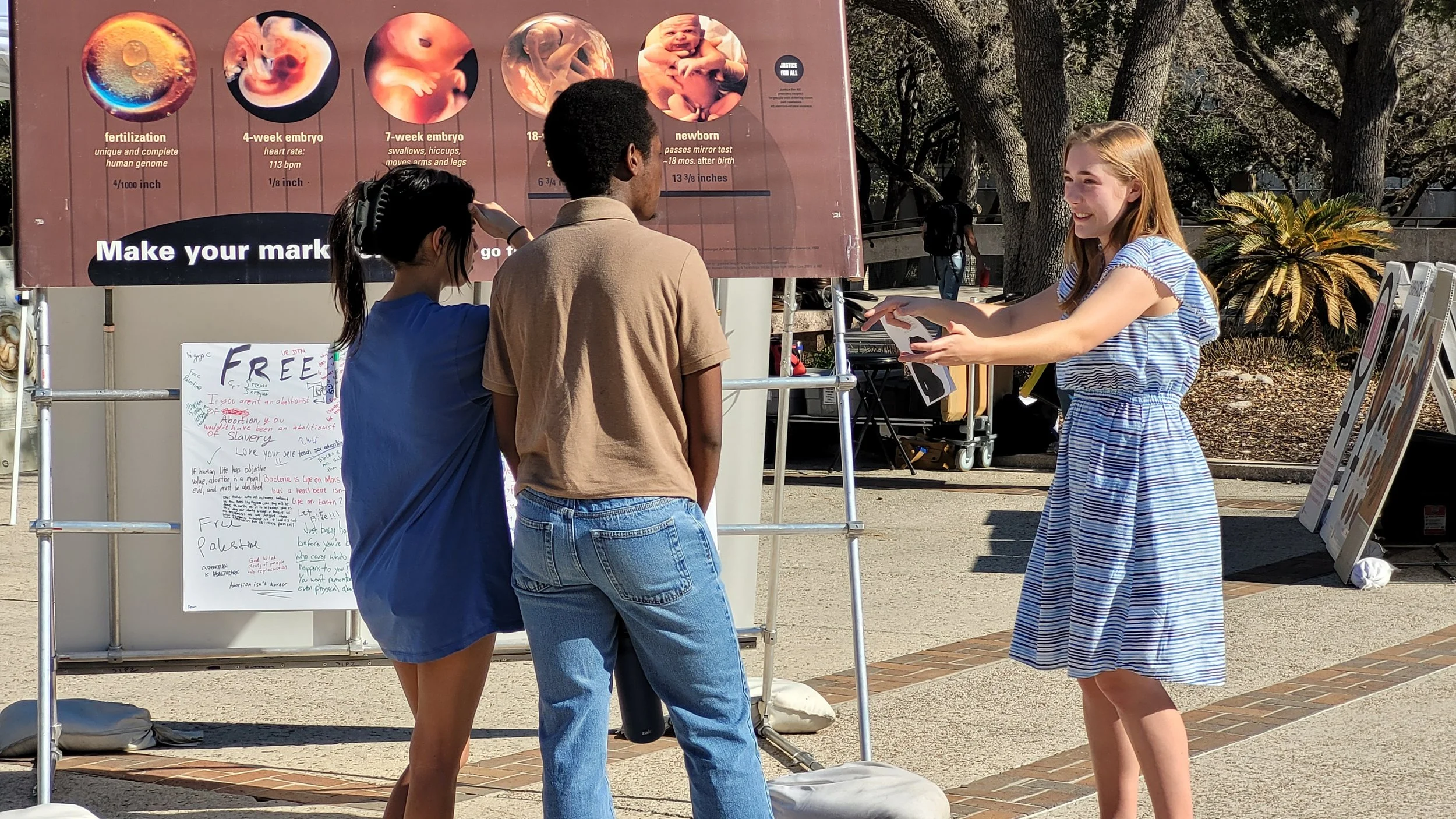
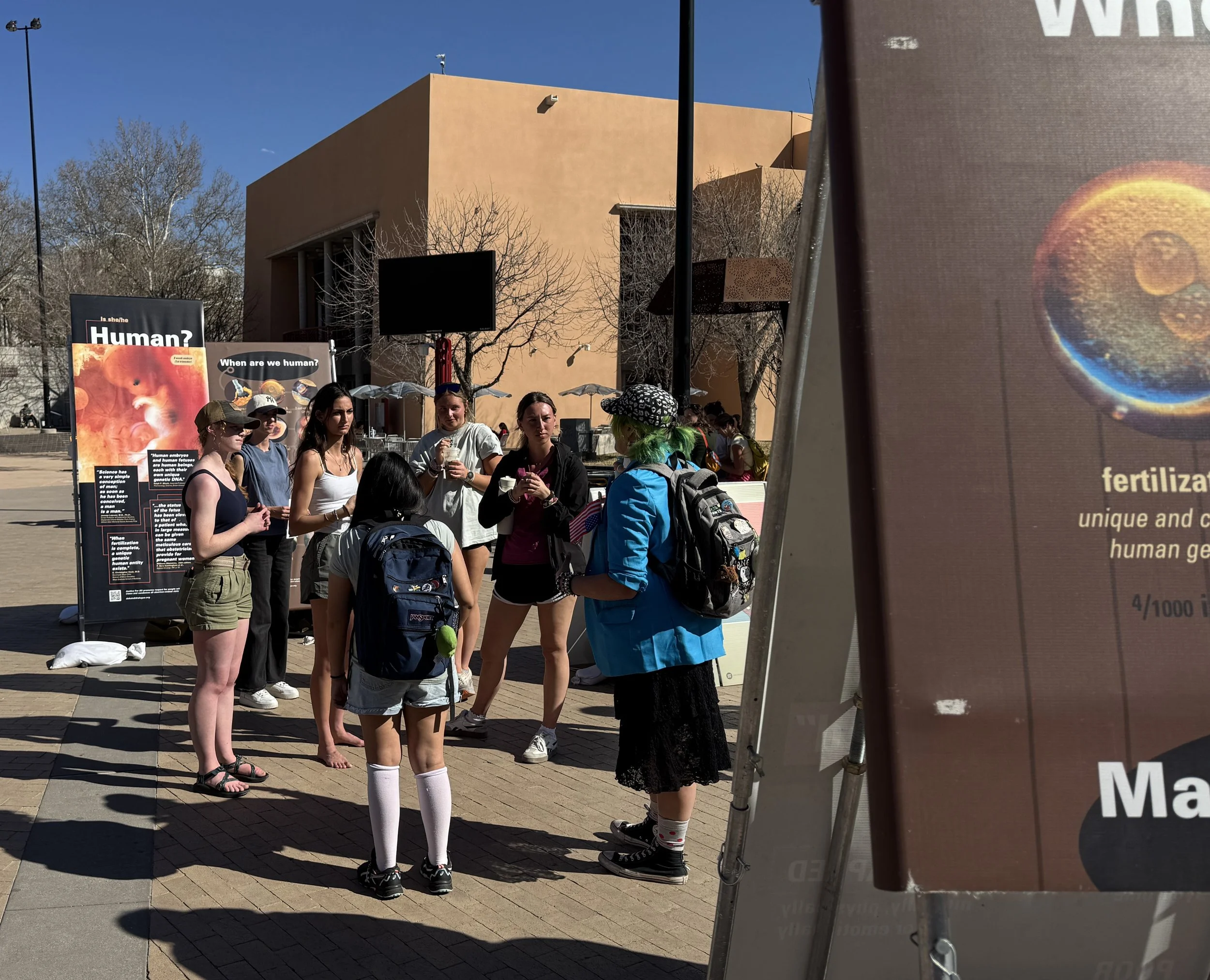
Texas State University (February, 2026)

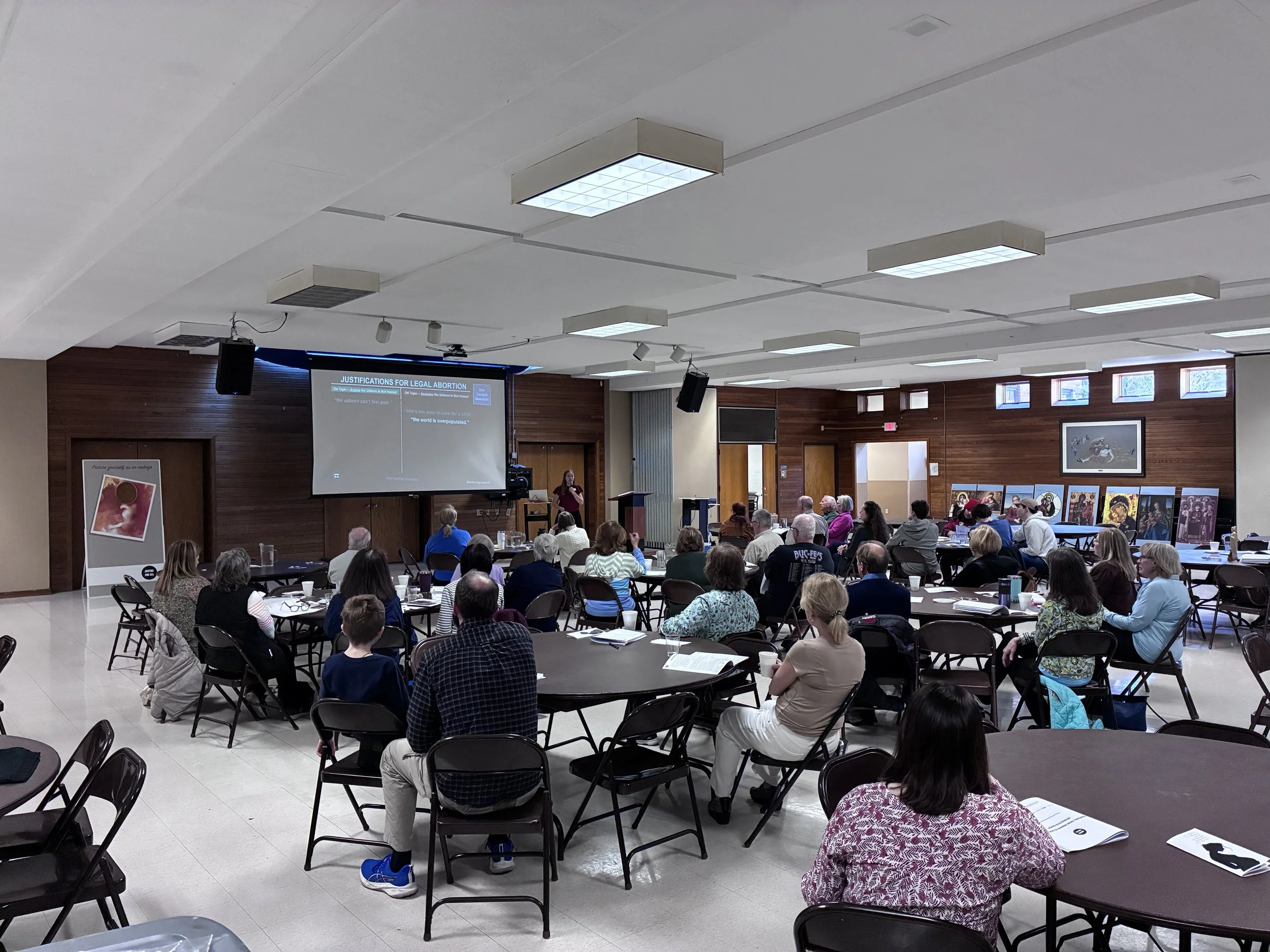
Since I last wrote I was able to travel to south Texas and conduct four days of outreach at Texas State and University of Texas at San Antonio (UTSA). Additionally, I was able to help with Justice For All’s interactive workshop for UTSA’s pro-life club. I am also happy to announce that taking all of the monthly pledges and special gifts into account, I am fully funded! A huge thank you to all of my generous supporters. I’m so grateful for my supporters who make it possible for me to have these important discussions. I would like to share a conversation I had on my Texas trip.

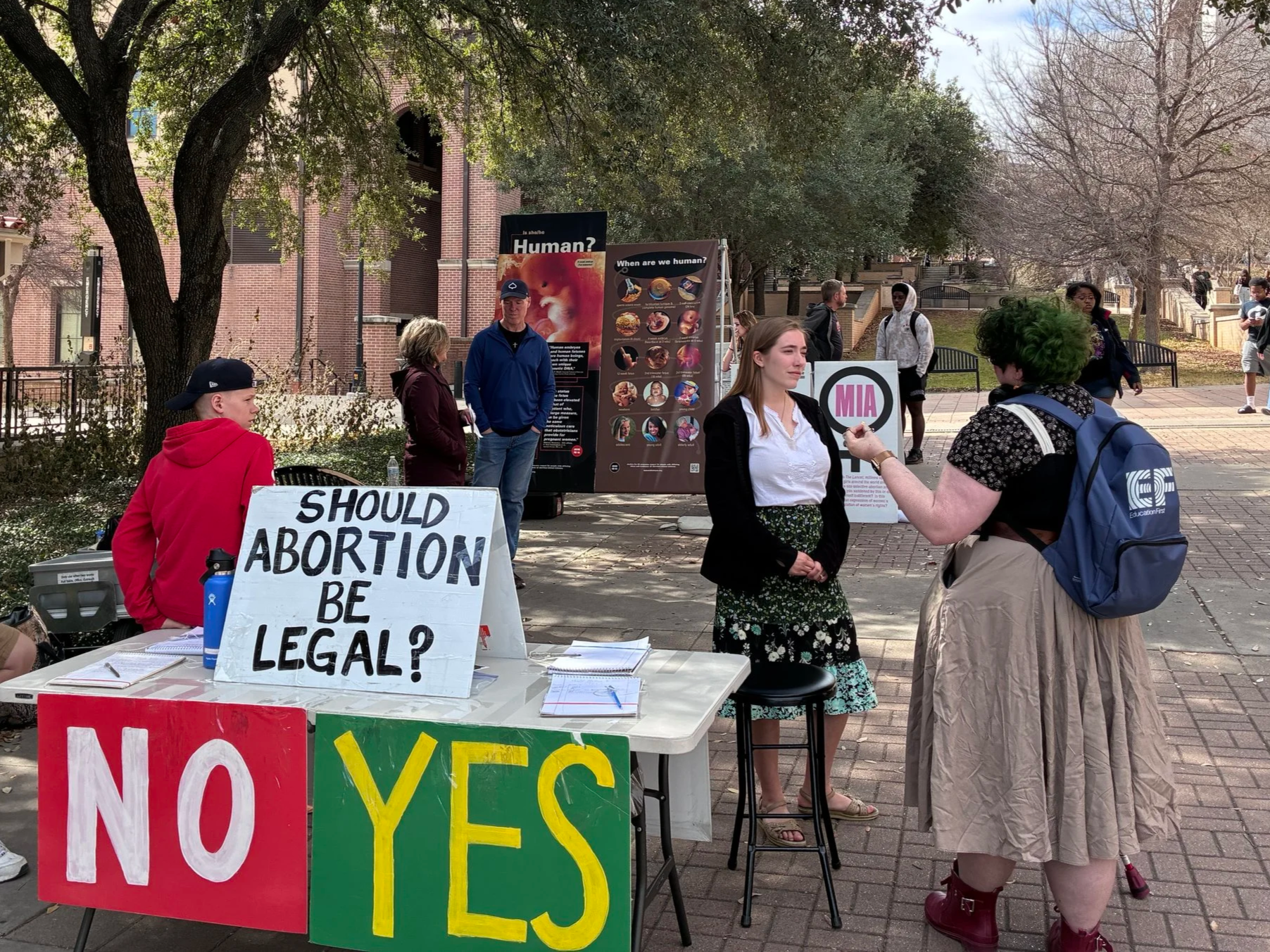
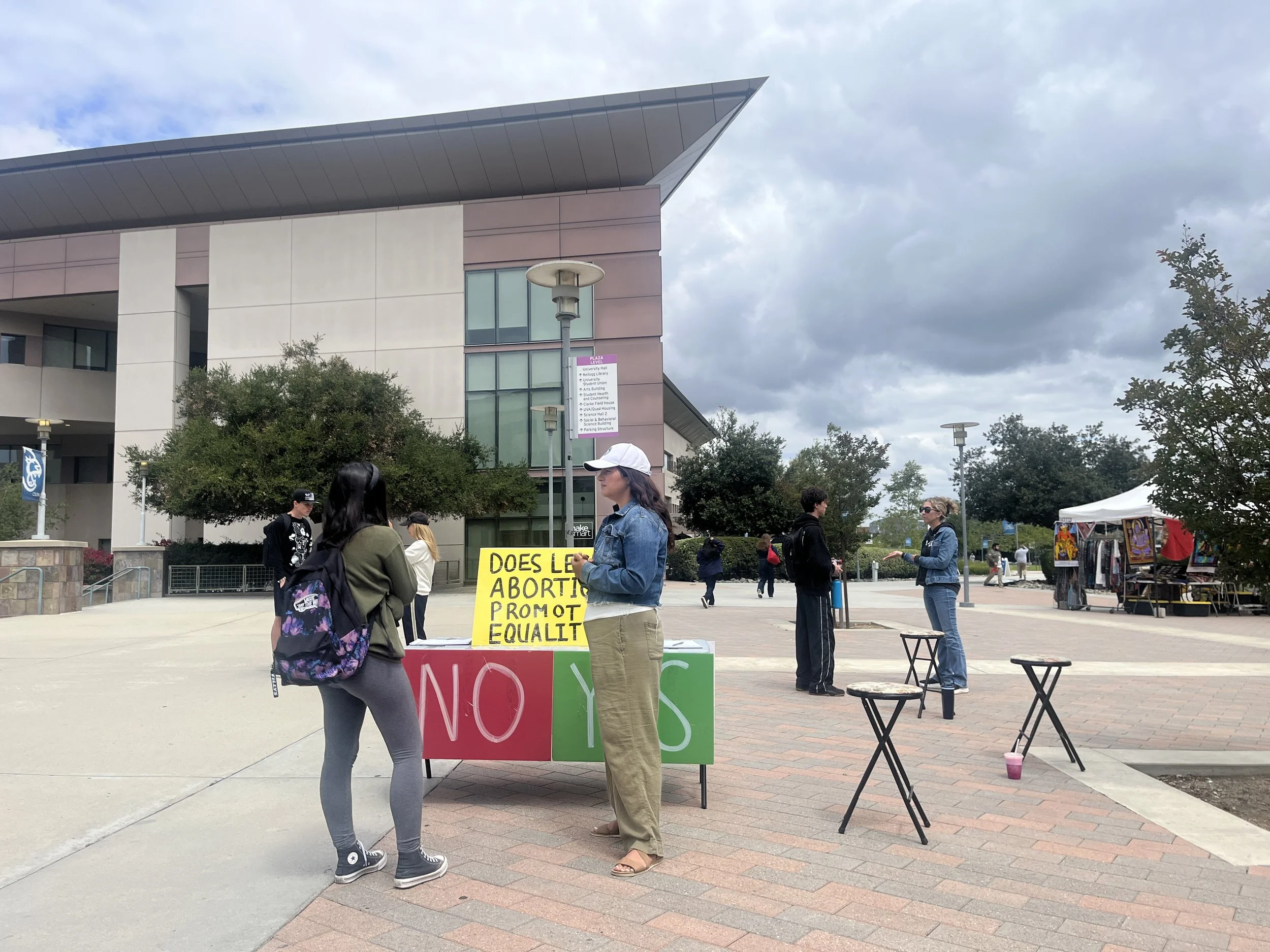
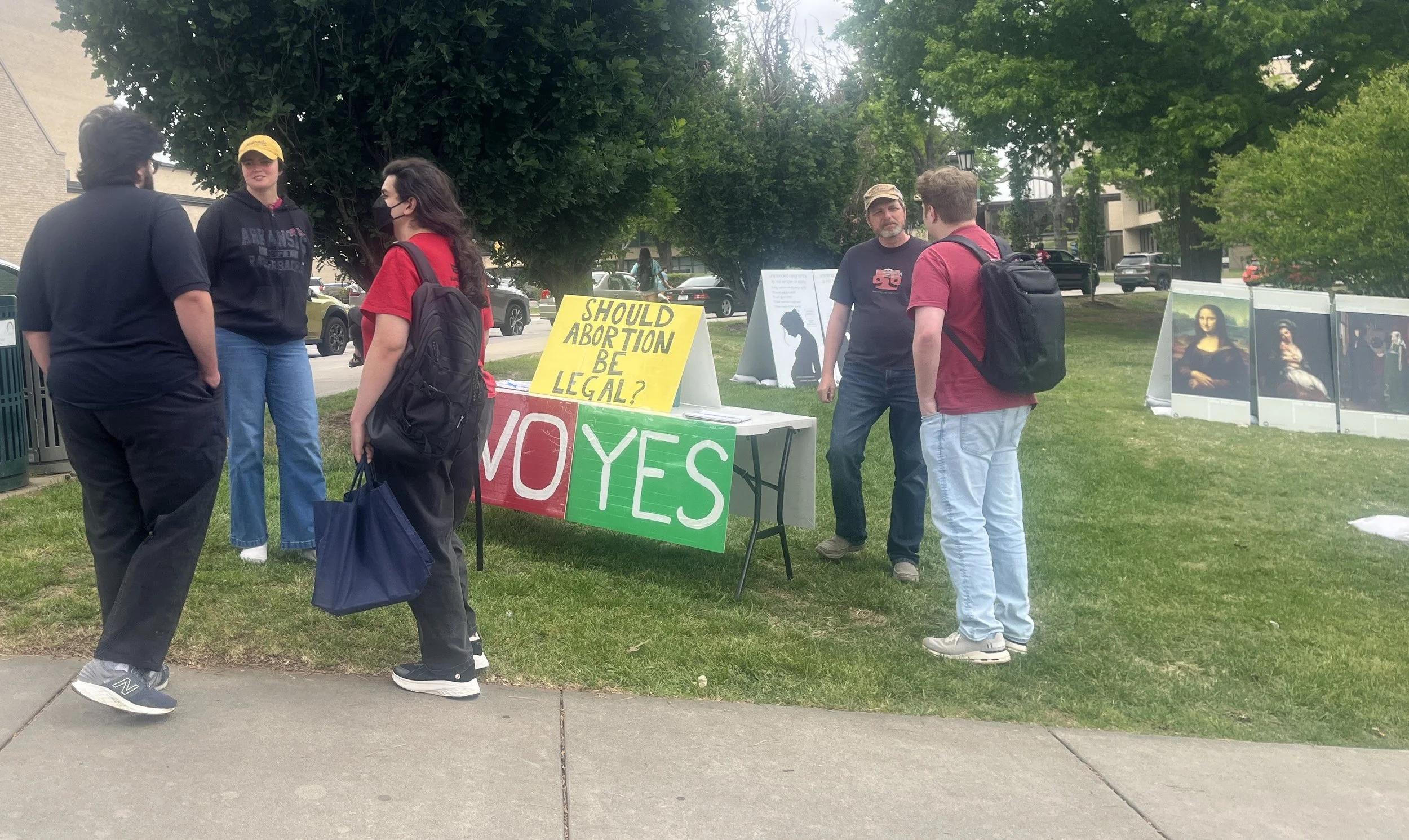
A student I’ll call “Max” at UTSA approached our poll table, “Should Abortion Be Legal?” (see images). After he had signed, I asked him what his thoughts were on abortion. He said that he was pro-choice. Using what I had learned from JFA’s workshops, I proceeded to ask him some clarifying questions about his view. First I asked him if he supported abortion through all nine months of pregnancy or if he thought there should any limit timewise. He replied that he did support abortion through all nine months. This initially made me think he had a more extreme view on abortion than most people, but I continued to inquire by asking him in what circumstances he supported abortion.

It turned out that he only supported abortion in the case of rape. This surprised me because a lot of people will bring up rape to support their pro-choice position, but they generally also support abortions for all sorts of other much less horrific reasons. Max was one of the first I’ve encountered during my internship with this view. (He also had said right off the bat that he did believe that the unborn is a human person.) Now that I understood his particular view, I focused on our common ground related to the evil of rape.

University of Texas at San Antonio (February, 2026)

I agreed with Max that rape is a horrific crime that leaves its victims severely traumatized. I told him that I think our society and we as individuals need to work harder to prevent these crimes from occurring. Moreover, we need to support victims and help them find healing. Additionally, we both agreed that a lot of our laws need to be much stricter in punishing the perpetrators of these sorts of crimes and that too often rapists are not prosecuted or get off with just a slap on the wrist.

I always try to start any of my discussions by finding common ground with the other person because it helps ease the tension and makes people so much more open to a differing view. When someone brings up rape, I try to focusing on sympathizing with his concerns and agreeing with everything that I can without compromising my view, all the more because it is such a sensitive and intense topic. Moreover, you never know if the person with whom you are speaking has experienced assault or if someone close to him has. Throughout my time with JFA, I have been saddened by how frequently college students have shared with me that they have experienced assault. I try to always keep in mind that when we are discussing rape, it very well might not be hypothetical for the student. I’ve often seen pro-lifers dismiss the case of rape by saying that it only constitutes about 1% of the abortions in the U.S., which is true, but if that is the first thing you say, it can come off as dismissive of the horror of rape. If the pro-choice person does not think that you care about sexual violence against vulnerable people in general, he will likely feel that your claim that you care about violence against vulnerable unborn people is not genuine.

Once I had established some of what we believed in common, I began to gently challenge his view. Here is the gist of the rest of our conversation:

Martha: Can I present you with a hypothetical situation?

Max: Sure.

Martha: Imagine there are two women who tragically have been raped and both become pregnant. One of the women is now two months pregnant and the other has a toddler as a result. Now this is going to sound like a crazy question, but please bear with me. Could both women kill their children?

Max: Of course not! It would be murder for the woman to kill her toddler.

Martha: I completely agree! Again this will probably sound like a ridiculous question, but I think it will actually help us get at something crucial. Why would it be wrong for her to end the life of her child who was conceived in rape?

Max: Well, I guess because he’s a human being.

Martha: I totally agree. If the unborn is a human being, as you mentioned earlier, just like the toddler, then shouldn’t we protect the unborn child regardless of the circumstances of his conception the same as we would protect the toddler conceived in rape?

Max: I’d never thought about it that way before.

Martha: After all, both of these women are in the exact same circumstance. The only significant difference is the age of each child. Now this is not necessarily going to be every woman’s experience and every woman is different, but some women who have experienced rape and have gotten abortions have later said that the abortion was more traumatic for them than the rape.

Max: Really? I’m kind of shocked to hear that. I never really thought about how getting an abortion could also be traumatic for a woman.

Martha: I think that often people feel like abortion can “fix” or “undo” the rape. I think this comes from a good place of wanting to help the victim and erase the horrible thing that happened to her. The problem is that abortion won’t “undo” the rape. If a woman conceives, even through something as evil and horrific as rape, she is still a mother. Abortion will only make her the mother of a dead child; it will not heal her trauma.

Throughout the conversation Max was agreeing with me. At the close of our conversation he thanked me and said that abortion should not be legal even in the case of rape. I was really encouraged by this distinct shift in Max’s view from thinking that abortion in the case of rape should be legal through all nine months of pregnancy to thinking that even in the case of rape abortion should be illegal. Thank you again to all those who support my work through your prayers or financial gifts and help me to come alongside people like Max to help them think more clearly about the value of unborn children.

Personally Pro-Life

Impact Report, February 2026

Martha Depew began as an intern with JFA in July 2025 and is continuing her internship this spring. In this Impact report, Martha gives a window into her work through one special conversation she had recently, and she shares a principle that is helpful to all Christians as they seek to change hearts and minds. In addition, the tools Martha used here to help Becky are not hard to learn, and they can make a big difference for people who characterize themselves as “personally pro-life” and don’t want to “push their views” on other people through the law. Following Martha’s reflection, please take note of the partial list of recent and upcoming outreach events. Thank you for your support of our work through prayer and giving.

-Steve Wagner, Executive Director

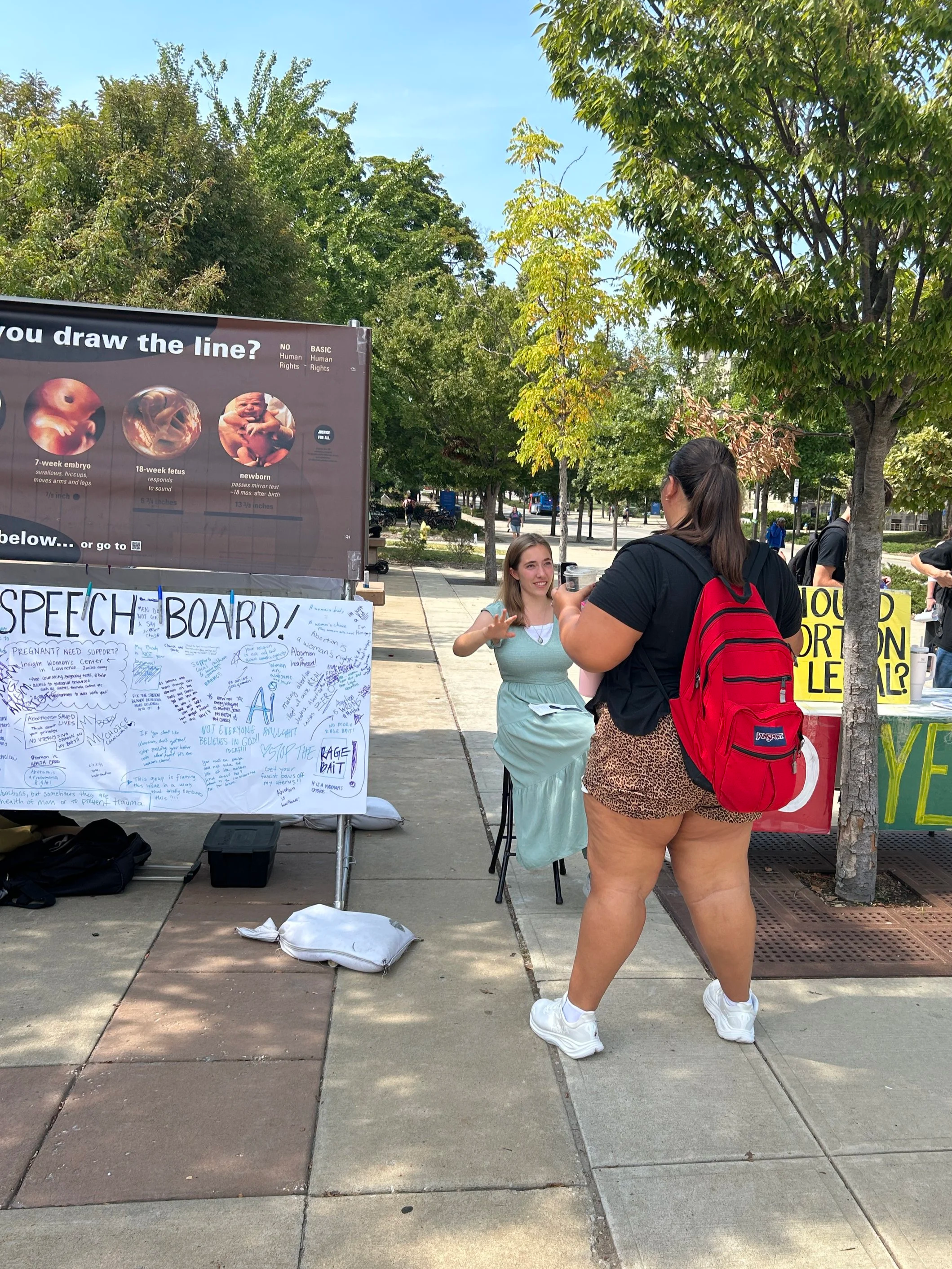
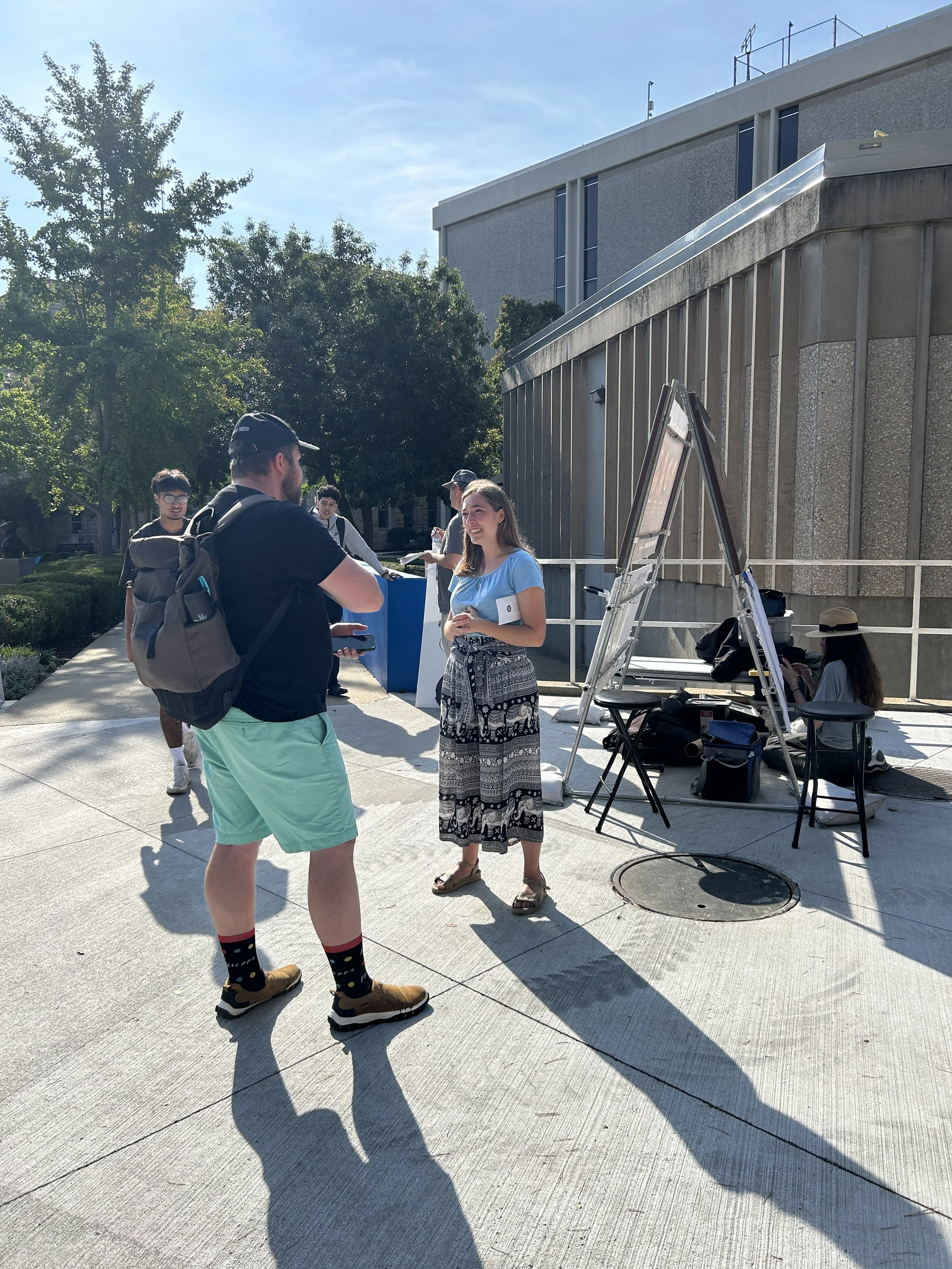
University of Kansas (Sept. 2025)

During my internship I have had many amazing opportunities to conduct outreach and help with Justice For All’s interactive workshops in Colorado, Arkansas, Ohio, Pennsylvania, Illinois, Missouri, Kansas, and Texas.

I’ve also spent time learning to give sections of our training and furthering my knowledge of the abortion issue.

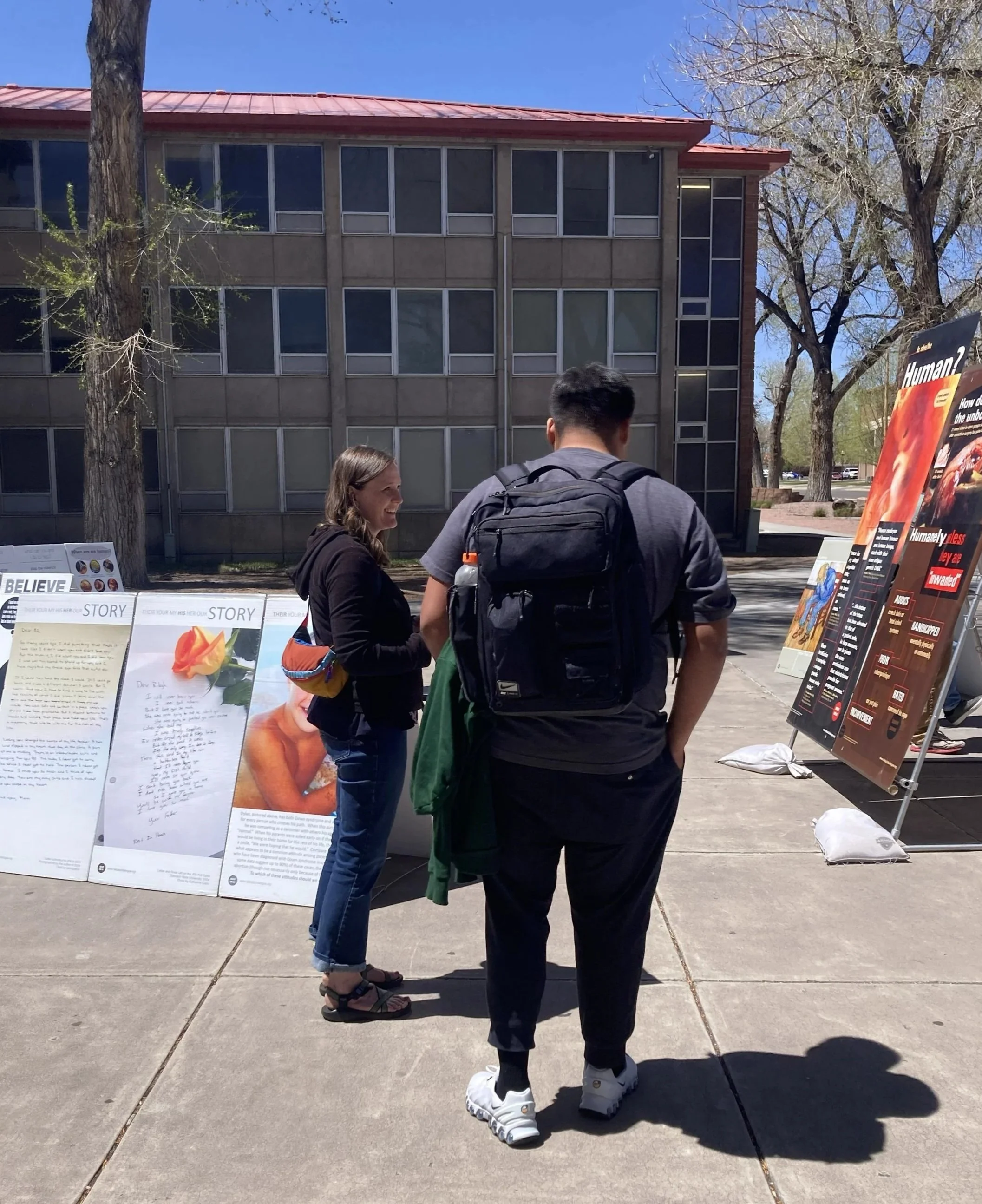
I wanted to share a conversation I had at Colorado State University that was such a great reminder to me of how God might use one person to plant a seed and another person to water it.

University of Missouri in Kansas City (Sept. 2025)

I asked a student I’ll call “Becky” what she thought of our display. She explained she had actually talked with one of our volunteers the previous day. She said that prior to that conversation she had been pro-choice, but at its conclusion she had significantly shifted her position to being “personally pro-life.” She meant that she was morally opposed to abortion, but felt uncomfortable saying that it should be illegal for others. I began by empathizing with her concern. I agreed with her that there are certain things to which I am morally opposed, but which I still think should be legal. For example, I said that while I believe that it is morally wrong to take God’s name in vain, I think the U.S. government would be overstepping if it started arresting people for this. After finding common ground with Becky, I then moved on to gently challenge her position. I pointed out that while there are some things we both agree the government should not regulate, there are other things in which the goverment has a duty to intervene, such as when an innocent person is being threatened with harm. We brought up various examples and discussed when the government should and shouldn’t intervene and into which category the abortion issue falls. At one point in our conversation I brought up the example of slavery. I helped Becky see the parallel to someone who said a similar thing about slavery when it was legal: “I am personally against slavery, but I don’t want to ‘force’ my view on others by saying it’s wrong for my neighbor to own slaves.” (I was very careful in framing this so that Becky would not feel like I was accusing her of anything, but instead simply drawing out the flaw in her way of thinking through an analogy.) Becky seemed struck by my analogy and was honest enough to admit the sense in it. I also used the example of being morally and personally against child abuse but not wanting to “impose” that view on others.

Becky had already become convinced the day before that abortion hurts an innocent child, so at this point in the conversation she had to admit that she agreed with me. Yet, I could tell that there was still something stopping her from fully shifting from only personally thinking that abortion is bad to thinking it should be illegal for other people. We had been talking for a while and built a lot of rapport, so I felt that I could be pretty direct with her. I asked her if the reason that she couldn’t bring herself to become fully pro-life was because she was scared to hold such an unpopular opinion. Becky frankly admitted that this was how she felt. It is an understandable fear because holding the opinion that abortion should be illegal, especially at a secular university, would practically guarantee losing friends. For someone like Becky who had probably grown up with the idea that being pro‑choice was essentially tantamount to being a compassionate, reasonable person who cares about human rights, it’s so difficult and requires a lot of bravery to recognize the truth about the humanity of the unborn. I was honestly impressed that she was even willing to consider something that would push her so far out of her comfort zone and belief system. At the close of our conversation I encouraged Becky that if she truly believed that abortion takes an innocent life then she must take a stand in defending unborn children, even if it is unpopular. Becky concluded by saying that she needed to think about it all more, but she seemed pretty convicted.

At Justice For All we talk about planting a seed, but this was the first time that I got to see so clearly firsthand how each conversation can be one step in someone’s journey. Because our volunteer had covered so much ground with her the day before, I was able to focus more specifically on helping her see that if abortion ends an innocent life, then it is not a subjective matter that should be left up to each person to decide, but an objective injustice against which we must take a stand. I’m so grateful that God allowed me to witness the growth in Becky.

Martha Depew, for the JFA Team

"That's a Baby!"

Recent Event Reflection

I started a conversation with a man named Ocean at Colorado State University (Sept. 2025) by asking his thoughts on abortion. He said he wasn’t sure, having gone back and forth on the issue, but he currently leaned more pro-choice. He mentioned that his mom had him at 15 and that he sometimes wished she had aborted him. I felt terrible hearing this and couldn’t imagine what he has experienced to feel that way. Later, he shared that he struggles with depression. I told him I was glad he is here and that his mom didn’t abort him, and I expressed sincere sympathy for his struggle with depression. I think part of Ocean’s difficulty in recognizing the value of the unborn came from not recognizing his own worth. We discussed various aspects of the issue, but the breakthrough came when I showed him pictures of human development. He was shocked—pointing to the six-week embryo and exclaiming, “That’s a baby!” By the end of our talk, Ocean said he was “more pro-life now.”

– Martha Depew, JFA Intern

Note: See jfaweb.org/oct-2025-andrea for another recent campus story by Andrea Thenhaus (“A Charge to Continue”).


Recent Events in Pictures and Numbers

Our team conducted outreach on busy Library Walk at Univ. of California at San Diego (UCSD) on October 13. (Image signs are not shown here.) In September and October, JFA trainers conducted outreach during 15 days on 9 campuses in 7 states.

Kristina spoke to an all-school assembly at a high school in Illinois on October 7. JFA trainers also conducted 11 interactive workshops in 7 states in September & October.

Martha and Andrea display two approaches to rain-readiness during our Colorado State University outreach in September. The rain led to splitting our team between outdoor and indoor locations, leading to even more conversations!

Pray for Upcoming Outreach Events

11/3-5 Kansas State Univ. (Manhattan, KS)

11/3-4 Univ. of Missouri Kansas City (UMKC)

11/17-18 Univ. of Texas, San Antonio (UTSA)

11/19-20 Texas State Univ. (San Marcos, TX)

11/18-20 Univ. of Arkansas (Fayetteville, AR)