
question of rape

What about the Case of Rape?

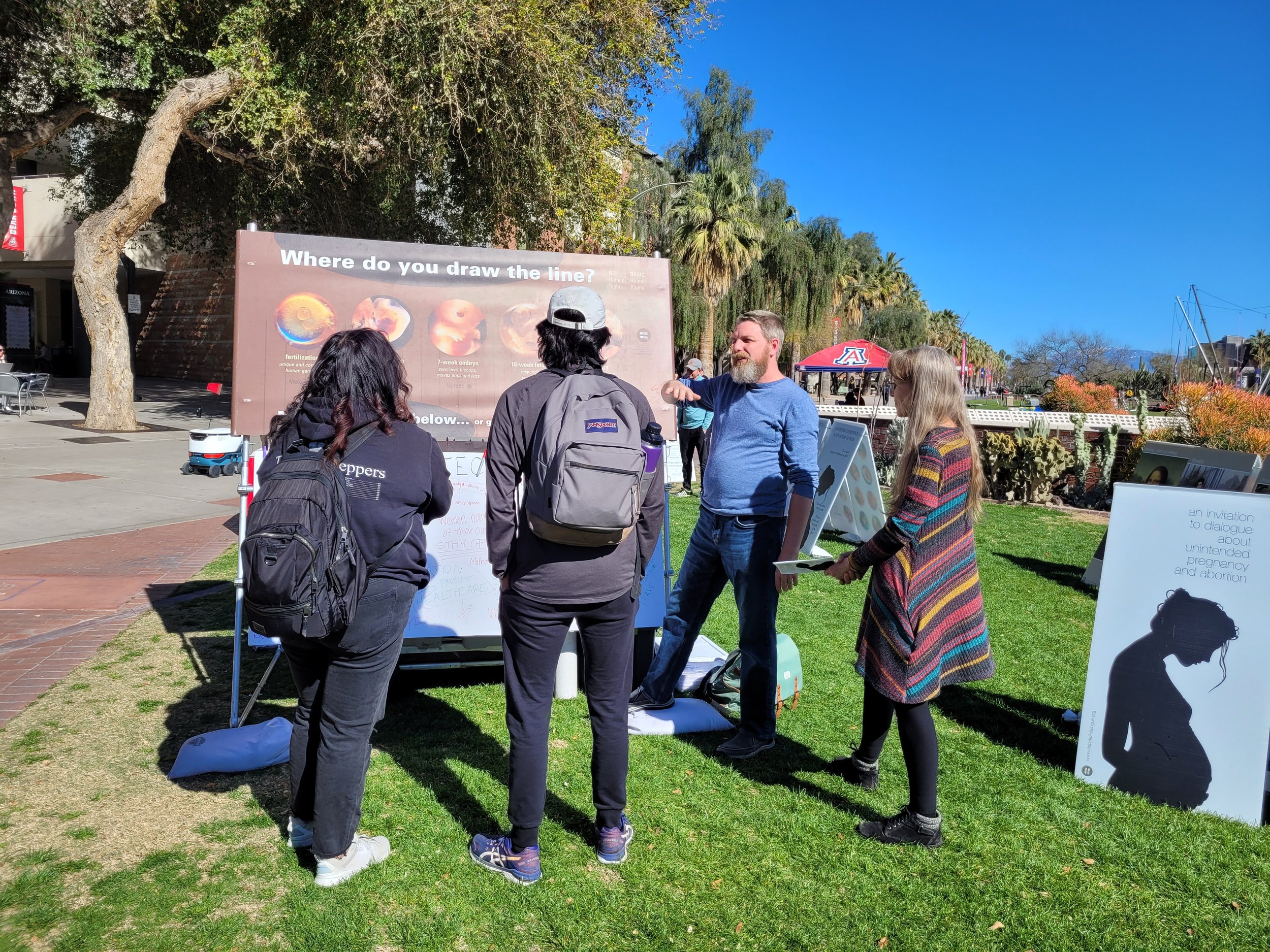
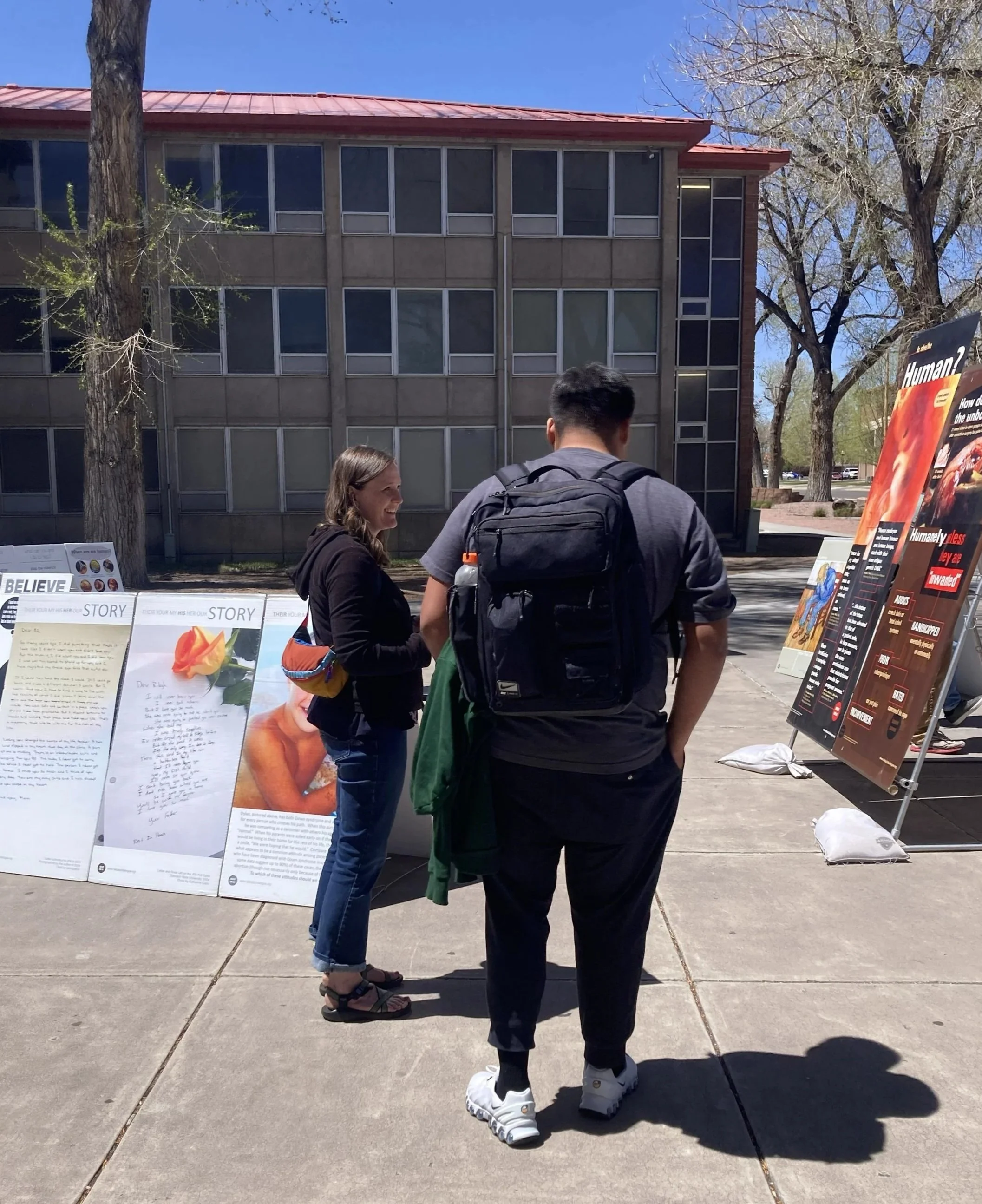
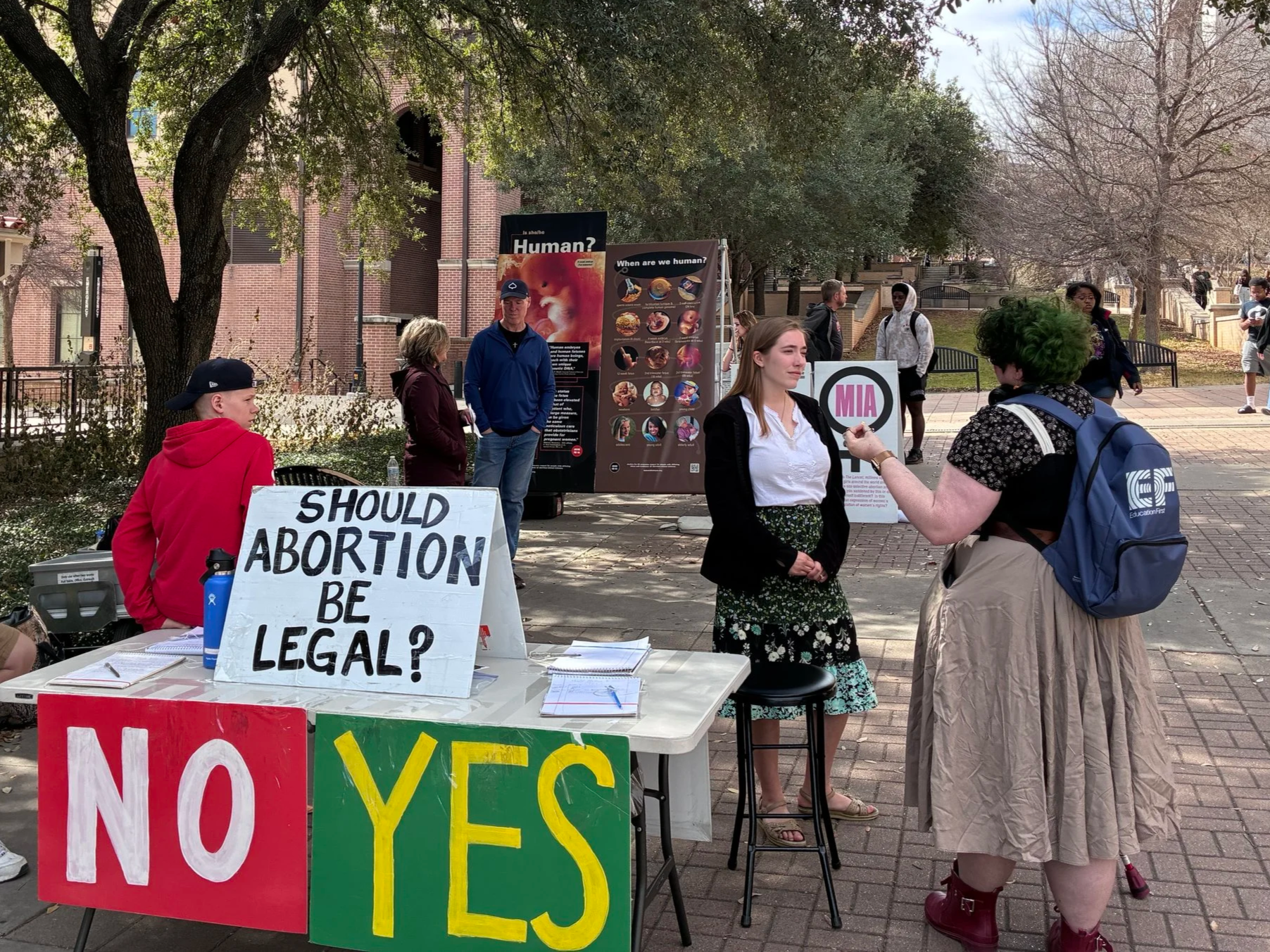
Texas State University (February, 2026)

Since I last wrote I was able to travel to south Texas and conduct four days of outreach at Texas State and University of Texas at San Antonio (UTSA). Additionally, I was able to help with Justice For All’s interactive workshop for UTSA’s pro-life club. I am also happy to announce that taking all of the monthly pledges and special gifts into account, I am fully funded! A huge thank you to all of my generous supporters. I’m so grateful for my supporters who make it possible for me to have these important discussions. I would like to share a conversation I had on my Texas trip.

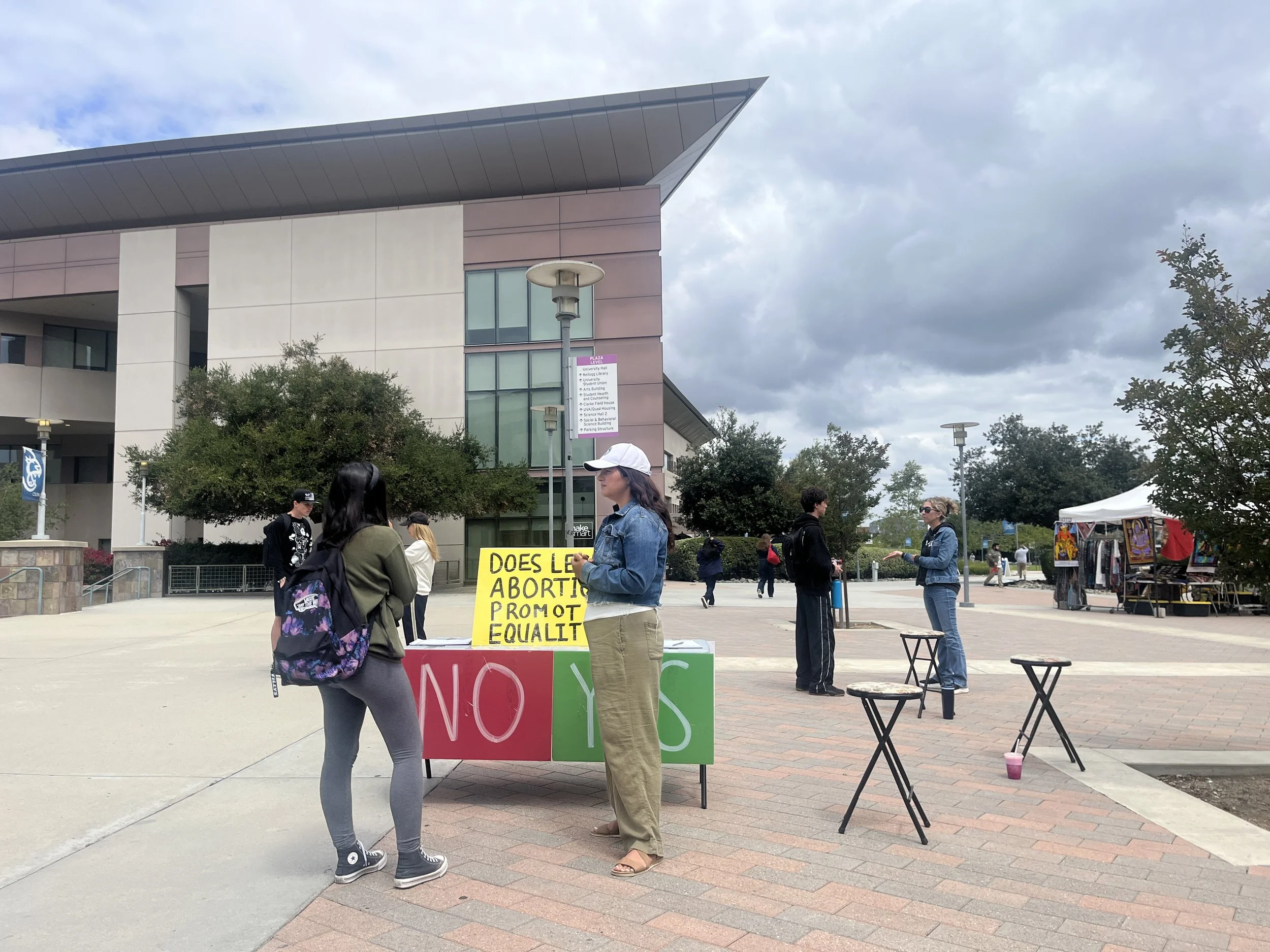
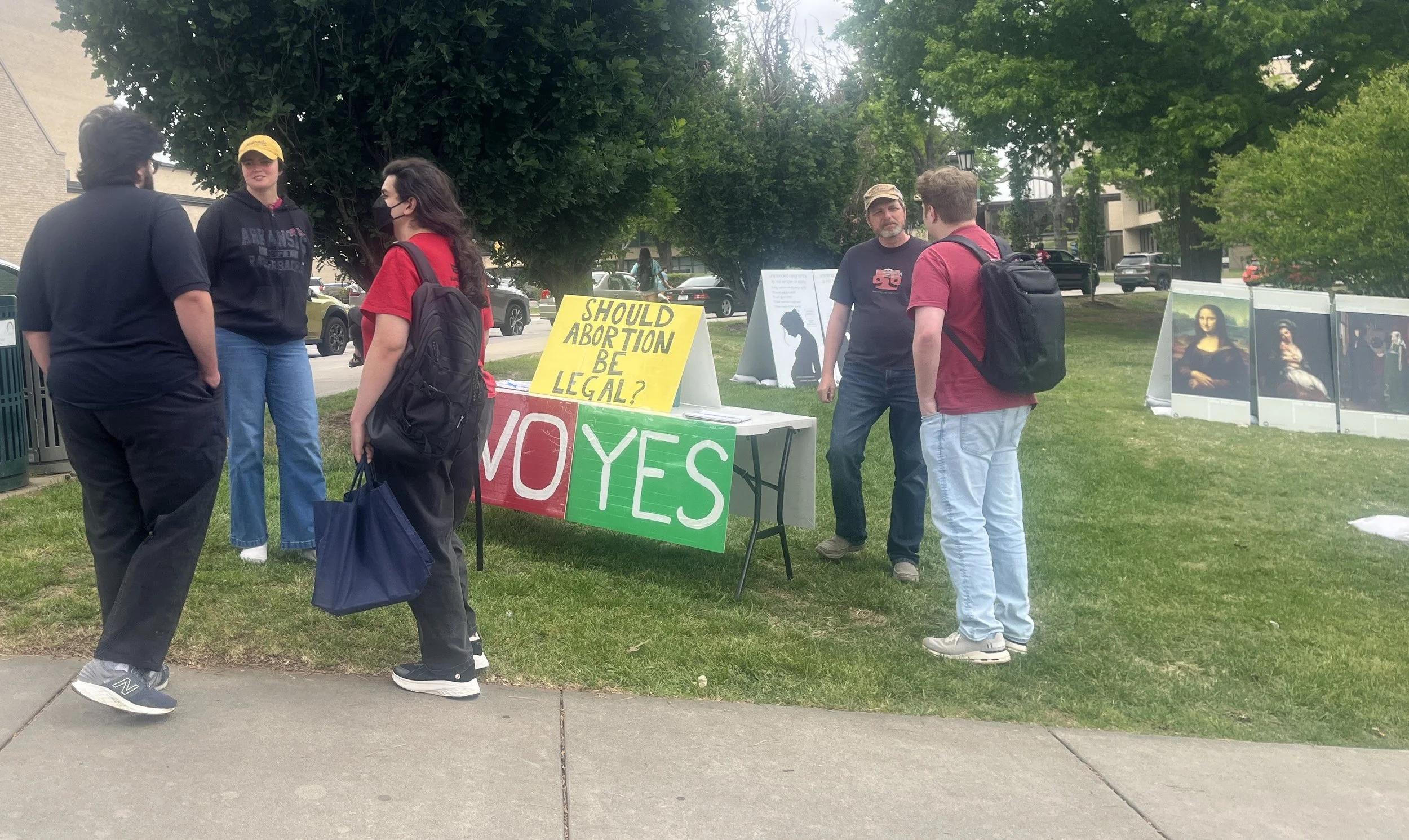
A student I’ll call “Max” at UTSA approached our poll table, “Should Abortion Be Legal?” (see images). After he had signed, I asked him what his thoughts were on abortion. He said that he was pro-choice. Using what I had learned from JFA’s workshops, I proceeded to ask him some clarifying questions about his view. First I asked him if he supported abortion through all nine months of pregnancy or if he thought there should any limit timewise. He replied that he did support abortion through all nine months. This initially made me think he had a more extreme view on abortion than most people, but I continued to inquire by asking him in what circumstances he supported abortion.

It turned out that he only supported abortion in the case of rape. This surprised me because a lot of people will bring up rape to support their pro-choice position, but they generally also support abortions for all sorts of other much less horrific reasons. Max was one of the first I’ve encountered during my internship with this view. (He also had said right off the bat that he did believe that the unborn is a human person.) Now that I understood his particular view, I focused on our common ground related to the evil of rape.
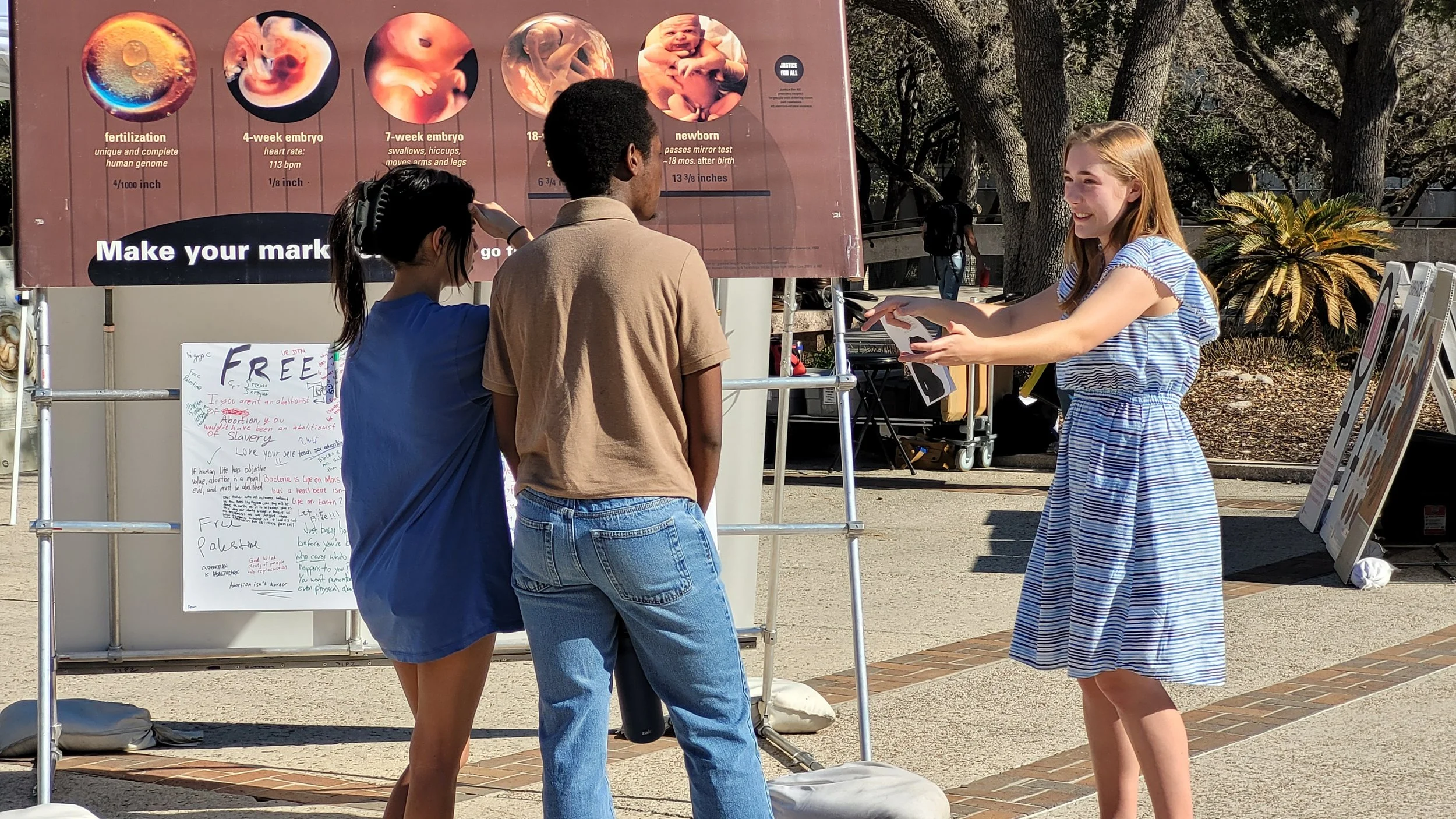
University of Texas at San Antonio (February, 2026)

I agreed with Max that rape is a horrific crime that leaves its victims severely traumatized. I told him that I think our society and we as individuals need to work harder to prevent these crimes from occurring. Moreover, we need to support victims and help them find healing. Additionally, we both agreed that a lot of our laws need to be much stricter in punishing the perpetrators of these sorts of crimes and that too often rapists are not prosecuted or get off with just a slap on the wrist.

I always try to start any of my discussions by finding common ground with the other person because it helps ease the tension and makes people so much more open to a differing view. When someone brings up rape, I try to focusing on sympathizing with his concerns and agreeing with everything that I can without compromising my view, all the more because it is such a sensitive and intense topic. Moreover, you never know if the person with whom you are speaking has experienced assault or if someone close to him has. Throughout my time with JFA, I have been saddened by how frequently college students have shared with me that they have experienced assault. I try to always keep in mind that when we are discussing rape, it very well might not be hypothetical for the student. I’ve often seen pro-lifers dismiss the case of rape by saying that it only constitutes about 1% of the abortions in the U.S., which is true, but if that is the first thing you say, it can come off as dismissive of the horror of rape. If the pro-choice person does not think that you care about sexual violence against vulnerable people in general, he will likely feel that your claim that you care about violence against vulnerable unborn people is not genuine.

Once I had established some of what we believed in common, I began to gently challenge his view. Here is the gist of the rest of our conversation:

Martha: Can I present you with a hypothetical situation?

Max: Sure.

Martha: Imagine there are two women who tragically have been raped and both become pregnant. One of the women is now two months pregnant and the other has a toddler as a result. Now this is going to sound like a crazy question, but please bear with me. Could both women kill their children?

Max: Of course not! It would be murder for the woman to kill her toddler.

Martha: I completely agree! Again this will probably sound like a ridiculous question, but I think it will actually help us get at something crucial. Why would it be wrong for her to end the life of her child who was conceived in rape?

Max: Well, I guess because he’s a human being.

Martha: I totally agree. If the unborn is a human being, as you mentioned earlier, just like the toddler, then shouldn’t we protect the unborn child regardless of the circumstances of his conception the same as we would protect the toddler conceived in rape?

Max: I’d never thought about it that way before.

Martha: After all, both of these women are in the exact same circumstance. The only significant difference is the age of each child. Now this is not necessarily going to be every woman’s experience and every woman is different, but some women who have experienced rape and have gotten abortions have later said that the abortion was more traumatic for them than the rape.

Max: Really? I’m kind of shocked to hear that. I never really thought about how getting an abortion could also be traumatic for a woman.

Martha: I think that often people feel like abortion can “fix” or “undo” the rape. I think this comes from a good place of wanting to help the victim and erase the horrible thing that happened to her. The problem is that abortion won’t “undo” the rape. If a woman conceives, even through something as evil and horrific as rape, she is still a mother. Abortion will only make her the mother of a dead child; it will not heal her trauma.

Throughout the conversation Max was agreeing with me. At the close of our conversation he thanked me and said that abortion should not be legal even in the case of rape. I was really encouraged by this distinct shift in Max’s view from thinking that abortion in the case of rape should be legal through all nine months of pregnancy to thinking that even in the case of rape abortion should be illegal. Thank you again to all those who support my work through your prayers or financial gifts and help me to come alongside people like Max to help them think more clearly about the value of unborn children.

Are Some People Better Off Dead?

What about a child who gets pregnant in high school or even middle school? She would have to drop out of school, so do you think she should still have to give birth?

University of New Mexico, March 2026

What about a woman who has been raped? She didn’t ask for that, so how can you say she should be forced to remain pregnant? The justice system fails sometimes, and children born into these environments will just suffer. What about foster care and all the suffering there? Children shouldn’t have to live in bad environments. What about people living in communist dictatorships where the child will suffer under oppression? Some people don’t want to have a child at all, so why can’t abortion be an option?

Recently, a young Christian woman reached out to me on Instagram and asked me questions like these. Here’s how I responded:

Rebekah: These are great questions. They do raise some hard things. I agree with you that children shouldn’t be having children. When you have a young child in middle school or high school, and she is pregnant, that’s really tough. If it’s because of rape that’s even harder. You’re right that the justice system often fails women who have been raped, and that’s awful. You’re also right that foster care can be a horrible place for some children, and that’s so sad. And all the hard things about living under communism are totally tragic. I think our words around this and how we talk about it matters because this can be so fraught with pain and trauma for so many people.

Holding all that in one hand though, I think we need to balance on the other hand the dignity and value of the unborn child. So perhaps a question that would be helpful for you to think through is, ‘Should people be allowed to kill a human in the womb because of difficult circumstances they face?’

Think of it this way: imagine there is a woman who was raped, and she got pregnant, and she gave birth recently. Now let’s say that her child is going to be put into foster care and will suffer there. What if someone said she shouldn’t have to be a mother, and the child is going to suffer in foster care. Should she have the choice to kill her infant because of the assault and because of the suffering the child will experience? Of course not. So if the unborn in the woman’s womb is human like a born child, then all these difficult, tragic circumstances, while they matter, don’t justify ending the life of another innocent image bearer of God. If abortion does not kill a human being, then abortion should be allowed. But if it really does kill a human being it should not be allowed. The idea that we can kill other humans because life is really hard is really dangerous.

Young woman: I agree they are human, but I am confused because it is horrible to end a life, but wouldn’t it also be horrible for a child to live a bad life? I don’t think you should be able to take a life, but I just don’t see how that would be worse than giving birth and then having the child experience trauma.

Rebekah: I agree it’s horrible when a child grows up in an environment that’s abusive and where she doesn’t get the care she deserves. It sounds like you are wrestling with this question: Wouldn’t it be better that someone dies than live a life of suffering and pain? If a human is going to suffer and have traumatic experiences, is it better to end her life before these experiences happen? What do you think God says about this?

So many Christians have a view of human suffering that is not informed by Scripture. I had similar exchanges with some Christians at San Diego State University and MiraCosta College in February. Thinking it is justified to take the life of another human being because they are going to suffer is a lie from Satan that too many Christians believe. It is a dangerous lie because it’s couched in compassion and concern for others, but it violates the commandment to not take away the most precious thing someone has: her life. Satan is the father of lies, and what’s lurking behind this view of suffering is the belief that some humans are better off dead. It is such a privileged position to look at another’s suffering and make the judgment, “Her life isn’t worth living. Someone else should decide if she lives or dies.” It’s a lie. This is not the way of Jesus.

I understand and believe that to depart and be with Jesus is far better, as Paul says in Philippians. But that mindset needs to also be held in tension with the knowledge that God is the author of life; He gives, and He takes away. That is His prerogative, not ours. We are clearly told not to take the lives of innocent human beings.

As Christians, our mindset toward these kinds of situations should be something like this: I love you. I’m with you. God is with you. You are not alone. I may not understand why this particular suffering has afflicted you, but God will not leave you. You matter even in this pain. I will seek to alleviate your suffering and pain in the ways that I can, but I will not dare raise a hand against another image bearer of God and take away her life.

God’s light shines in these dark places. His truth guides us in how to answer these questions.

An Eye-Opening Conversation

Outreach at Adams State University in Colorado, April 2024

When our team went to Adams State University last spring, we had the opportunity to partner with two amazing local Christian ministries on campus. On the second day of outreach, Kalen, one of the ministry leaders, and I had a providential interaction with a student. “Thomas” was walking by our exhibit, and this is how our conversation went.

Andrea: Hi, do you have time to share your thoughts on the issue of abortion?

Thomas: Yeah, I am not completely sure what my thoughts are on this issue.

Andrea: That is totally fine. Do you think abortion should be legal for all nine months of pregnancy or just for a certain period of time?

Thomas: I am not sure.

Kalen showed him images of the unborn at different developmental stages (shown right).

Thomas: Okay, I would say abortion should be legal somewhere until four to twelve weeks of pregnancy.

Andrea: Do you think abortion should be legal for all circumstances or just certain circumstances?

Thomas: I think abortion should be legal for circumstances like rape. I have a friend who was raped, got pregnant, and had an abortion. My sister was raped as well.

Andrea: That is awful. I am so sorry. That must have been so difficult on your friend and sister.

After spending time acknowledging how terrible rape is, I paused for a second. I was trying to decide where to take the conversation next.

Kalen opened the brochure again to the images of the unborn at different stages of development.

Kalen: Did you say you think abortion should be legal until this time frame (pointing to about four to twelve weeks)?

Thomas: Yes.

Andrea: When do you think life begins scientifically speaking?

Thomas: I would say around four to twelve weeks.

Kalen and I were able to discuss the biology in depth and explain how we can determine that life starts at conception.

Kalen: If the unborn is growing, it must be alive. If it has human parents, it must be human. And living humans, or human beings like you and me, are valuable, aren’t they? *

Thomas: Yes, that makes sense.

With Thomas’s permission, Kalen showed him images of a first trimester abortion. I could tell that Thomas was greatly affected as he looked at the reality of abortion. Kalen did a beautiful job explaining how many women think abortion should be legal because they mistakenly believe it empowers them.

At one point Thomas said, “Thank you for having this conversation with me. This has really opened my eyes on this issue.”

Kalen took a minute to explain that he is with Christian Challenge, a Christian club on campus. This gave us an open door to ask Thomas about his spiritual background.

Thomas didn’t have much of a spiritual background, but Kalen had the opportunity to share the gospel in great detail with him. As the conversation progressed, it was incredible to watch him begin to realize his need for a Savior.

“I appreciate you having
this conversation with
me. No one has ever
talked to me about these
things before

Before Thomas left, he said, “I appreciate you having this conversation with me. No one has ever talked to me about these things before.”

As I reflect on this conversation, it is a reminder that God is still at work. Exodus 4:12 says, “Now therefore, go, and I will be with your mouth and teach you what you shall say.” In interactions like the one I had with Thomas, it can be challenging to know how to steer the conversation. It’s comforting to rest in the fact that God calls us to be willing, obedient, and sensitive to the Holy Spirit’s leading. He does the rest.

Thank you so much for your prayers and support that make these conversations possible. Our team is gearingup for another semester of engaging students on universities and training pro-life advocates to engage others onthe issue of abortion. I would appreciate your continued prayers.

* Kalen used the Ten Second pro-life apologist developed by Steve Wagner.

A Difficult Answer to a Difficult Question

I talked to a thoughtful high school student who told me I opened his mind.

I get asked many difficult questions in my conversations with students at universities. One question I get asked in nearly every conversation is, “What about abortion in the case of rape?” In May, I was at UCLA on Bruin Walk, and a woman I’ll call “Taylor” asked me if I thought abortion should be legal in this difficult circumstance, especially if the victim is really young.

I said something like:

Given the recent unrest at UCLA, I wasn’t sure how the outreach event would go, but we had two productive days of civil conversations!

I have a hard time emotionally with my own answer to this question. My heart doesn’t want to tell a rape victim that she can’t do something that she feels will help her heal. If she wants something, I just want to say “Yes” to her.  I want her to get all the care, help, and counseling she needs. I think we can agree what happened to her was wrong and evil. She should be separated from the abuser and protected from any future abuse.

A way that I help myself process this question is by imagining a twelve-year-old girl who gets pregnant from rape and decides to continue the pregnancy. Then after she gives birth, she’s now thirteen and thinks to herself, “I don’t want to do this anymore. I’m only thirteen and can’t care for a child.” Would we allow her to kill her child? Clearly the answer is no.

I bring this up because I believe a child in the womb is equally human to the newborn in this scenario. I want to come up with non-violent solutions here. I am against rape because it’s a violent act against an innocent person, and that’s precisely why I’m also against abortion. It is also a violent act against another human being.

Taylor then shared with me that she was a victim of rape. She was assaulted when she was very young, became pregnant from the rape, and then had a miscarriage. She told me she liked how I had answered the question and that it made sense. She also said she appreciated that I didn’t bring up the 1% figure that many pro-life people cite. I asked her if bringing up that percentage felt dismissive to her as a rape victim. She said that it does.

A common response to abortion in the case of rape is to highlight that only around 1% of abortions are due to rape. While this statistic is true based on the research available (see www.jfaweb.org/facts), I generally don’t bring this up. With about a million abortions happening every year, an estimated 10,000 women have abortions every year because they were raped. That’s a lot of women dealing with horrific trauma.

It’s not that I never share this statistic. It is helpful to know, and some people ask me about it. It’s important, though, that we don’t rush into sharing this statistic and neglect showing concern and compassion for victims of rape. If we aren’t careful here, we risk sounding callous and indifferent to victims of rape.

During our conversation, Taylor told me I was the first pro-life person to have a calm conversation with her. That was disheartening for me to hear, but I was also thankful God gave me the opportunity to give her a good experience discussing the issue of abortion. We went on to talk about some other traumatic experiences in her life, her religious upbringing, the Bible, and some of her beliefs about God.

I face two general challenges in every conversation I have with students. One is giving intellectually satisfying answers to all the questions, statements, and arguments people bring up to defend abortion. The other challenge is being emotionally sensitive to the person and to the difficult things each person has been through. It’s the challenge of knowing how to answer each person (Colossians 4:6). It’s a conversation rooted in love for other people and a deep love for and commitment to the truth. It’s the kind of conversation I get to have all over the country because of your support. Thank you for standing with me.

Aha Moments for Henry

Impact Report, May 2024

In this Impact Report, we feature a reflection from JFA trainer Andrea Thenhaus along with pictures of JFA trainers and volunteers at recent outreach events.  In early April, Andrea had a memorable conversation with Henry at Grand Valley State University near Grand Rapids, Michigan.  Although many people with whom we interact on campus don’t reveal their inner thought processes, Henry was kind enough to give Andrea a glimpse of how the conversation was changing him.  Aha moments are a joy to witness, but whatever the results seem on the surface, we thank God for helping us speak for those who cannot speak for themselves (Proverbs 31:8).  We thank God for you and for your partnership as we seek to be faithful in each conversation.

-Steve Wagner, Executive Director


Andrea (center) and volunteer Kalen (left) at Adams State University in Colorado (April)

Our team was nearing the end of our second day of outreach at Grand Valley State University. While the team started taking everything down, I remained available for conversations.

About this time, a student I’ll call “Henry” walked by our exhibit. I asked him if he had time to share his thoughts on the issue of abortion.

Henry replied that he was on his way to class and could not talk. Then a minute later, he turned around and said, “Actually, I have a few minutes to talk.” Our conversation went something like this:

Andrea: Okay, awesome. Do you think abortion should be legal or illegal?

Henry: I think it should be legal mainly for cases like rape, health of the baby, and life of the mother.

Andrea: Those are all hard cases for sure. Rape is such a horrific thing. Even if the woman does not get pregnant, it is still a traumatic experience. Then if the woman gets pregnant, things get even more complicated.

Kaitlyn (sitting), Kristina (center), and Seth (right) at University of Cincinnati (March)

Rather than jumping right into challenging Henry on his viewpoint, I was taking the time to slow down and show compassion for people who have been raped. Pro-choice and pro-life people all agree that rape is horrific, and it is helpful to find that common ground in our conversations. After spending a few minutes meeting the relational challenge inherent in discussing the topic of rape by acknowledging how difficult that situation is, I went on to intellectually respond to the questions he raised.

Andrea: For these specific circumstances that you mentioned, do you think abortions should be legal for all nine months of pregnancy or for a certain period of time?

Henry: Definitely a certain period of time. I believe the unborn are living human beings, so abortion should be legal for only the first trimester.

Andrea: Okay. Do you know anyone who has been affected by rape?

Henry: No, I do not. I just know it happens.

Andrea: Yeah, for sure. Here’s one way I look at it. Imagine there are two women who have been violated through rape. Both women have gotten pregnant. One of the women has given birth to her son. He is two months old now. The other woman is two months pregnant. If I asked you if both women have the right to kill their child, I think you would say no.

Henry: Right! Of course the woman with the two-month-old should not be able to kill her child.

Steve and volunteer Kim (right) at University of Arizona (February)

Andrea: I totally agree. If the unborn are human beings like the two-month-old, then we should protect the unborn even if they came about through rape, right?

Henry: You made a good point there! That makes sense. And why should the unborn be punished for the wrong that was committed?

Andrea: I agree.

Henry: Abortion should only be legal for the health of the baby and the life of the mother.

I addressed these issues, and by the end of the discussion, Henry responded:

Henry: Wow! Those are good points. This has given me a lot to think about.

Before Henry left for class, he thanked me for the conversation. I could tell that God was working in his life. Henry realized that since the unborn are living human beings, they should be protected even if they may not live very long or if they were conceived through rape.

Our trainers and volunteers often have opportunities to gently challenge pro-choice students and point out the inconsistencies in their views by asking them questions that help them think through the issue themselves. Thank you for your prayers and support that allow us to have conversations with students like Henry.


Be Relational...then Be Intellectual

In my May letter, I shared the story of my conversation with Stacey at Palomar College. It began with her saying abortion should be legal through all nine months of pregnancy because of bodily rights, and it ended with her saying, “I’ve never thought about whether the fetus is a person before. I’ll have to think about that.” This conversation illustrates a simple approach: Be relational, then be intellectual. What began as a principle we applied to the question of rape is now a principle we apply to every question related to pregnancy and abortion. You can see another great model of the basics of this approach in last month’s Impact Report by Kristina Massa entitled, “Answering the Hard Cases.”

I want to share a bit of the history of how this concept became so central to our teaching at JFA. A good starting point is a scene seven minutes into the documentary Unborn in the USA (2007), which was filmed about 19 years ago at Focus on the Family Institute (photo below). After watching that scene, a writer from Nerve Magazine (an edgy online magazine that is not recommended reading) said,

The guy is making perfect sense…He's an articulate, intelligent, calm presence. Suddenly, a chill creeps up your spine: I hope there are people on the pro-choice side who are equally perceptive and balanced.

I was the featured speaker in that scene, and here’s essentially what I was teaching: When talking about the topic of rape, we need to show sympathy for the rape victim and show emotional sensitivity to the heaviness of the topic of rape and the horror of that evil act. We need to do these things first, before making intellectual arguments. I regularly tell audiences that part of my job is to help them recover their common sense as a guide for how to respond to difficult questions like the question of abortion in the case of rape. We should be the strongest advocates for women whose basic rights have been trampled. In fact, the same concern for human rights that animates us to stand up for unborn children also animates us to stand up for all women everywhere and for their very real bodily right to be free from rape.

Focus on the Family Institute (Sept. 2004): During interactive role-play activities, Steve sometimes stood on a chair to make a point.

Being relational first and then giving intellectually credible answers to hard questions is practically wise: it works. It’s the best way to help people be open to our perspective. There’s a more fundamental reason to use this approach, though: it’s the right thing to do. Because all human beings have intrinsic value, we should stand up for them and show concern for them.

At first, we emphasized “being relational and then being intellectual” mostly on the topic of rape. Some of our trainers, notably Tammy Cook, have argued for years, though, that this approach is valuable on a much broader spectrum of questions related to pregnancy and abortion. In 2018 I put some of this approach into words in a series called “It’s Her Body.” I made the case that the relational concerns that are on the minds of people discussing the question of rape are just as present when a woman’s body is mentioned. I pointed out that many pro-choice advocates perceive or feel our advocacy against abortion to be a violation of a woman's body. If they hear our advocacy this way, the fear and horror they feel for other violations of a woman’s body will obstruct hearing our case for the unborn’s value.

To meet this challenge, I claimed that for any bodily rights argument, we should also use the approach of “be relational and then be intellectual.” First, point out that women have real bodily rights, generally speaking, and those rights have been trampled throughout history up to the present day in horrific acts including rape, domestic violence, and slavery. Then clarify how far those bodily rights extend and how it changes things when we consider that since those bodily rights are fundamental, they must have begun when the human being began, at fertilization. If the unborn also has bodily rights, their bodily rights should be respected as well. Be relational, then be intellectual.

The more we as a community have reflected on these things, we’ve realized that this is a good practice to follow with every pro-choice argument. Show sensitivity to the emotional heaviness caused by the suffering in these circumstances, then continue in that relational sensitivity as you offer intellectual clarifications.

Here’s an example: If someone says, “some women are too poor,” I begin with relational and emotional sensitivity: “That’s a good point. Some women are very poor, and I can’t fully understand what it’s like to be poor and pregnant. I’m glad you’ve brought this up, and I don’t have a simple answer.” When it seems helpful, I can then clarify that because poverty isn’t a good justification for killing a toddler whose mom is poor, this justification for abortion only works if something else is also true, that the unborn is not a human being. This clarifies that we all need to focus on this central question. We agree poverty is incredibly difficult, and we agree we need to care for poor women. What constitutes good “care” will depend on our answer to the question, “How many people are in the room?” If there’s only one person present when a woman is pregnant, and abortion kills no one, then abortion should be legal. But if abortion kills a real human being, it would be odd to offer abortion as a solution to poverty. Our approach is the same for most other justifications for abortion, including “the child will suffer,” “a woman’s life will be overturned by caring for a child,” and “the world is overpopulated such that people can’t get enough to eat.” We show concern for the suffering involved (“be relational”) and then clarify the truth that these situations don’t justify killing human beings, including the unborn (be intellectual).

Oct. 2024 Update: Note that this letter expands on the second of a series of three letters Steve wrote from February 2023 until March 2024 - letters focused on conversations skills we teach volunteers that help them get started having conversations and encourage them to stay active. Here are links to the series, including this letter, so you can see how it fits in the flow of thought:

  1. “Be a Playmaker” (Feb. 2023): on the importance of setting the right expectations for results and seeing your advocacy as one piece of a bigger puzzle

  2. “Thinking about the Unborn Child for the First Time” (May 2023): on being relational then intellectual

  3. “Only Two Questions?” (March 2024): on the two clarification questions that can help you make an impact in any conversation

Answering the Hard Cases

August 2023 Impact Report

In almost every conversation about abortion, we can expect people to ask about “hard cases” such as rape, incest, and life-threatening pregnancy complications. In this Impact Report, JFA trainer Kristina Massa beautifully illustrates JFA’s framework for addressing these questions. Through the story of a conversation from our April 2023 outreach at Colorado State University (CSU), Kristina describes step by step how she began with relational sensitivity and continued in that mode while also offering intellectually satisfying answers. Thank you for partnering with us so we can train more Christians and pro-life advocates to use this framework. It gives our strong case against elective abortion the best chance of being considered by skeptical listeners.

Steve Wagner, Executive Director

I watched “Brad” have his first “aha” moment within a few minutes of starting our conversation. My team was set up at Colorado State University in the middle of the campus’s main plaza when I found Brad standing by the free speech board. He was staring pensively at the comments. “Do you have any thoughts on abortion?” I asked. He answered that since the unborn are not conscious, they do not have the same rights as born humans. To make sure I understood his view, I asked a few more questions and found common ground with him where I could. Eventually I felt like I had built enough rapport with him to challenge his perspective. Here is the gist of what followed:

Kristina: I agree there are many differences between the unborn and us. There are also many differences between you and me. I think the question we need to answer is whether these differences matter. For example, you have dark skin, I have light skin. You are taller than me, I have longer hair than you. I am older than you, you are probably smarter than me. It seems like in order to demand we should be treated equally, there has to be something the same or equal about us; something that adults and infants have, but animals do not. Since animals are also conscious, it seems like the quality that grounds our equal rights must be more fundamental.

Kristina (right) talks to students at JFA’s Fort Lewis College outreach event in Durango, Colorado in April 2022.

That was when he had his first “aha” moment.

Brad: We’re all human beings.

Intellectually, he understood the pro-life position. Emotionally, there was still one roadblock hindering him from agreeing with it.

Brad: But what if a woman was raped? My mom was raped and became pregnant with my older sister. Do you think women should have a choice in a situation like that?

Here’s a close up of the free speech board at the CSU outreach. It’s a concept we’ve been testing recently.

Brad asked me a yes or no question, but I was not going to give him a quick yes or no response. The scenario was personal to him, and I needed to meet him relationally before I could give him my answer.

Kristina: I am so sorry your mom went through that. Rape is one of the most heinous crimes. How is she doing now?

Brad: Yeah, it was really hard on her. Thankfully she was already married to my dad, and he was very supportive of her through it. He told her that he would help her take care of my sister.

Rather than immediately answering his question, I slowed the conversation down by expressing concern for his mother. I focused on meeting what we at JFA call “the relational challenge.” This answers the question, “What about the woman? Do pro-life people think the lives of women who have been raped matter?” After all, the woman we were discussing was not an abstract hypothetical character. For Brad, she was his mother.

Still, Brad wanted to know my answer to “the intellectual challenge:” Is abortion justified if the woman was raped? Should it be legal? To answer this, I used the dialogue tool Trot Out the Toddler. It went something like this:

Kristina: Can I share a scenario with you that’s related to your question?

Brad: Sure.

Kristina: Imagine a woman is raped, becomes pregnant, and gives birth to her baby. She’s hurting, and even looking at her baby overwhelms her with fear and pain because her child’s existence reminds her of her attack. This is a terrible and tragic scenario no one should ever have to face. But Brad, I am guessing you and I will agree on a few things about this situation: We both want this woman to heal. We also want her to have choices to go about her healing. But those choices are not unlimited. If she thought ending her infant’s life would be the most helpful way to heal her trauma, we would not let her go through with it. Would you say you share that conviction as well?

Brad: Yes, she cannot kill her baby. That’s a human being.

Kristina: I agree with you, and that is the significant thing. When we say she cannot kill her newborn, we are not saying, “I don’t care about your rape. I don’t care about your trauma. I don’t care about your child.” What we are saying is, “I care so much about you, and I want you to have choices. I just want you to have choices that will help both of you and don’t add violence to an already violent situation.” Since the unborn have a human nature like the infant in this circumstance, do you think it could make sense to protect the unborn in the same way we protect infants who were conceived in rape?

Brad paused to reflect. And then I watched him have his second “aha” moment.

Brad’s comment on the free speech board

Brad: I think you are right. Unborn human beings have the same basic rights we do, so they should be protected, too.

Then he walked back to the free speech board to write the following comment: “It comes down to how we value human life. As humans, we create criteria for what qualifies as a “human.” That is how I perceive the pinpoint of this argument. Perhaps if we come to an agreement for what is truly human, we could apply that criteria for everyone...”

Thank you for helping me make the abortion of all children – regardless of the circumstances that created them – unthinkable, one person at a time. In case no one has told you recently, your life matters, too!