
Impact Report July 2026
In this Impact Report, we feature a story that trainer Kristine Hunerwadel shared recently in her May newsletter. Thank you for considering giving a special gift and praying for our team during our Summer Giving Challenge! -Steve Wagner Executive Director
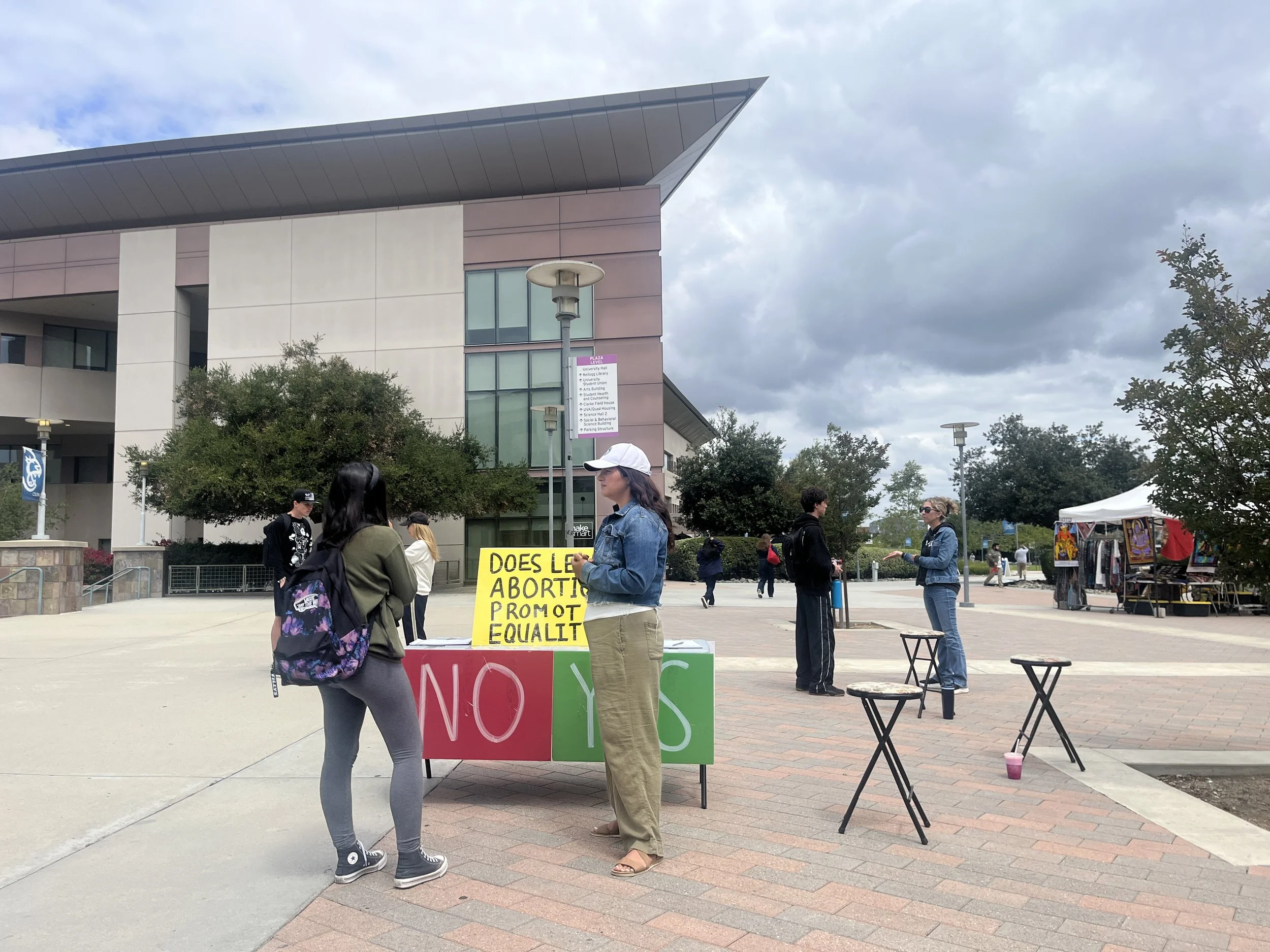
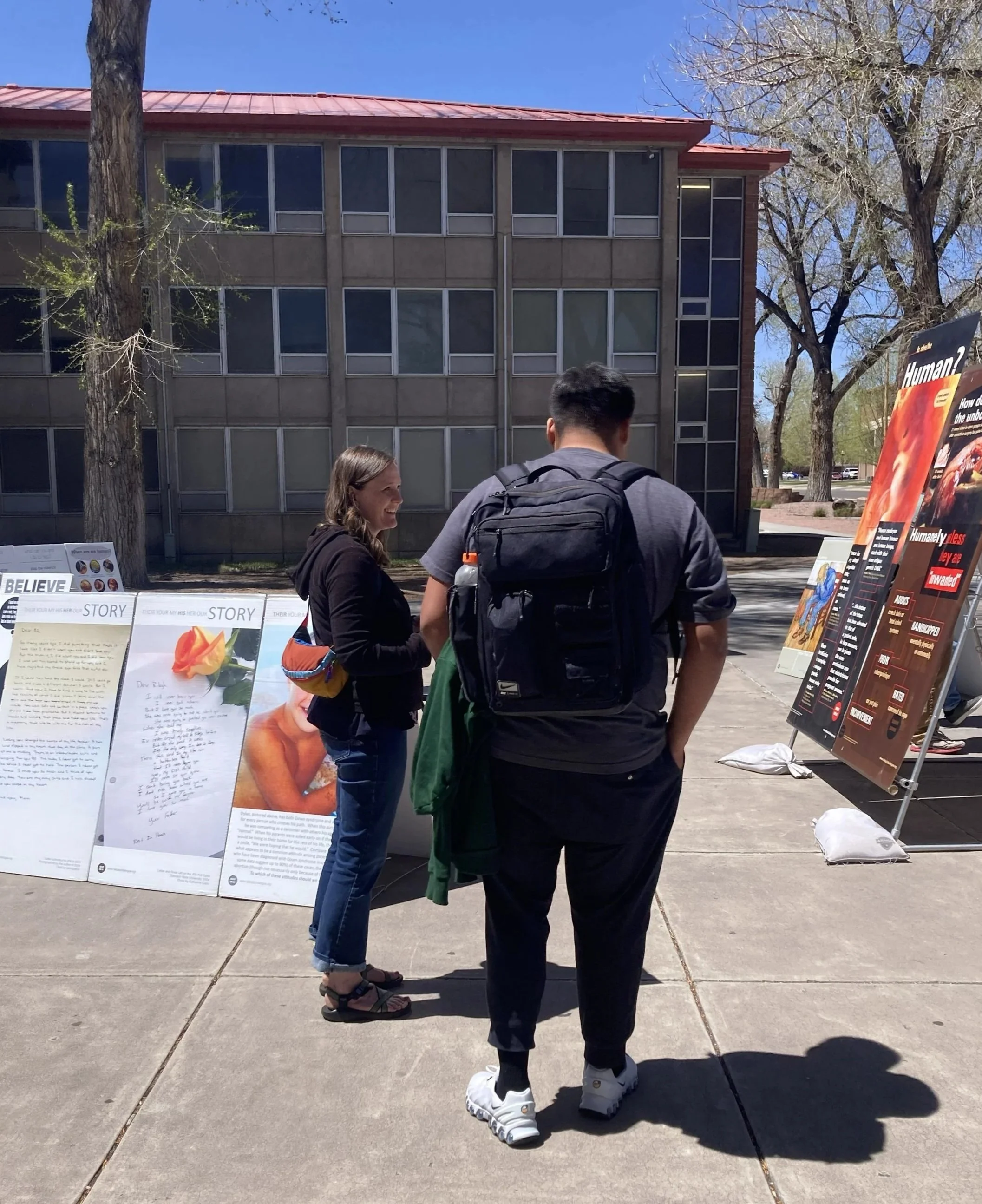
I was on campus at Adams State University in Alamosa, Colorado at the end of April, and at one point during our outreach event, I was sitting on the “No” side of our “Should Abortion Remain Legal?” poll table. I asked a female student nearby (who was getting ready to sign her name in the “No” notebook) about her thoughts on abortion. I’ll call her “Sarah.” Sarah paused, then realized what side she had started to sign, then crossed her name out and moved instead to the “Yes” side of the table, which was the side she thought she had been signing. My heart sank a bit while watching her switch sides, because I realized the conversation we were about to have was likely going to be different than the one I had expected. I waited while she wrote down her thoughts:
I don’t believe in abortion, and I think they are alive, but that’s my opinion. I am religious and do think it’s killing them, but it’s better to have a choice.
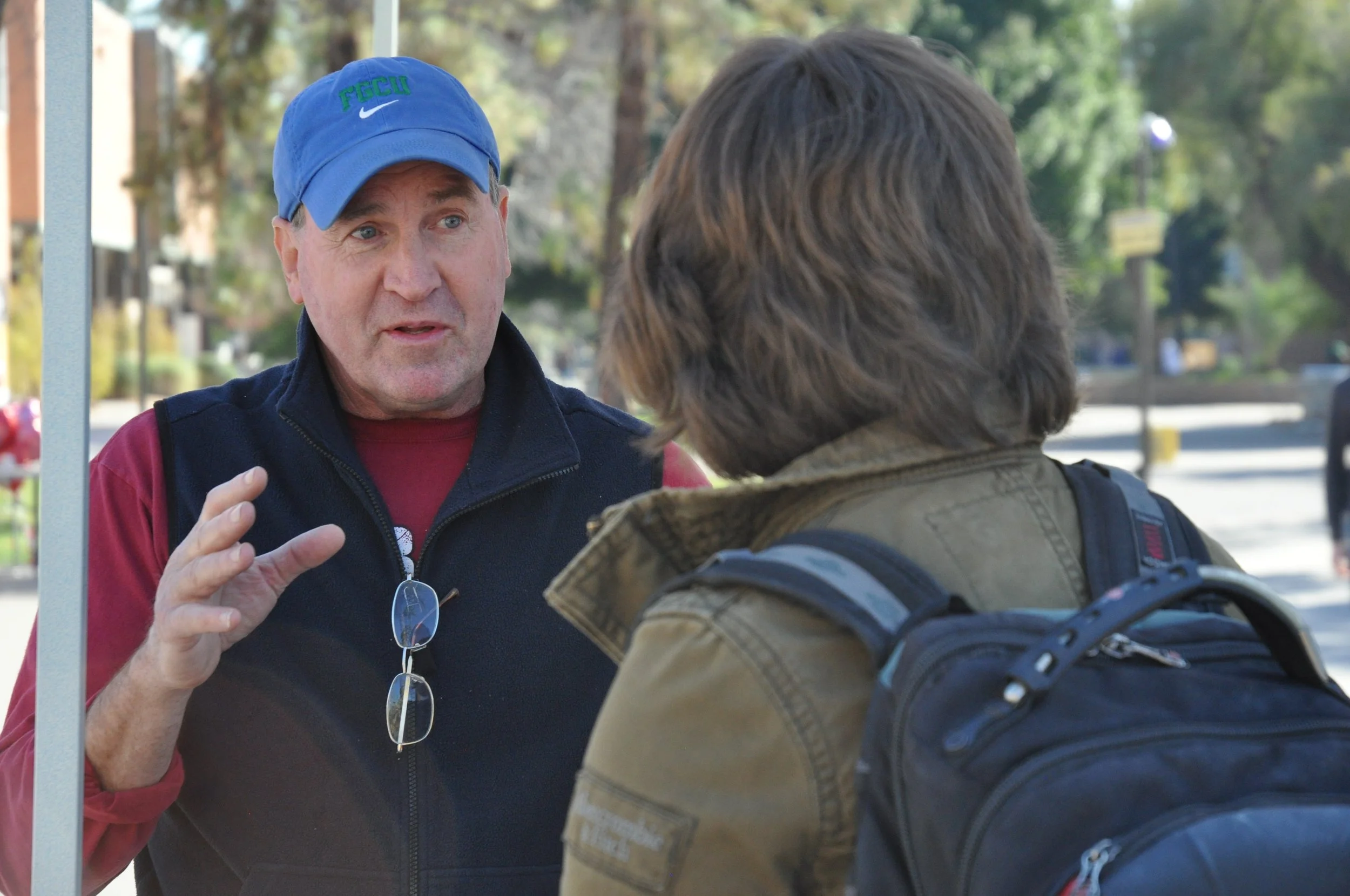
Kristine talks to a student at Adams State University in April.
Sarah and I proceeded to have a conversation about what she had written down. She said she was a Christian and that she thought abortion is wrong morally and that she doesn’t want women to choose it. Yet, she still thought they should have a choice. We discussed why that was the case, and why she personally didn’t believe in abortion. I then asked her a few questions about prenatal development and pointed out that the law protects infants from being hurt or killed. Then I asked her something like, “If the law protects human children after birth, and that’s because they are human beings, then why shouldn’t it protect them before birth as well, since they are human beings then, too?” We also talked about some difficult medical circumstances that can impact pregnant women, as well as various procedures and medications about which women need to have legal choices during pregnancy (related to things like ectopic pregnancies and miscarriages, for example). We discussed how essential treatment options in those settings (that are legal in all states currently, to my knowledge) differ from medications and procedures that are used to induce elective abortions. We also talked about the marvels of modern medicine, and Sarah was particularly intrigued to learn that currently medical specialists perform amazing in-utero surgeries at early gestational ages on very small prenatal children, who then continue to live and grow and develop inside their mothers until they are able to be delivered.
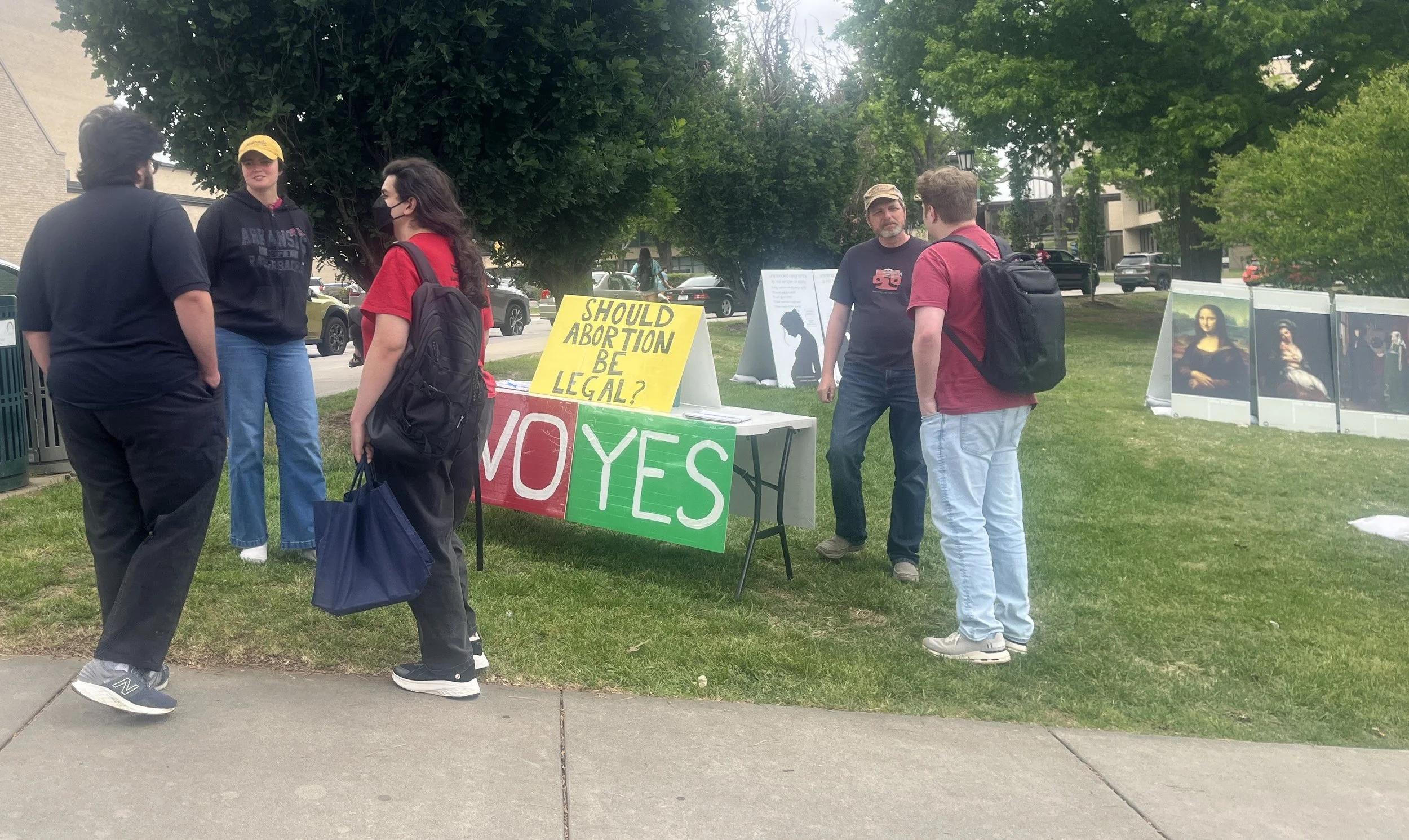
Sarah crossed out her "yes" response and changed her vote during the conversation with Kristine.
Overall, our conversation ended up being very pleasant, and Sarah at one point said, “I’m going to change my vote” and did so. We were able to talk a little about her journey in her faith and her current church, and I was able to introduce her to the campus ministry leader with whom we were working that day, as well as some students from his group. I was encouraged by her change of mind in the middle of our conversation, because conversations don’t often include an immediate and visible change of mind (and vote) like hers. In fact, I’ve been on staff with JFA for almost two years now, and Sarah was the first person who so definitively crossed out her initial answer during our conversation. It was clear from the turn of events in her case that the Lord had been working on molding and shaping her as she was growing in her faith already prior to our interaction that day, and that was exciting to see.
Another conversation I had that day, though, was with a male student I’ll call “Jack” who appeared to not budge at all in regards to his view on abortion (at least on the outside). He was adamant even that it was okay for women to take drugs while pregnant, even though they could harm the baby, and he also didn’t feel that stronger, more powerful adults owed care at all even to born infants. Drawing on JFA’s “It’s Her Body” series, I asked him something like, “For example, if you were hiking in a remote place and came across a defenseless infant on the path who was helpless and needed immediate care, and you had the means to help, and no one else was nearby who could do so, would you be obligated at all to care for the infant, at least until someone else could?” He responded that he would not be responsible to care for the baby at all, and that it would be fine to walk past it and do nothing. That was very disheartening. The next day, too, one of my conversations involved a woman I’ll call “Teresa” yelling off and on over the course of about an hour and a half while we were speaking together, to the point that the police were called by a professor who said her students inside one of the nearby buildings were having trouble focusing because of what was going on outdoors.
Like Jack, Teresa seemed from all appearances unwilling to change her mind, but she was willing to have a conversation, and I’m hopeful that seeds were planted in that conversation that God will use to change her heart one day. As we intend to do with every person we encounter on campus, our team paused that evening to pray for Teresa, Jack, Sarah, and other students we talked to during the outreach event. Will you please join us in praying for all of the students we’ve talked to this semester? Thank you!
-Kristine Hunerwadel, for the JFA Team
SUMMER GIVING CHALLENGE UPDATE

Meet Our Newest Intern: A recent graduate of Texas A&M, Eva is based in the Houston metro area near College Station. She is one of the interns supported by our Summer Giving Challenge. Please pray for Eva!
If you are one of the many who have responded to our Summer Giving Challenge, thank you! If you haven’t yet, please consider giving a special gift to one of four focus areas we’ve identified for the challenge. See our May 2026 letter and June 2026 letter for more information. If you’re currently giving to support the work of a JFA trainer, an extra gift this month helps us reach one of our goals! As always, call our office (316.683.6426) to reach any of our trainers to connect about the challenge.
For upcoming events, see jfa1.org/calendar. For recent stories and pictures, see jfa1.org/impact-quick-look.